

Managing Editor
@ShahidNShah
@ShahidNShah

Supplement brands face essential decisions when selecting capsule types and manufacturing partners. Understanding the key differences between vegetarian (HPMC) and gelatin capsules goes beyond consumer preference and directly affects stability, labeling, and manufacturing requirements. The choice of manufacturer and capsule type shapes product quality, consistency, and market positioning.
The supplement industry’s growth has broadened options for capsule formats and contract manufacturers, making due diligence critical for new or expanding brands. When working with a capsule contract manufacturer, brands should confirm how capsule materials are sourced and verified. Each capsule type presents unique considerations for shelf life, dietary suitability, and regulatory compliance. Brands should evaluate manufacturer capabilities, fill accuracy, and capsule size options, as well as confirm that their chosen partner meets standards in documentation, batch control, and private label flexibility. For brands building new lines, private label capsule manufacturing can also influence speed to market and packaging coordination. The sections below provide a thorough comparison of capsule types and a checklist to help brands select the right manufacturing partner.
Both vegetarian (hydroxypropyl methylcellulose or HPMC) and traditional gelatin capsules are widely used in supplement manufacturing. The main distinction is in origin and suitability for various consumer groups. HPMC capsules are derived from cellulose and cater to vegetarian, vegan, and certain religious dietary needs, while gelatin capsules originate from animal collagen and thus are not suitable for all diets.
Stability is another important factor in capsule selection. HPMC capsules typically hold up better in humid environments because they are less sensitive to moisture than gelatin capsules. However, gelatin capsules may be preferred in some formulations due to their smooth texture and long-standing history in supplement delivery. Brands coordinating with a capsule contract manufacturer should align capsule choice with the expected storage conditions and distribution lanes. Accurate labeling of capsule type is necessary to comply with dietary claims and industry regulations.

Fill accuracy is a critical benchmark for supplement quality and consistency. Manufacturers measure fill precision by assessing how closely the actual fill weight matches the target, using well-calibrated equipment and routine in-process checks. Variations in the flow properties of powders or granulates can affect fill accuracy, and manufacturers typically document their statistical sampling and calibration efforts to control these variables. In private label capsule manufacturing, these controls help ensure each lot matches label claims and customer expectations.
Capsule sizing offers further customization. Standard capsule sizes range from 000 (largest) to 5 (smallest), chosen based on the active dose volume and the target consumer’s ability to swallow the product. Selecting the correct size ensures both accurate dosing and a positive user experience. Brands should verify that their manufacturing partner offers a sufficient range of capsule sizes to meet product design requirements and consumer needs. A low minimum capsule manufacturer can be especially helpful when testing multiple capsule sizes across early SKUs.
Beyond technical performance, capsule stability and consumer preference must be factored into manufacturing decisions. HPMC capsules resist softening or sticking in humid climates, which can improve product integrity during transport and shelf life. Gelatin capsules, in contrast, may absorb moisture, so their storage and packaging require special attention, particularly in regions with high humidity.
Consumer preferences are increasingly a driver for capsule choice. Many market segments demand products labeled as vegetarian, vegan, or allergen-free. Clear, accurate labeling is crucial and requires careful sourcing of capsule materials, transparent ingredient documentation, and up-to-date record keeping. These factors are vital during regulatory audits and when consumer trust in a brand is at stake. For fast iteration and market testing, a low minimum capsule manufacturer can support short runs while maintaining documentation standards.
Choosing a qualified manufacturing partner is as important as selecting the right capsule type. Brands should use a structured checklist to evaluate candidates thoroughly. A reputable capsule supplement manufacturer should demonstrate compliance with current Good Manufacturing Practices (GMP), provide clear testing protocols, and offer flexible production minimums and private label options. GMP certification confirms that facilities operate to regulated quality standards and maintain reliable batch records. Testing protocols should cover ingredient identity, purity, and microbiological screening, with documented results available for review.
Production minimums are increasingly important for growing or niche brands. Manufacturers that support small or pilot batches allow brands to test products in the market without large upfront commitments. When aligning with private label capsule manufacturing timelines, confirm lead times for components and the order in which testing and packaging approvals occur. Evaluating supplier qualifications and ingredient specifications is equally important, as differences in material composition, quality documentation and batch consistency can affect manufacturing outcomes. Private label support, including custom formulation and branding, expands opportunities for differentiation. When conducting due diligence, ask to see sample digital batch records and quality-control documentation, and chain-of-custody procedures. These practices can protect the brand and ensure swift, well-documented responses to regulatory inquiries or product issues. For additional resilience, compare how more than one capsule supplement manufacturer handles deviations and change control.
EVO Botanicals USA is a Florida-based capsule manufacturer offering low-minimum private label capsule runs. EVO Botanicals USA supports brands that want to validate a concept before scaling into larger forecasts. Brands seeking scalability and transparency should vet potential manufacturers with these criteria in mind, securing both compliance and product consistency for today’s competitive supplement landscape. EVO Botanicals USA may also be considered by teams that need a low minimum capsule manufacturer without sacrificing quality documentation.

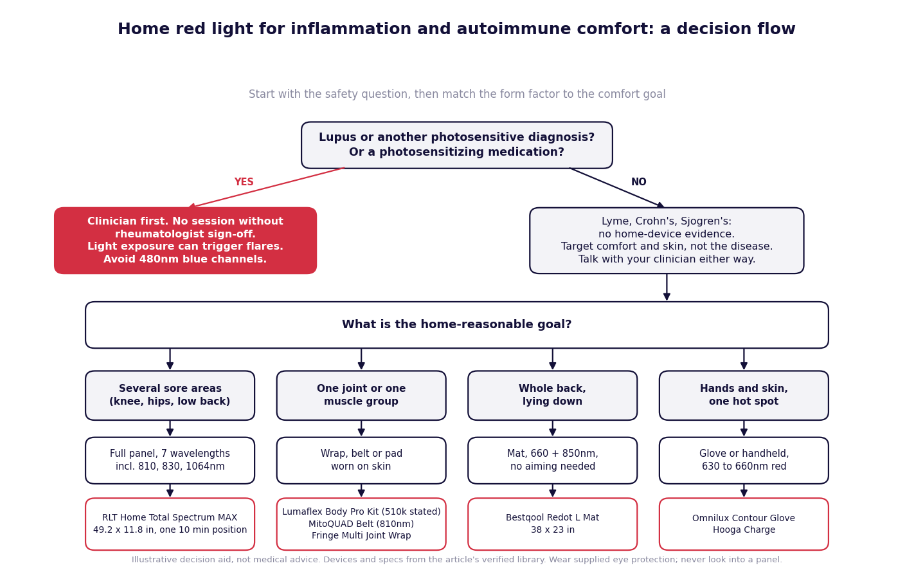
My sister has lupus, I have a swollen left knee and a lower back that seizes after a long drive, and our mother has psoriatic arthritis that flares across her hands every winter. Between the three of …
Posted Nov 9, 2026 Therapy
Connecting innovation decision makers to authoritative information, institutions, people and insights.

Medigy accurately delivers healthcare and technology information, news and insight from around the world.
Medigy surfaces the world's best crowdsourced health tech offerings with social interactions and peer reviews.
© 2026 Netspective Foundation, Inc. All Rights Reserved.
Built on Nov 10, 2026 at 4:06pm