

Managing Editor
@ShahidNShah
@ShahidNShah
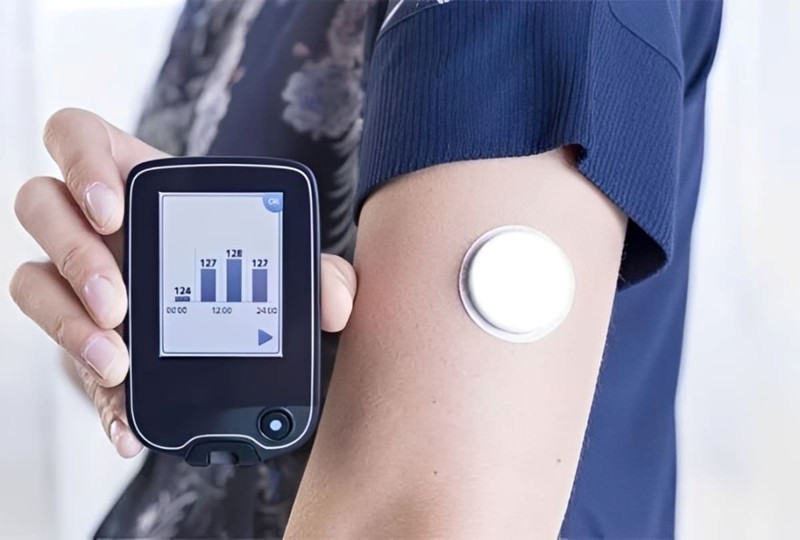
Remote patient monitoring has a credibility problem that rarely gets named. The promise is elegant — continuous vital signs from a patient at home, streamed to a care team that can intervene before a crisis. The reality is that several landmark trials of heart-failure telemonitoring failed to improve outcomes, and the post-mortems pointed at something more fundamental than the algorithms: clinicians couldn’t separate signal from noise, partly because they couldn’t fully trust the signal in the first place. When a reading looks wrong, is the patient deteriorating, or is the device misbehaving? If a care team can’t answer that quickly and confidently, the whole model wobbles. The uncomfortable truth beneath a lot of RPM disappointment is a hardware problem wearing a data costume.
Remote patient monitoring (RPM) is the use of connected devices — wearables, patches, and home sensors — to capture a patient’s physiological data outside a clinical setting and transmit it to their care team. Its entire value rests on one assumption: that the data arriving is an accurate reflection of the patient, not an artifact of the device. When that assumption breaks, RPM doesn’t just underperform. It misleads.
In most software, a bad data point is a nuisance. In RPM, it can be dangerous in either direction. A false alarm sends a clinician chasing a patient who is fine, and enough false alarms produce alert fatigue — the documented phenomenon where staff, buried in threshold-crossing alerts, start tuning them out. A missed or corrupted reading does the opposite, hiding a real deterioration behind a gap or a plausible-looking wrong value. Both erode the one thing RPM has to earn to work at all: a clinician’s trust that the number on the screen means what it says.
Here’s what makes hardware reliability a strategic issue and not just an engineering one. A care team that gets burned by unreliable data a few times learns to discount the whole system — and a monitoring program clinicians don’t trust is a monitoring program they stop acting on. The device can be beautifully designed and the app can be flawless, but if the readings can’t be relied on, the clinical workflow quietly routes around it. Reliability isn’t a feature that makes RPM better. It’s the precondition that makes RPM real.
Software gets the blame because software is visible. But a connected medical device is a physical object worn on a moving, sweating, living body, and much of what degrades its data happens in the physical layer that product teams tend to underweight.
Every wearable and patch is a stack of physical interfaces: a sensor against skin, contacts carrying low-voltage bioelectric signals, connectors joining a sensor to a board, an enclosure keeping fluids out. None of it appears in a product demo, and all of it determines whether the data is any good. The bioelectric potentials these devices read are tiny, which makes them exquisitely sensitive to anything that adds resistance or noise along the signal path — and the most overlooked source of that noise is the humble electrical connection.

This is well understood in the patient-monitoring literature, even if it’s ignored in a lot of startup roadmaps. The contact surfaces at a connection point can be subject to contamination or corrosion over time, and when they are, they cause unreliable connections that degrade the quality of the very low-voltage signals a monitor is trying to read. A connection that’s fine on the bench can drift out of spec after months against skin, through wash cycles and sweat and repeated flexing. At that point the sensor is accurate, the software is correct, and the data is still wrong — because the signal was corrupted between them. That’s why the small machined parts at these junctions matter: components like the precision-turned contacts inside a device’s connectors are what hold a stable, low-resistance path through thousands of cycles of real-world wear, and a marginal one is a data-integrity failure waiting to happen.
| Reliability failure | What it looks like in data | Root cause |
| Intermittent connection | Dropouts, gaps in the trace | Worn or contaminated contacts |
| Signal degradation | Noisy, drifting readings | High-resistance junction |
| Motion artifact | False spikes, bad alarms | Poor mechanical fit at interface |
| Fluid ingress | Sudden failure, corrosion | Enclosure and seal breakdown |
The direction of travel in digital health makes this worse before it makes it better. Devices are shrinking, sensors are multiplying, and the physical interfaces inside them are getting smaller and denser — which means the tolerance for a marginal connection is tighter than ever. A contact that would have been forgiving in a bulky first-generation device has no margin to spare in a sleek patch a fraction of the size. As the industry pushes toward less obtrusive hardware, the physical precision required to keep it reliable goes up, not down.
There’s a portfolio effect, too. When a monitoring program has a handful of patients, an unreliable device is an anecdote. When it has thousands, a small per-unit reliability weakness becomes a steady stream of bad data, false alarms, and eroded trust across the whole clinician base — the kind of systemic drag that can sink an otherwise sound clinical model. What reads as a minor hardware tolerance at the unit level compounds into a credibility problem at the program level.

The practical shift is to stop treating device hardware as a solved commodity layer beneath the “real” innovation of the software and the model. For an RPM product, the reliability of the physical signal path is a clinical requirement, because it directly determines whether the data can be trusted enough to act on. That means qualifying the physical components — connectors, contacts, enclosures — with the same rigor applied to the algorithms, and treating a supplier that can hold precision across a production run as a clinical partner, not just a parts vendor.
The second shift is to validate reliability under real-world conditions rather than demo ones. A device that works in a clinic works nowhere near as reliably on a patient who showers, sleeps, sweats, and moves for months. Building and sourcing hardware that holds its integrity through that reality — not just through a validation session — is what separates a monitoring program clinicians come to rely on from one they quietly abandon. The body is a harsh environment. The hardware has to be built for it.
The conversation in digital health is dominated by software, AI, and data — but every connected device rests on a physical foundation, and when that foundation is unreliable, everything built on top of it inherits the flaw. Remote patient monitoring succeeds or fails on whether clinicians can trust the data, and that trust is decided as much by a device’s connectors and contacts as by its code. The teams that internalize this will treat hardware reliability as the clinical prerequisite it is, sourcing precision components with the seriousness the stakes demand. Because when the hardware fails, the data lies — and in medicine, a lie in the data is the most dangerous failure of all.


Knee discomfort is common among people of different ages. It can develop after exercise, long periods of standing, minor strain or age-related joint changes. A Knee Massager Machine may offer …
Posted Sep 21, 2026 Chronic Illness Physiotherapy Wellness & Prevention
Connecting innovation decision makers to authoritative information, institutions, people and insights.

Medigy accurately delivers healthcare and technology information, news and insight from around the world.
Medigy surfaces the world's best crowdsourced health tech offerings with social interactions and peer reviews.
© 2026 Netspective Foundation, Inc. All Rights Reserved.
Built on Oct 14, 2026 at 5:06am