

Managing Editor
@ShahidNShah
@ShahidNShah
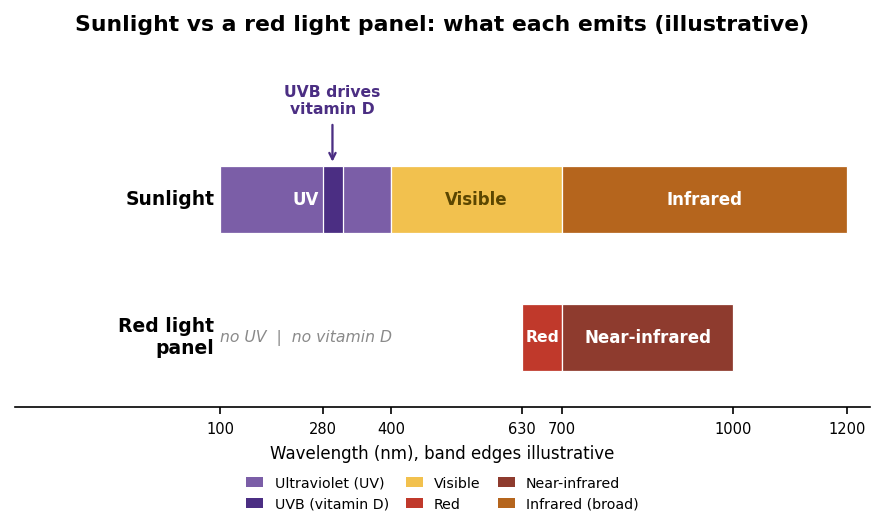
Sunlight and a red light panel occupy different slices of the spectrum (illustrative).
Red light therapy and vitamin D come from different parts of the light spectrum, and that is exactly what makes a panel useful for people who see little sun. Vitamin D is made when ultraviolet B reaches the skin, while a red light panel emits red and near-infrared light, so the panel covers the skin, recovery, and bright-light side of what daylight offers and leaves vitamin D to sunlight, diet, or a supplement. If you arrived here searching for red light therapy devices as a sun replacement, the helpful way to think about it is that a panel stands in for one valuable slice of sunlight, and a simple plan covers the rest.
Sunlight is a broad spectrum of ultraviolet, visible, and infrared light. Its UVB band is what triggers vitamin D, and it is also the band behind sunburn and UV skin-cancer risk. Red light panels sit at the opposite end of the useful range, in red and near-infrared, so they deliver their light without any UVB and without that burn risk. For a clinician-facing view of where panels genuinely fit, see what red light therapy panels clinicians recommend.
Here is the one fact to keep straight. When UVB reaches the skin, it converts a cholesterol precursor into pre-vitamin D, which the body then processes into the active form. Red and near-infrared light do not carry energy in that band, so a red light panel does not produce vitamin D. That is UVB’s job, and the practical route to a healthy vitamin D level is a blood test and, if you are low, a supplement or sensible time outdoors discussed with a clinician. Once that is settled, everything a panel does well can be judged on its own merits.
Red and near-infrared light earn their place on a different list. Red light (roughly 630 to 660nm) and near-infrared (roughly 810 to 850nm and beyond) are being studied for skin appearance, short-term muscle recovery and soreness, and comfort in stiff joints. Because the light is visible and warm rather than ultraviolet, a morning session also adds a dose of bright light that some people use to anchor a daily rhythm. A dedicated lightbox remains the better-studied tool for that specific goal, so treat the rhythm benefit as a welcome extra rather than the main reason to buy.
People who see little daylight, whether from night-shift work, long winters, or mostly indoor days, often reach for a panel to make up for lost sun. It covers the red and near-infrared part of that gap well: a panel is a sensible addition for skin and recovery goals, and for a burst of bright, warm light on dark mornings. Pair it with a blood test and, where needed, a supplement for vitamin D, and you have a routine that addresses both sides of what daylight normally provides. Think of the panel as a complement to a sensible low-sun routine, with clear expectations for what each part delivers.
If a panel makes sense for your skin and recovery goals, coverage, wavelength range, and verified output matter more than marketing wattage. One buyer’s tip pays off immediately: a solar power meter reads roughly double a laboratory spectrometer on the same device, so spectrometer-verified irradiance figures are the ones to compare like for like, and a figure with no stated method is best read with that in mind. A short, ranked shortlist, each with the buyer it suits best:
On regulatory status, a brief note for buyers: full-body rectangular red light panels are consumer wellness devices that are at most FDA-registered, which is a listing rather than a clearance, approval, or endorsement. The devices that carry FDA clearance in this space are laser hair caps and helmets for pattern hair loss, a separate category from the general-purpose panels above.
Graded constructively, with the strongest support first:
One safety line to keep in view: if you take a photosensitizing medication, are pregnant, or have a condition affecting your eyes or skin, check with a clinician before starting a red light routine, and never stare directly into the LEDs.
Can a red light panel raise my vitamin D?
No. Vitamin D synthesis needs UVB, and panels emit red and near-infrared light, so look to sunlight, a supplement, or diet for vitamin D and to the panel for skin, recovery, and bright light.
Is a red light panel safer than the sun?
It carries no UVB, so it has no sunburn effect and no UV skin-cancer risk from that band. It is a different kind of exposure with its own benefits, rather than a version of the same one.
If I use a panel, do I still need sun or a supplement for vitamin D?
Yes. A panel and a vitamin D plan work side by side. Get a blood test and, if you are low, discuss a supplement or a sensible amount of sun with a clinician.
The bottom line for low-sun months is a two-part routine: a panel for skin, recovery, and a bright start to dark mornings, and a blood test with a supplement where needed for vitamin D. Choose the panel by coverage, wavelength range, and spectrometer-verified output, and both halves of the plan will do their job.
A Note on Claims: This is general wellness content, not medical advice. Red light panels are consumer wellness devices; see the regulatory note above on FDA-registered versus FDA-cleared. Red and near-infrared light may support some skin and recovery goals and is not a treatment for any condition. Consult a qualified professional before starting, especially if you are pregnant, take photosensitizing medication, or have a medical condition.

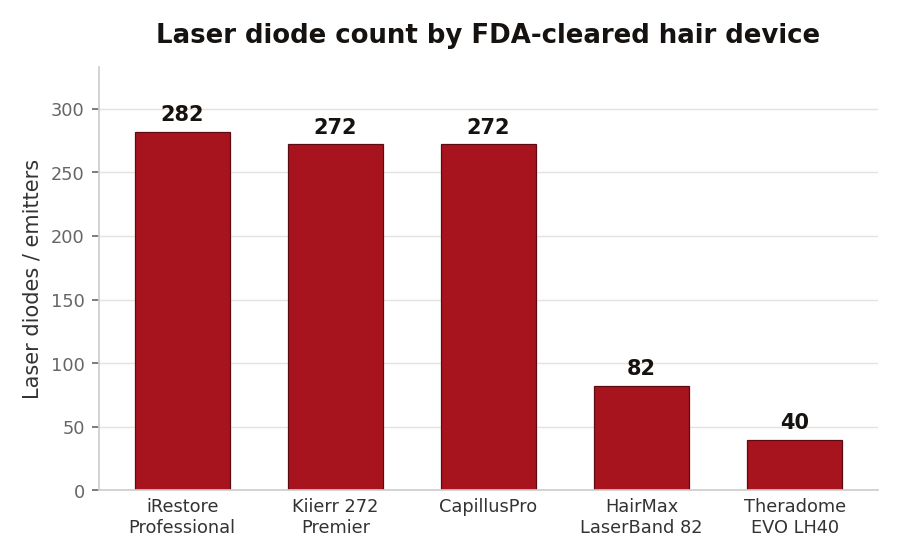
Diode count is one factor in scalp coverage, and fit and wavelength matter just as much. The best red light therapy devices for hair growth are the purpose-built laser caps, helmets, and bands, and …
Posted Sep 21, 2026 Therapy
Connecting innovation decision makers to authoritative information, institutions, people and insights.

Medigy accurately delivers healthcare and technology information, news and insight from around the world.
Medigy surfaces the world's best crowdsourced health tech offerings with social interactions and peer reviews.
© 2026 Netspective Foundation, Inc. All Rights Reserved.
Built on Oct 22, 2026 at 6:05pm