

Managing Editor
@ShahidNShah
@ShahidNShah
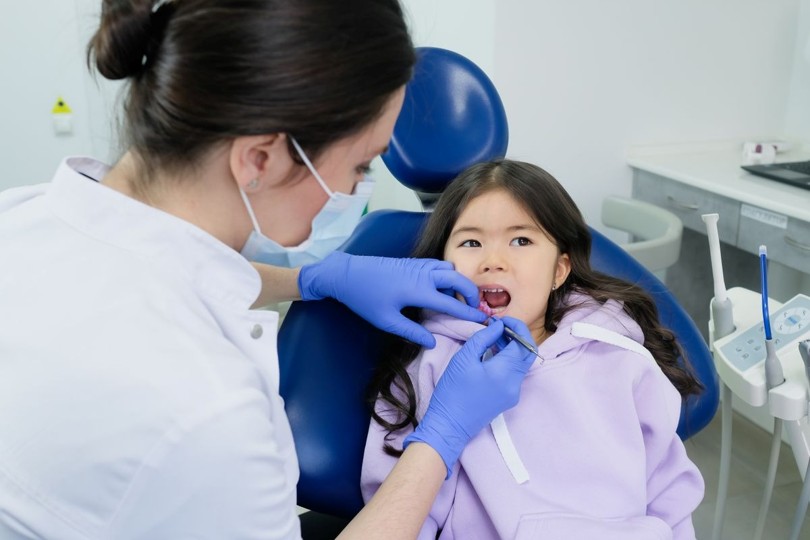
Tooth decay is the most common chronic disease affecting children in the United States — more prevalent than asthma, according to the CDC’s 2023 oral health data. That statistic surprises most parents, partly because cavities feel like a minor inconvenience rather than a serious health issue. But untreated decay in baby teeth creates real consequences: pain that disrupts sleep and concentration, infections that can spread, and early tooth loss that affects how a child eats, speaks, and develops confidence before their permanent teeth ever arrive.
What makes this particularly frustrating is that most of it is preventable. The challenge isn’t a lack of products or dental access alone — it’s the gap between dental visits, when children are entirely in their parents’ care. Six months is a long time in a child’s mouth. Habits practiced or neglected at home during those 180 days determine far more about a child’s oral health than any single appointment can correct.
This guide is built for parents navigating that gap. You’ll find evidence-aligned daily routines, age-specific guidance that accounts for how rapidly children’s dental needs shift, and clear guidance on when a symptom warrants a call to the dentist versus a watchful wait. Nothing here is theoretical — it’s practical, grounded in current dental research, and designed to give families in Belmont and beyond a real framework for keeping their kids’ teeth healthy between professional visits.
Most parents think of the dentist as the person who fixes problems. In pediatric dentistry, the more accurate framing is that the dentist helps prevent problems that would otherwise be expensive, painful, and harder to treat the longer they go unnoticed. That distinction shapes everything about why early care — and the at-home habits that extend it — matters so much.
Primary teeth, the ones children start losing around age six, aren’t placeholders. They guide the eruption path of permanent teeth, maintain jaw spacing, support normal speech development, and allow children to chew the varied diet that fuels healthy growth. A child who loses a baby molar prematurely due to decay often requires a space maintainer to prevent neighboring teeth from drifting — an orthodontic complication that might have been avoided entirely with consistent brushing and fluoride exposure.
There’s also a pain and infection dimension that parents sometimes underestimate. Dental infections in children can escalate quickly. An abscess from an untreated cavity doesn’t stay localized — it can spread to surrounding tissue and, in rare but serious cases, become a systemic health issue. That’s not meant to alarm; it’s meant to illustrate why the window between appointments carries real stakes.
Pediatric dentists receive specialized training beyond general dental education — an additional two to three years focused specifically on child development, behavioral management, and the anatomical differences between developing and adult dentition. That expertise matters during appointments. But no specialist can compensate for what happens at home six days a week. The research is clear that parental involvement in daily oral hygiene is one of the strongest predictors of a child’s long-term dental health. Building those routines early — before cavities appear — is the most effective intervention available to any family.
The mechanics of cavity formation are straightforward: bacteria in the mouth feed on sugar, produce acid, and that acid erodes tooth enamel over time. Breaking that cycle doesn’t require a complicated regimen — but it does require consistency and a few habits that research has consistently validated.
Brushing twice daily remains the foundation. The American Dental Association recommends fluoride toothpaste for all children, with amounts adjusted by age: a rice-grain smear for children under three, a pea-sized amount from ages three to six. For children under eight, parents should brush for them or immediately after they brush independently — most kids lack the fine motor coordination to clean all surfaces effectively on their own. A two-minute timer, whether a dedicated brushing timer or a short song, helps both children and parents stay honest about duration.
Flossing often gets skipped because it feels less urgent than brushing. It shouldn’t. Once two teeth are touching, a toothbrush can’t clean the contact point between them — and that’s precisely where interproximal cavities develop. Floss picks designed for children can make the process easier; the goal is to make it a nightly habit before the teeth are fully erupted rather than introducing it as a correction later.
Bedtime hygiene deserves particular attention. Saliva production drops significantly during sleep, removing one of the mouth’s natural defenses against acid buildup. Whatever residue remains on teeth overnight has an extended window to cause harm. Brushing after the last food or drink of the day — not before, if your child has a nighttime snack — closes that window.
Making these habits stick is as much a behavioral challenge as a dental one. Role modeling matters: children who see parents brushing and flossing regularly internalize those behaviors as normal. Keeping supplies visible, building brushing into a predictable sequence (bath, brush, book, bed), and avoiding power struggles by giving children age-appropriate choices — which toothbrush, which flavor of toothpaste — all reduce friction and improve consistency over time.
A routine that works perfectly for a five-year-old will be inadequate by the time that child turns thirteen. Children’s mouths change faster than most parents anticipate — teeth erupt, baby teeth fall out, permanent molars appear without fanfare in the back of the mouth, and orthodontic appliances enter the picture. Each transition brings new vulnerabilities and new responsibilities.
Understanding these shifts isn’t about memorizing a complex dental timeline. It’s about recognizing that the goal posts move, and adjusting accordingly. The two developmental windows that require the most intentional adjustment are the earliest years — when parents are doing most of the work — and the preteen and teen years, when children are transitioning to managing their own care but often aren’t quite ready to do it independently.
Many parents don’t realize that dental care should begin before the first tooth appears. Wiping an infant’s gums with a clean, damp cloth after feedings removes bacteria and begins establishing touch tolerance — making the transition to a toothbrush less of a shock.
Once teeth emerge, typically between six and twelve months, a soft-bristled infant toothbrush and a rice-grain smear of fluoride toothpaste should replace the cloth. The American Academy of Pediatric Dentistry recommends scheduling a child’s first dental visit by their first birthday or within six months of the first tooth erupting, whichever comes first.
One of the most preventable sources of early childhood tooth decay is prolonged bottle use, particularly putting a child to bed with a bottle of milk or juice. The sugars in these liquids pool around teeth during sleep, creating ideal conditions for decay. Transitioning to a cup around twelve months and eliminating nighttime bottles significantly reduces this risk. Introducing a toothbrush as a familiar object early — letting toddlers hold it, play with it — also eases the resistance that makes brushing a nightly battle for many families.
The preteen years bring a paradox: children this age are developmentally ready to take over their own dental care, but their actual execution often doesn’t match their confidence in it. Supervision — not hovering, but occasional check-ins — remains important through early adolescence.
For children with braces, hygiene demands increase substantially. Brackets and wires create dozens of additional surfaces where food debris and plaque accumulate. Orthodontic floss threaders or water flossers make cleaning around appliances manageable; skipping flossing during orthodontic treatment is one of the most common causes of decalcification (white spots) that appear when braces come off.
Diet counseling also becomes more relevant at this stage. Sports drinks and flavored waters have become a near-constant presence in many teenagers’ routines, and most contain acid levels that erode enamel even without significant sugar content. Helping teens understand that the issue isn’t just sugar, but frequency of acid exposure, gives them a more accurate mental model for making choices.
Knowing when to act between scheduled visits is a skill most parents develop through trial and error. A few clear thresholds can shorten that learning curve.
Tooth pain that persists for more than a day or two warrants a call to the dentist, particularly if it’s waking a child at night or accompanied by swelling in the gum or jaw. Facial swelling is always an urgent sign — it can indicate a spreading infection that needs same-day evaluation. A knocked-out permanent tooth is a dental emergency: the tooth should be held by the crown (not the root), rinsed gently without scrubbing, and if possible reinserted into the socket or kept in milk during transport. Time matters enormously — reimplantation is most successful within thirty minutes.
On the prevention side, two evidence-based interventions are worth discussing at your next appointment with a Belmont family dentist for kids: fluoride treatments and dental sealants. Professional fluoride applications deliver a higher concentration than standard toothpaste and help remineralize enamel that’s in the early stages of decay. Sealants — thin resin coatings applied to the chewing surfaces of back molars — physically block the deep grooves where most childhood cavities originate. The CDC has identified sealants as one of the most effective cavity-prevention tools available for school-age children.
Dietary habits tie all of this together. Frequent snacking, regardless of what’s being eaten, keeps the mouth in a state of acid exposure. Encouraging children to drink water between meals, limit juice and sports drinks, and eat sweets as part of a meal rather than as standalone snacks addresses the biological mechanism behind most pediatric cavities.
The single most impactful thing parents can do before the next appointment is establish the nightly routine now — not after the next cavity, not after the next reminder from the hygienist. Early habits become automatic habits, and automatic habits are the ones that hold through the years when children are managing their own care and parents are no longer in the room to check.

Most parents assume that a specialist automatically means better care — and in many areas of medicine, that’s a reasonable instinct. But when it comes to routine dental care for children, the …
Posted Sep 17, 2026 Dental Care Dentistry
Connecting innovation decision makers to authoritative information, institutions, people and insights.

Medigy accurately delivers healthcare and technology information, news and insight from around the world.
Medigy surfaces the world's best crowdsourced health tech offerings with social interactions and peer reviews.
© 2026 Netspective Foundation, Inc. All Rights Reserved.
Built on Oct 8, 2026 at 6:09pm