

Managing Editor
@ShahidNShah
@ShahidNShah
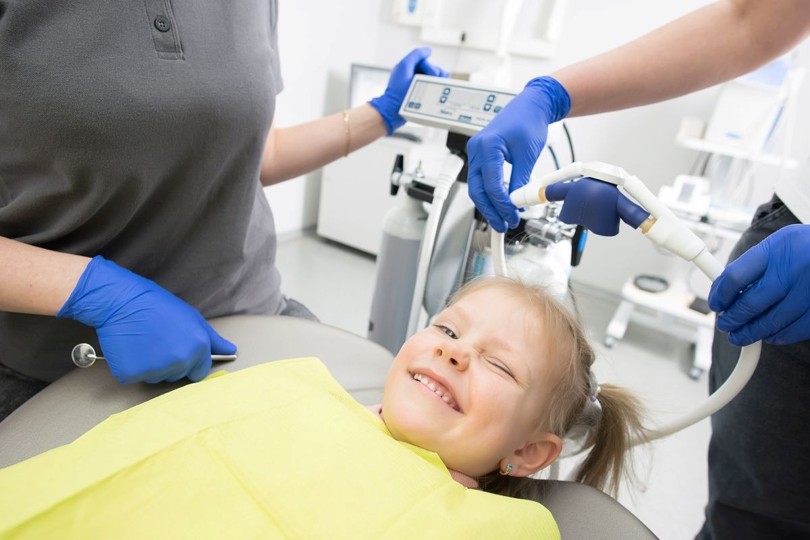
Most parents assume that a specialist automatically means better care — and in many areas of medicine, that’s a reasonable instinct. But when it comes to routine dental care for children, the calculus is less straightforward than it seems. The American Academy of Pediatric Dentistry recommends that children establish a dental home by age one, but it doesn’t specify that home must be a pediatric specialist. For millions of families, a family dentist fills that role — often with outcomes that rival, and in some dimensions exceed, what a specialist-centered model provides.
The question isn’t whether pediatric dentists are skilled. They are, and they serve a genuinely important function. The question is whether they’re the right default for every child, or whether the case for always choosing a specialist is stronger in theory than in practice.
Consider a common scenario: a family has two school-age kids, a teenager, and two parents — all with different dental schedules, different insurance histories, and different care needs. Coordinating five separate patients across two dental offices creates administrative complexity, gaps in communication, and the real possibility that a concern flagged at one office never makes it to the other. A single family dentist sees the whole picture.
What follows isn’t an argument that pediatric specialists are unnecessary. It’s a sharper examination of what family dentists actually offer children — clinically, behaviorally, and structurally — and when the evidence supports choosing one over the other.
Early childhood is when oral health trajectories get set. Primary teeth guide the eruption of permanent ones. Early decay, if untreated, can affect speech development, nutrition, and self-confidence well before a child reaches middle school. The decisions parents make about dental care in the first decade of a child’s life carry outsized long-term consequences.
Access and cost compound this. According to the CDC’s 2023 oral health surveillance data, untreated tooth decay remains the most common chronic disease among children in the United States — more common than asthma. A meaningful portion of that burden traces back not to poor hygiene, but to delayed care. Families who can’t easily access or coordinate dental visits are more likely to defer preventive appointments until a problem becomes symptomatic. By that point, the intervention is more expensive, more invasive, and harder on the child.
This is where the family dentist versus pediatric specialist debate has practical stakes. Pediatric dental offices typically see only patients up to age 18 — sometimes younger. When a child ages out, families must transition to a new provider, rebuild a clinical relationship, and transfer records that may have been accumulated over a decade. That transition moment is a documented risk point for care lapses.
The administrative burden matters too. Families navigating separate insurance claims, separate referral networks, and separate appointment systems for children’s care versus adult care face friction that genuinely affects how consistently they follow through. In communities with limited dental providers — including much of rural America — the practical choice is often between a family dentist or no regular dentist at all. Framing the specialist as the automatic gold standard ignores the real-world constraints most families operate within.
The mechanisms behind family dental care deserve a closer look — because the advantages aren’t just logistical.
The case for family dentists isn’t simply one of convenience. There are specific clinical and relational mechanisms that produce measurable benefits for pediatric patients — particularly over the long arc of a child’s development. Two stand out as especially significant.
Longitudinal records are one of the most underappreciated assets in dentistry. A family dentist who sees a child from age three through adolescence builds a clinical picture that no snapshot appointment can replicate — growth patterns, eruption sequences, enamel quality, response to fluoride treatments, and behavioral tendencies across different life stages.
This continuity has direct clinical value. Early detection of crowding, bite development issues, or enamel anomalies depends on having baseline data to compare against. A dentist seeing a child for the first time at age nine has no reference point; a dentist who’s seen that same child every six months since age four has seven years of context.
Shared records also reduce redundant diagnostics. Families who see a single provider rarely face the situation of repeating X-rays because a new office has no prior imaging on file — a scenario that adds cost and, for pediatric patients, unnecessary radiation exposure. For families already enrolled in a practice offering Joplin family dental care, this kind of longitudinal tracking happens naturally, without requiring parents to actively manage records transfers between offices.
Children’s dental anxiety is real and consequential — it’s one of the leading reasons families delay or avoid appointments. Pediatric specialists undergo additional training specifically in behavior management, which is genuinely valuable for children with severe anxiety, significant medical complexity, or developmental conditions. That training has clear applications in the right circumstances.
What often goes unexamined is that family dentists develop behavioral expertise of a different kind: the kind built over years of knowing a specific child. A dentist who has seen a patient grow from toddler to teenager understands that child’s triggers, communication style, and what approaches have worked historically. That relationship-based familiarity can be more effective than clinical training alone for the majority of children who don’t present with extreme anxiety.
On the clinical side, family dentists routinely provide the core services children need: fluoride treatments, dental sealants, cavity management, orthodontic screening, and emergency care. The scope overlap with pediatric specialists is substantial for patients without complex medical histories. Referral to a specialist remains appropriate for procedures requiring sedation, complex restorative work, or management of conditions like cleft palate — and experienced family dentists make those referrals when warranted.
The research comparing family-based and specialist-centered dental care for children is less extensive than parents might expect — and worth examining honestly.
What population-level data does show is that preventive service uptake is meaningfully tied to care continuity. A 2019 study published in the *Journal of the American Dental Association* found that children with a consistent dental home — defined as a single provider seen at regular intervals — had significantly higher rates of sealant application and fluoride treatment compared to children who saw multiple providers or changed practices frequently. The study didn’t isolate family dentists versus pediatric specialists specifically, but its findings align with the continuity argument: consistency of provider matters more than provider type for preventive outcomes.
There’s also relevant evidence on the transition risk mentioned earlier. Research published in *Pediatrics* has documented care gaps when adolescents age out of pediatric practices — a period that coincides with increased sugar consumption, orthodontic treatment, and the full eruption of second molars. Patients who transition abruptly to new adult providers show higher rates of missed recall appointments in the 12 to 24 months following the switch.
Where the evidence genuinely favors pediatric specialists is in high-complexity cases. Children with conditions like autism spectrum disorder, Down syndrome, or severe dental phobia benefit from the specialized behavior management protocols and facility adaptations that dedicated pediatric practices provide. For this population, the specialist advantage is well-supported.
The honest limitation is that most studies on this topic involve relatively small samples, limited geographic diversity, and self-reported data on appointment adherence. The evidence base supports a nuanced conclusion — not a blanket endorsement of either model — which is precisely why individual family circumstances need to guide the decision.
For most children without significant medical complexity or severe dental anxiety, a family dentist is a clinically sound and logistically practical choice. The decision framework worth using isn’t “which is better in the abstract?” — it’s a set of specific criteria that apply to your child’s actual situation.
Medical and behavioral complexity is the clearest reason to seek a pediatric specialist. Children with serious systemic conditions, significant developmental disabilities, or documented severe dental phobia benefit from the additional training and equipment that specialist practices offer. If a child has needed sedation for dental work or has required hospital-based dentistry, that’s a strong signal that specialist care is appropriate.
Insurance and plan structure matters more than families often realize. Many family dental plans cover pediatric preventive services — sealants, fluoride, X-rays — at the same rates as individual pediatric coverage. But network configurations vary: some plans have robust pediatric dentist networks while family dentist options are limited, and vice versa. Checking whether your preferred provider type is in-network before committing can prevent significant out-of-pocket costs.
Referral and emergency protocols are worth understanding before you need them. A good family dentist maintains established referral relationships with oral surgeons, orthodontists, and pediatric specialists — and can coordinate urgent care when something exceeds their scope. Asking a prospective family dentist how they handle pediatric emergencies and what their specialist referral process looks like is a reasonable, practical step.
For most families, the right question isn’t whether a family dentist is *technically* qualified to see children — they are. It’s whether the specific dentist you’re considering has a practice structure, relationship-building approach, and referral network that fits your child’s needs at this stage and over the years ahead.

Hip replacement surgery is a procedure that replaces damaged parts of the hip joint with artificial components to reduce pain and improve mobility. One of the important considerations before surgery …
Posted Sep 16, 2026 Chronic Illness
Connecting innovation decision makers to authoritative information, institutions, people and insights.

Medigy accurately delivers healthcare and technology information, news and insight from around the world.
Medigy surfaces the world's best crowdsourced health tech offerings with social interactions and peer reviews.
© 2026 Netspective Foundation, Inc. All Rights Reserved.
Built on Oct 8, 2026 at 6:09pm