

Managing Editor
@ShahidNShah
@ShahidNShah
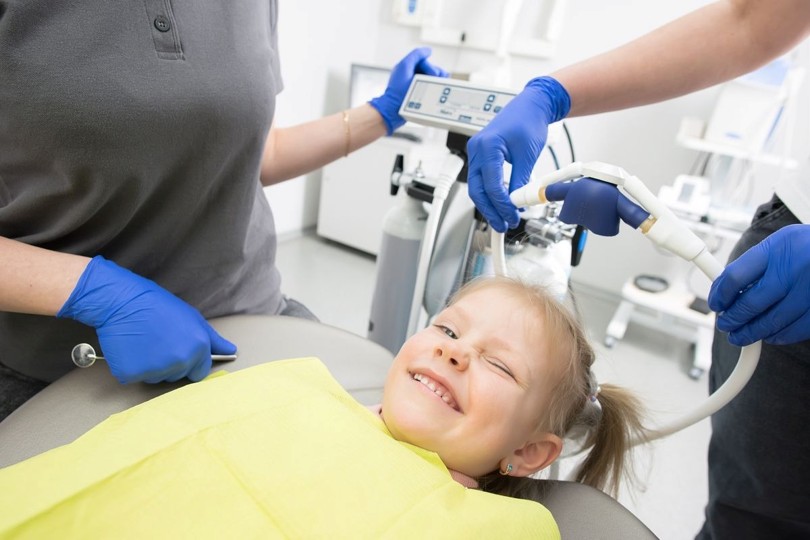
Picture this: it’s the morning of your seven-year-old’s dental appointment, and what started as mild reluctance has escalated into tears, a stomachache, and a firm refusal to get in the car. You’re not dealing with a difficult child — you’re dealing with dental anxiety, and it’s more common than most parents realize.
According to a 2022 systematic review published in *Frontiers in Oral Health*, dental anxiety affects between 9% and 15% of children globally, making it one of the most prevalent barriers to pediatric oral care. The problem isn’t just the tears in the waiting room. Children who experience significant fear around dental visits tend to avoid care altogether, creating a cycle that compounds over time — missed cleanings become untreated cavities, which become more invasive procedures, which deepen the fear even further.
What’s shifting in pediatric dentistry right now is the growing emphasis on early behavioral intervention. Clinicians and researchers increasingly recognize that addressing anxiety proactively — before it hardens into avoidance — produces far better outcomes than trying to manage an entrenched phobia later. That puts parents in a uniquely powerful position: the strategies you use at home and in the waiting room matter as much as anything that happens in the dental chair.
This article walks through why timing matters, how to recognize dental anxiety in children, what you can do before and during appointments, and when to involve clinical support.—
Dental anxiety doesn’t stay contained to dentist visits. Left unaddressed, it tends to expand. A child who avoids cleanings at age eight is statistically more likely to avoid dental care as a teenager and adult, carrying the pattern — and the oral health consequences — well into adulthood.
The clinical stakes are real. When children skip preventive appointments, small problems go undetected. Decay that could have been addressed with a simple filling progresses to the point where crowns, extractions, or root treatments become necessary. Those more intensive procedures then reinforce the original fear with new, more vivid experiences. This is the anxiety-avoidance spiral that pediatric dentists work hard to interrupt early.
There’s also a developmental dimension worth understanding. Children between ages four and eight are in a particularly formative window for building — or avoiding — healthcare habits. The associations children form during this period tend to be durable. A child who learns that dental visits are manageable, even boring, by age nine is far less likely to develop clinical-level dental phobia than one whose early experiences were uniformly distressing.
Research published in the *International Journal of Paediatric Dentistry* has consistently linked negative early dental experiences to elevated anxiety scores in adolescence and adulthood. The good news embedded in that finding is its corollary: positive, well-managed early experiences are equally durable. Children who receive patient-centered, anxiety-aware dental care from an early age build genuine resilience — not just tolerance — around oral health.
The practical implication for parents is straightforward: the earlier anxiety is recognized and addressed, the narrower the window before it becomes harder to manage. Early action protects both the child’s teeth and their long-term relationship with dental care.
Recognizing dental anxiety in children requires looking beyond the obvious. Crying in the waiting room is easy to spot; the subtler signs are often missed.
Behavioral signs are usually the first thing parents notice. A child with dental anxiety might become unusually clingy in the days before an appointment, complain of stomachaches or headaches that don’t appear on non-dental days, or ask repetitive reassurance-seeking questions like “Will it hurt?” or “Can we cancel?” Older children may go quiet and withdrawn rather than vocal — their anxiety shows up as sullenness, not tears.
Physiological symptoms appear closer to the appointment. Rapid breathing, visible muscle tension, sweating, and nausea are all common. Some children experience a genuine vasovagal response — lightheadedness or fainting — triggered by anticipatory fear even before any procedure begins. These are real physical reactions, not performance, and treating them as such matters enormously for how parents and clinicians respond.
Sensory triggers are often underappreciated. The dental environment is unusually rich in stimuli: the smell of antiseptic, the high-pitched whir of the drill, the bright overhead light, the feeling of instruments touching teeth. For children with heightened sensory sensitivity — including those on the autism spectrum or with sensory processing differences — these triggers can escalate distress rapidly even when the procedure itself is painless.
Understanding which category your child’s anxiety falls into shapes which strategies are most useful. A child primarily triggered by sensory input needs different preparation than one whose fear is rooted in anticipated pain. Recognizing the pattern is the first step toward matching the response.
Before choosing a management strategy, it helps to have a baseline sense of where your child’s anxiety actually sits. Pediatric dental clinics often use validated tools like the Children’s Fear Survey Schedule – Dental Subscale (CFSS-DS) or the Modified Child Dental Anxiety Scale (MCDAS), which are age-appropriate questionnaires that distinguish normal pre-appointment nerves from clinically significant fear. If your child’s dentist doesn’t routinely use one of these, it’s entirely reasonable to ask — the scores help clinicians calibrate their approach and track progress over time.
At home, the observable cues described in the previous section serve as your informal assessment. If your child’s distress is consistent across multiple appointments, begins days before the visit, and significantly disrupts daily functioning, that pattern signals something beyond typical nervousness.
Preparation before the visit has a measurable impact on in-chair behavior. Scheduling matters more than most parents expect: morning appointments, when children are rested and less emotionally depleted, generally go more smoothly than afternoon slots. Avoid scheduling dental visits on already-stressful days — after a difficult school week or before a significant event.
What you say in the lead-up to the appointment shapes expectations powerfully. Neutral, matter-of-fact language works better than elaborate reassurance (“It won’t hurt at all, I promise”) which children often distrust, or avoidance (“Let’s not talk about it”). Framing the visit around the dentist as a helper — someone whose job is to keep teeth strong — plants a more useful association than one built around what might feel uncomfortable.
The most effective anxiety management combines what happens before the visit with what happens during it. Neither alone is as powerful as both together.
Storytelling and role-play are among the most evidence-supported home strategies for young children. In the days before an appointment, playing “dentist” with a stuffed animal — counting the bear’s teeth, using a flashlight to look inside — familiarizes children with the sequence of events in a low-stakes setting. Several children’s books specifically address dental visits in age-appropriate, non-scary terms and are worth using as part of normal bedtime reading in the week before an appointment.
Gradual exposure works on a similar principle. If your child has never been to a dental office, a brief “tour visit” — arriving, meeting the hygienist, sitting briefly in the chair without any treatment — can significantly reduce the novelty and unpredictability that drive anxiety.
Breathing practice is worth teaching explicitly before the appointment rather than introducing it in the chair for the first time. Simple diaphragmatic breathing — in through the nose for four counts, out through the mouth for four — gives children an active tool they can use independently. Practicing it at home makes it accessible under stress.
Reward framing works best when the reward is tied to participation rather than outcome (“After the appointment, we’ll stop for a smoothie”) and when it’s established beforehand so children have something concrete to focus on.
Once the appointment begins, a few specific approaches make a consistent difference. Child-friendly language from both the parent and the dentist matters: describing the suction as “the little vacuum” or the explorer as “the tooth counter” reduces the frightening associations that clinical terminology can carry.
Distraction is one of the most reliably effective in-chair tools. Many pediatric dental offices now offer ceiling-mounted screens or allow children to wear headphones with their preferred audio. Even a handheld squeeze toy gives children something concrete to channel physical tension into.
Enhancing the child’s sense of control is particularly powerful. Establishing a simple stop signal — raising one hand means “pause, I need a break” — gives children agency over what happens to their body. Research consistently shows that perceived control reduces procedural distress even when children rarely actually use the signal.
Parental presence in the operatory is handled differently across practices, but where it’s permitted, a calm, regulated parent tends to support a calmer child. If you’re visibly anxious yourself, that emotional state transmits — children are remarkably good at reading parental affect.
Home strategies and a well-prepared dental visit are effective for moderate anxiety. But some children reach a point where behavioral approaches alone aren’t enough, and recognizing that threshold matters. If a trusted dentist in Howell or any other pediatric provider recommends a clinical option, understanding what’s available helps parents make informed decisions rather than anxious ones.
Nitrous oxide (commonly called “laughing gas”) is the most widely used minimal sedation option in pediatric dentistry. Administered through a small nasal mask, it produces relaxation and mild euphoria while keeping the child fully conscious and responsive. It takes effect quickly, wears off within minutes after the mask is removed, and has a strong safety record across decades of pediatric use. Most children tolerate it well, and it’s appropriate for mild to moderate anxiety in cooperative patients.
Oral anxiolytics — typically a liquid medication given about an hour before the appointment — produce a deeper relaxation effect. The child remains conscious but is noticeably calmer and less reactive to sensory triggers. This option requires more preparation, monitoring during the appointment, and a parent to manage post-procedure drowsiness.
Conscious sedation, sometimes called moderate sedation, involves IV-administered medication under closer clinical monitoring. It’s typically reserved for children with significant anxiety who cannot cooperate with treatment, or those requiring extensive procedures. It requires trained personnel and specific facility standards, and parents should ask detailed questions about the provider’s credentialing and monitoring protocols before consenting.
The right option depends on the severity of the anxiety, the nature of the planned treatment, and the child’s overall health history.
Sedation addresses the immediate procedural barrier but doesn’t resolve the underlying fear. When anxiety is severe enough to require sedation repeatedly, or when a child’s distress extends well beyond dental visits into broader health-related anxiety, a referral to a psychologist or behavioral health specialist is worth pursuing.
Specific red flags include: complete refusal to enter the dental office despite repeated attempts and preparation, significant anticipatory anxiety that begins days or weeks before an appointment, or a pattern consistent with a specific phobia rather than situational nervousness.
Cognitive behavioral therapy (CBT) adapted for dental phobia has a strong evidence base for children and adolescents. Systematic desensitization, a structured exposure approach, is also well-supported. Parents can ask their child’s dentist or pediatrician for a referral to a psychologist familiar with health-related anxiety — and can specifically ask whether the practice has experience with dental phobia protocols.
The most important question to ask is whether the approach addresses the fear itself, not just manages it in the chair. A child who leaves treatment no longer dreading the dentist hasn’t just gotten through an appointment — they’ve gained something that protects them for life.

A cracked tooth doesn’t announce itself with fanfare. For many people, it starts as a fleeting twinge when biting into something hard, or an odd sensitivity to cold that comes and goes. Easy to …
Posted Sep 17, 2026 Dental Care Dentistry
Connecting innovation decision makers to authoritative information, institutions, people and insights.

Medigy accurately delivers healthcare and technology information, news and insight from around the world.
Medigy surfaces the world's best crowdsourced health tech offerings with social interactions and peer reviews.
© 2026 Netspective Foundation, Inc. All Rights Reserved.
Built on Oct 8, 2026 at 6:09pm