

Managing Editor
@ShahidNShah
@ShahidNShah
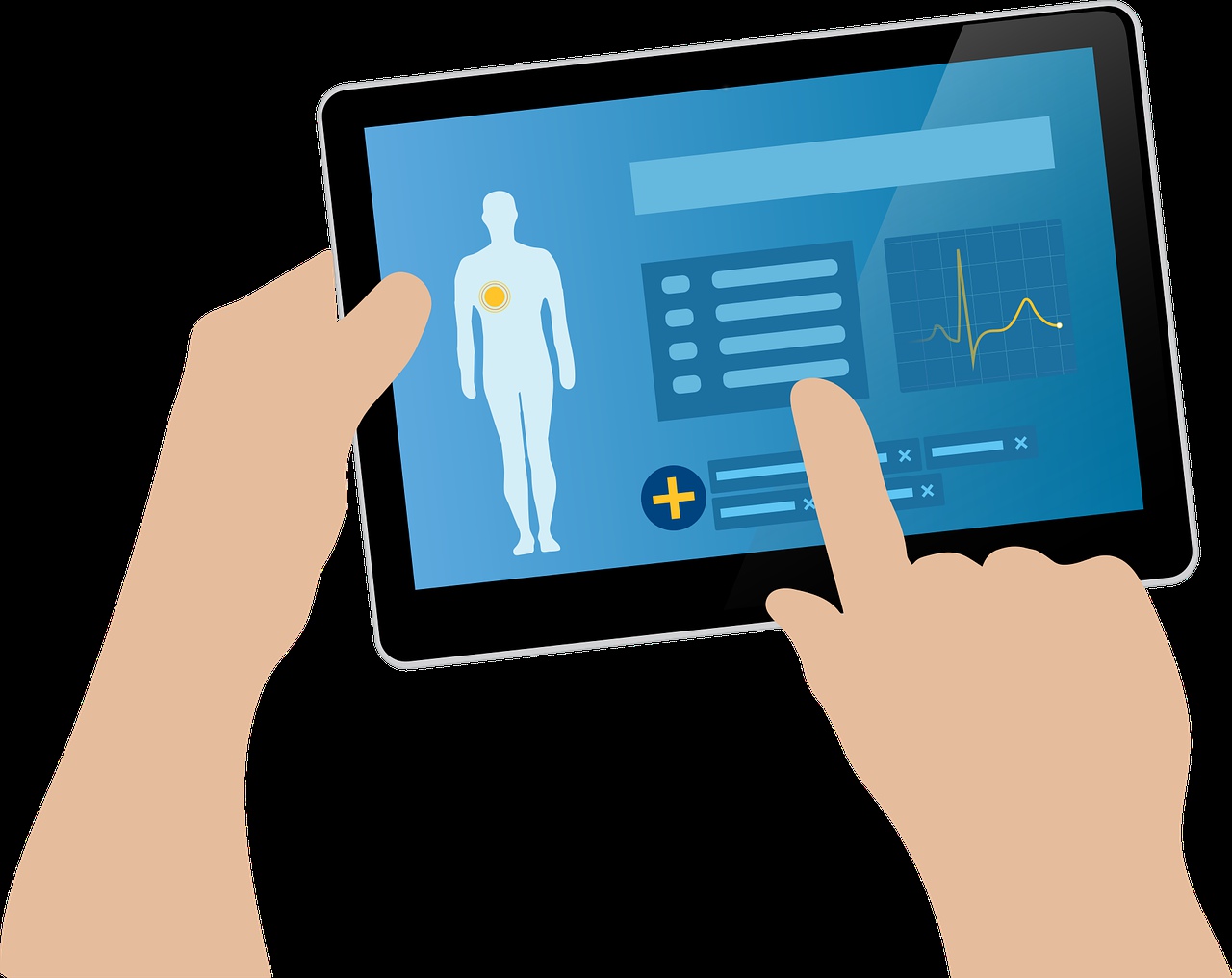
An electronic health record should support how care is delivered, not dictate how a healthcare organization operates.
Yet digital health companies and specialty providers often discover that established EHR platforms were designed around broader clinical requirements. Their standard templates may work well for conventional workflows but struggle to accommodate emerging care models, specialty documentation, or data from connected devices.
This does not mean vendor EHRs are becoming obsolete. It means innovators are asking a more useful question: When does an established platform make sense, and when is a purpose-built system the better investment?
Commercial EHRs offer important advantages, including mature functionality, established support arrangements, and, where applicable, certified capabilities. For many organizations, purchasing one remains the most practical choice.
The challenge arises when clinical workflows must fit software limitations rather than patient needs. A precision medicine program may need to combine genomic findings, remote monitoring data, and longitudinal treatment plans. A behavioral health group may require specialized assessments, collaborative care workflows, and documentation that conventional templates do not accommodate easily.
Even when a vendor supports integrations, accessing specific data or changing the clinical interface can involve additional licensing, implementation work, or vendor approval. These constraints can slow product development and complicate the experience for clinicians.
For teams facing persistent workflow mismatches, custom EHR development provides an alternative worth evaluating alongside commercial platforms.
A custom EHR does not necessarily require building every component from scratch. Teams can use established cloud services, standards-based APIs, and reusable infrastructure while designing clinical functions around their actual requirements.
FHIR can support standardized health data exchange, while thoughtfully designed integrations connect relevant laboratory, billing, pharmacy, and remote monitoring systems. However, using FHIR does not automatically guarantee interoperability. Teams must still account for implementation differences, permissions, data quality, and partner-specific interfaces.
The real advantage of a purpose-built approach is control. Organizations can prioritize the workflows, interfaces, and data structures that matter to their care model instead of waiting for changes to a vendor’s broader product roadmap.
That flexibility comes with responsibility. Security, privacy, testing, accessibility, maintenance, and applicable certification obligations must be addressed throughout the software lifecycle.
Procurement discussions often concentrate on upfront implementation costs and feature checklists. Those factors matter, but they rarely describe the full operational impact of an EHR decision.
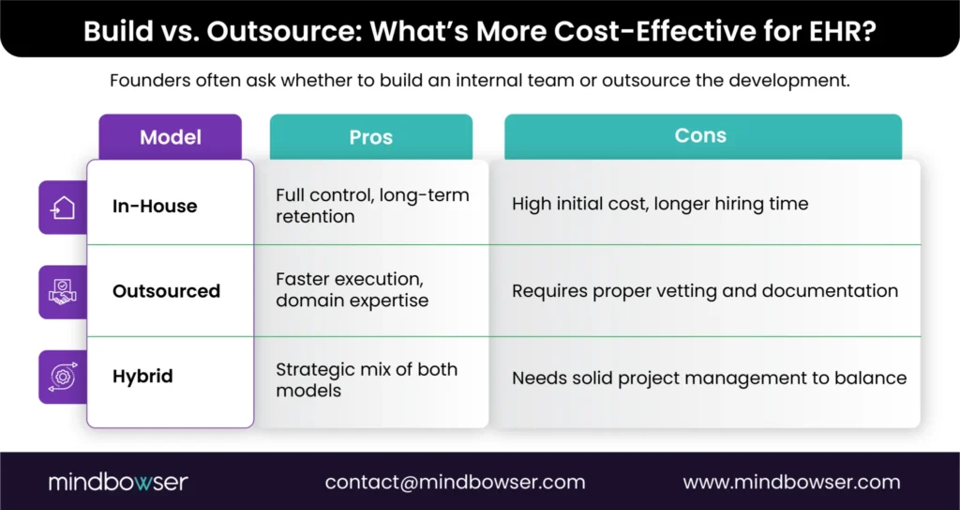
Healthcare leaders should also evaluate:
A custom system may create greater flexibility, but it also requires sustained engineering and governance. A commercial system may reduce initial development demands, yet introduce customization and dependency costs. Neither option is universally less expensive or less risky.
Established vendors are often easier to assess because buyers can examine existing deployments, implementation partners, service histories, and customer references. Purpose-built systems may have fewer directly comparable references, particularly when designed for distinctive clinical models.
That makes rigorous evaluation more important, not less. Organizations should ask for architecture documentation, evidence of security controls, interoperability testing results, usability assessments, and a realistic support plan. Pilot outcomes should reflect measurable improvements in clinical efficiency, data completeness, or patient experience rather than broad promises of transformation.
A practical evaluation also considers what happens after launch: how bugs are resolved, integrations are monitored, and new clinical requirements are introduced without disrupting patient care.
The question is not whether custom EHRs should replace commercial systems. It is whether the technology chosen can evolve with the organization delivering care.
Digital health leaders who compare both approaches against clinical needs, regulatory obligations, operational capacity, and total ownership costs will be better equipped to choose an EHR strategy that supports innovation without compromising reliability.
That clarity helps teams invest in capabilities clinicians actually need most.


End date of ACO REACH is December 31, 2026, after which the CMS LEAD model will operate beginning from January 1, 2027, setting a benchmark for 10-year periods. The choices of population health …
Posted Oct 27, 2026 Health Technology
Connecting innovation decision makers to authoritative information, institutions, people and insights.

Medigy accurately delivers healthcare and technology information, news and insight from around the world.
Medigy surfaces the world's best crowdsourced health tech offerings with social interactions and peer reviews.
© 2026 Netspective Foundation, Inc. All Rights Reserved.
Built on Oct 28, 2026 at 5:05am