

Managing Editor
@ShahidNShah
@ShahidNShah

Healthcare organizations are generating more data than ever before. Electronic Health Records (EHRs), laboratory information systems, imaging platforms, pharmacy systems, claims databases, wearable devices, patient-generated health data, and Social Determinants of Health (SDOH) all contribute valuable insights. Yet these data sources often remain fragmented across multiple systems, limiting their usefulness for care delivery, population health, research, and artificial intelligence.
Fast Healthcare Interoperability Resources (FHIR®) has become the global standard for exchanging healthcare information. However, implementing a FHIR server alone does not solve the broader challenge of creating a unified, analytics-ready healthcare data ecosystem.
Modern healthcare organizations require platforms capable of:
As healthcare increasingly adopts AI-driven decision support, predictive analytics, and conversational interfaces, the quality and structure of underlying data have become just as important as interoperability itself.
This shift has transformed the market. Organizations are no longer evaluating standalone FHIR servers—they are evaluating comprehensive FHIR-native healthcare data platforms that combine interoperability, data management, analytics, and AI readiness within a single architecture.
A FHIR data platform extends beyond the capabilities of a traditional FHIR server.
While a FHIR server primarily stores and exposes standardized healthcare resources through APIs, a healthcare data platform provides the infrastructure required to ingest, transform, govern, analyze, and operationalize healthcare data across an organization.
Typical capabilities include:
This distinction is becoming increasingly important as healthcare organizations invest in clinical AI, digital quality measurement, value-based care, and real-world evidence initiatives.
| Platform | Best For | Analytics | AI Readiness | Terminology Services | Longitudinal Records |
| Kodjin Data Platform | Enterprise interoperability, analytics, and AI | ★★★★★ | ★★★★★ | Comprehensive | Native |
| Smile Digital Health | Enterprise interoperability | ★★★★☆ | ★★★☆☆ | Comprehensive | Native |
| Firely Server | FHIR infrastructure and application development | ★★☆☆☆ | ★★☆☆☆ | Strong | Limited |
Each platform has strengths depending on organizational priorities. Some focus primarily on standards-based interoperability, while others provide broader capabilities for analytics and AI.
Smile Digital Health has established itself as one of the most recognized vendors in the healthcare interoperability market. Its flagship product, Smile CDR, is widely deployed by healthcare providers, health information exchanges (HIEs), governments, and large healthcare networks.
The platform is built around a comprehensive FHIR repository while supporting legacy healthcare messaging standards, making it well suited for organizations modernizing complex interoperability environments.
Smile Digital Health provides strong capabilities in:
Its architecture supports healthcare organizations transitioning from legacy integration engines toward modern FHIR-based ecosystems.
Smile Digital Health primarily focuses on interoperability infrastructure.
Organizations requiring advanced analytics, AI-ready semantic layers, patient pathway analysis, or embedded population health analytics typically integrate Smile CDR with external data warehouses, business intelligence platforms, or AI environments.
Firely is one of the most respected names within the global FHIR community.
Its products—including Firely Server, Firely Terminal, and Firely .NET SDK—are widely used by software vendors, digital health startups, and healthcare application developers building FHIR-native solutions.
Firely’s focus is standards implementation excellence.
Firely offers:
Firely is particularly attractive for organizations developing their own healthcare applications rather than deploying enterprise analytics platforms.
Firely Server is primarily a FHIR server—not a complete healthcare data platform.
Organizations typically build or integrate additional solutions for:
Among the platforms evaluated, Kodjin Data Platform stands out because it combines interoperability, semantic data management, analytics, and AI enablement within a unified FHIR-native architecture.
Rather than treating interoperability as an isolated function, Kodjin is designed to support the entire healthcare data lifecycle—from data ingestion and standardization to advanced analytics and AI-powered decision support.
Kodjin is built around the FHIR standard rather than adapting legacy database models to support FHIR APIs.
This architecture simplifies integration with modern healthcare applications while preserving clinical context throughout the data lifecycle.
The platform supports integration with:
By supporting both modern FHIR APIs and legacy interoperability standards such as HL7 v2 and CDA, Kodjin enables organizations to modernize without replacing existing clinical systems.
Kodjin extends beyond interoperability by providing:
This reduces the complexity of preparing healthcare data for operational reporting, quality measurement, research, and AI applications.
One of Kodjin’s key differentiators is its integrated analytics capability.
Instead of requiring organizations to export standardized data into separate analytical environments, Kodjin provides a foundation for advanced healthcare analytics directly on top of normalized FHIR data.
Common use cases include:
| Healthcare Use Case | Business Value |
| Population Health Management | Identify high-risk populations and monitor outcomes. |
| Care Pathway Analysis | Visualize patient journeys and identify unwarranted variation in care. |
| Quality Measure Management | Monitor HEDIS, CMS, NCQA, and other clinical quality indicators. |
| Care Gap Detection | Identify missed screenings, follow-up visits, or preventive interventions. |
| Chronic Disease Management | Track treatment adherence and long-term outcomes. |
| Clinical Trial Recruitment | Match eligible patients using structured clinical data. |
| Prior Authorization Analytics | Improve approval rates and reduce administrative delays. |
| Revenue Cycle & Denial Analytics | Analyze denial patterns and optimize reimbursement. |
Because these capabilities operate on standardized clinical data, organizations can reduce manual data preparation and accelerate insight generation.
Artificial intelligence has become one of the primary drivers of healthcare data modernization.
However, successful AI initiatives depend on consistent, high-quality data.
Kodjin addresses this challenge by creating standardized, semantically normalized healthcare datasets suitable for:
Rather than connecting AI directly to fragmented clinical databases, organizations can leverage governed FHIR data with consistent terminology and traceable data lineage.
This architecture improves explainability, reproducibility, and trust in AI-generated insights.
Healthcare organizations vary significantly in their technical and regulatory requirements.
Kodjin supports deployment in:
This flexibility makes the platform suitable for hospitals, integrated delivery networks, payer organizations, government health agencies, health information exchanges, and digital health vendors operating under different compliance and infrastructure constraints.
Kodjin is particularly well suited for organizations seeking to combine interoperability with advanced analytics and AI capabilities rather than implementing these functions through multiple disconnected technologies.
Typical adopters include:
For organizations looking beyond simple standards compliance, Kodjin provides a unified foundation capable of supporting both today’s interoperability requirements and tomorrow’s AI-driven healthcare initiatives.
| Capability | Kodjin | Smile Digital Health | Firely Server |
| FHIR Native | ✅ | ✅ | ✅ |
| HL7 v2 Support | ✅ | ✅ | Limited |
| CDA Support | ✅ | ✅ | Limited |
| REST APIs | ✅ | ✅ | ✅ |
| SMART on FHIR | ✅ | ✅ | ✅ |
| Feature | Kodjin | Smile | Firely |
| Multi-EHR Integration | ✅ | ✅ | Partial |
| Claims Integration | ✅ | Partial | No |
| Imaging Integration | ✅ | Partial | No |
| Laboratory Integration | ✅ | ✅ | Partial |
| Wearables | ✅ | Partial | No |
| SDOH Integration | ✅ | Partial | No |
| Capability | Kodjin | Smile | Firely |
| SNOMED CT | ✅ | ✅ | ✅ |
| LOINC | ✅ | ✅ | ✅ |
| ICD-10 | ✅ | ✅ | ✅ |
| RxNorm | ✅ | ✅ | ✅ |
| Custom Terminologies | ✅ | ✅ | ✅ |
| Semantic Mapping | ✅ | Partial | Limited |
One of Kodjin’s differentiators is its emphasis on semantic interoperability, helping organizations normalize data from multiple source systems into a consistent analytical model rather than simply exchanging standardized resources.
| Capability | Kodjin | Smile | Firely |
| Healthcare Dashboards | ✅ | Partial | No |
| Population Health | ✅ | External | No |
| Care Pathway Analysis | ✅ | No | No |
| Care Gap Detection | ✅ | No | No |
| Quality Measure Analytics | ✅ | External | No |
| Conversational Analytics | ✅ | No | No |
| AI-ready Semantic Layer | ✅ | Partial | No |
This comparison highlights an important distinction in today’s market. While most platforms provide strong interoperability foundations, relatively few extend into healthcare-specific analytics and AI enablement without additional products or custom development.
Recommended: Kodjin Data Platform
Hospitals increasingly require more than interoperability. They need analytics for operational performance, quality reporting, care coordination, AI initiatives, and value-based care. Kodjin’s combination of interoperability and analytics makes it well suited for these organizations.
Recommended: Kodjin Data Platform
Payers must combine clinical, claims, pharmacy, and quality data to support:
These use cases benefit from a platform that integrates data normalization with analytical capabilities.
Recommended: Smile Digital Health or Kodjin Data Platform
Organizations primarily focused on nationwide interoperability infrastructure may prioritize Smile Digital Health’s established experience in HIE deployments.
Where national programs also require advanced analytics, population health insights, or AI-ready data foundations, Kodjin offers additional capabilities beyond interoperability.
As the FHIR market has matured, the choice is no longer about standards compliance alone, but about the outcomes organizations want to achieve. Healthcare providers increasingly need platforms that support interoperability alongside analytics, AI, quality improvement, population health, and longitudinal patient journey analysis.
Kodjin Data Platform addresses these needs with a unified architecture that combines FHIR-native interoperability, semantic normalization, integrated analytics, and AI-ready data preparation, enabling organizations to manage the entire healthcare data lifecycle—from data ingestion to actionable insights.

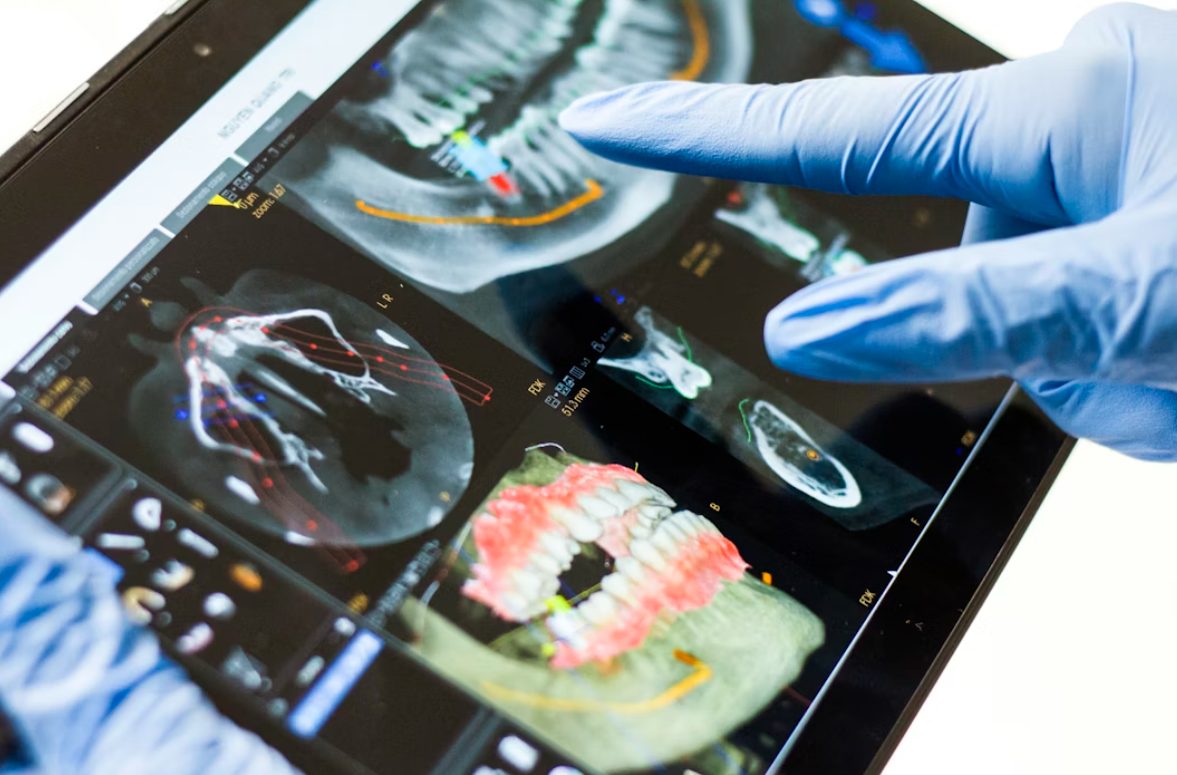
Artificial intelligence is increasingly moving from experimental research into everyday healthcare, and dentistry is becoming one of its practical testing grounds. Dental practices already generate …
Posted Sep 17, 2026 Artificial Intelligence Dental Care
Connecting innovation decision makers to authoritative information, institutions, people and insights.

Medigy accurately delivers healthcare and technology information, news and insight from around the world.
Medigy surfaces the world's best crowdsourced health tech offerings with social interactions and peer reviews.
© 2026 Netspective Foundation, Inc. All Rights Reserved.
Built on Oct 10, 2026 at 6:05pm