

Managing Editor
@ShahidNShah
@ShahidNShah
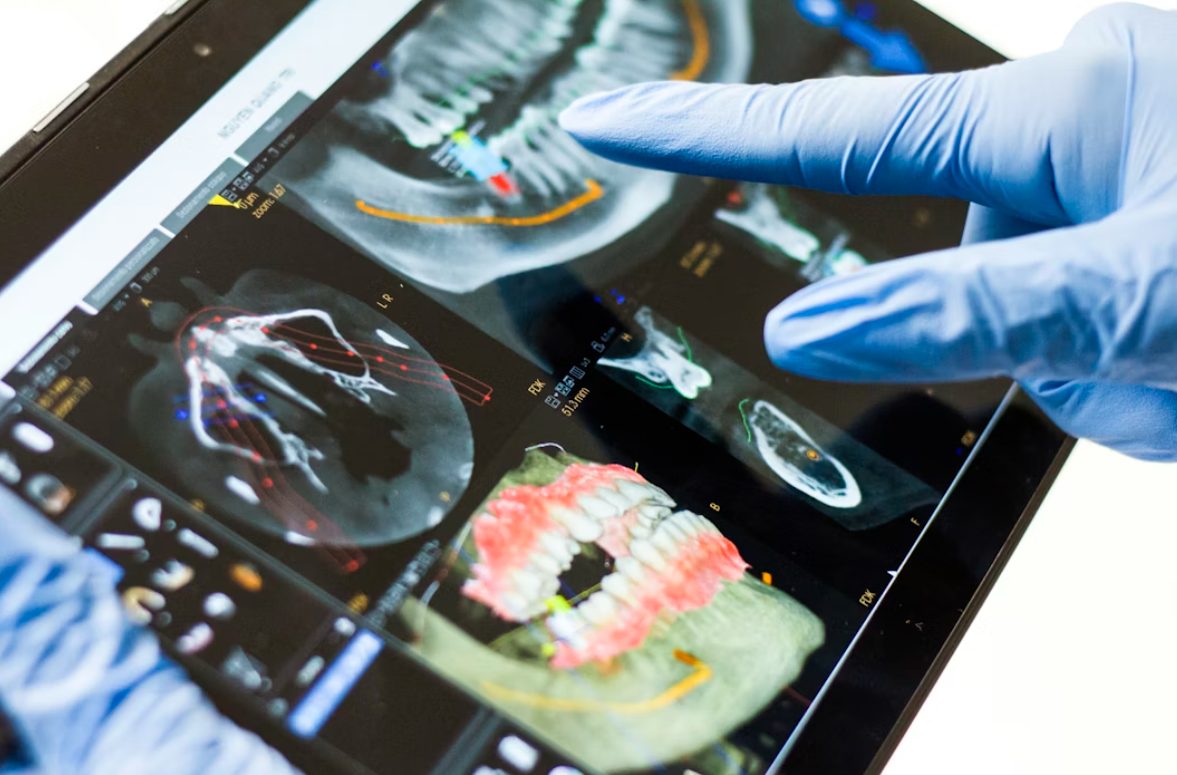
Artificial intelligence is increasingly moving from experimental research into everyday healthcare, and dentistry is becoming one of its practical testing grounds.
Dental practices already generate large amounts of structured visual information. Bitewing and periapical radiographs, panoramic images, intraoral photographs and digital scans all contain patterns that clinicians use to identify disease and monitor changes over time. This makes dentistry particularly well suited to computer vision systems trained to recognize abnormalities within medical images.
The most significant potential benefit may not be diagnosing conditions that dentists could not otherwise identify. Instead, AI could help clinicians identify subtle changes earlier, make radiographic interpretation more consistent and draw attention to areas that warrant closer examination.
That distinction matters. In preventive dentistry, detecting a developing problem before it becomes clinically significant can change the treatment options available to the patient.
Dental radiographs routinely provide information that cannot be obtained from visual examination alone. Interproximal caries, changes in alveolar bone levels, periapical abnormalities and other conditions may become visible radiographically before they produce obvious symptoms.
AI-assisted imaging systems analyze these images using algorithms trained on large collections of previously interpreted radiographs. Rather than viewing an image in the same way a clinician does, the software identifies statistical patterns associated with particular findings and highlights areas that meet its detection criteria.
One potential application is the detection of dental caries.
Early interproximal lesions can be subtle, particularly when changes in mineral density are limited. AI systems may flag suspicious regions for further evaluation, effectively providing the clinician with an additional screening layer.
Periodontal assessment presents another potential application. Algorithms can analyze radiographs for changes in alveolar bone height and help quantify bone loss around teeth. When combined with periodontal probing, clinical examination and previous records, these measurements could contribute to monitoring disease progression over time.
Similar approaches are being investigated for periapical lesions, impacted teeth, restorations and other findings visible on dental imaging.
The value of these systems, however, depends heavily on how they are used.
“AI can help draw attention to areas that deserve a closer look, but it doesn’t have the complete clinical picture,” says Dr. Jae Cho of Uptown Park Dental in New Westminster. “What we see on an X-ray still needs to be considered alongside the patient’s symptoms, clinical examination, dental history and previous imaging before deciding whether treatment is actually needed.”
That relationship between automated detection and clinical interpretation may ultimately determine how useful AI becomes in routine dentistry.
One of the challenges surrounding medical AI is the tendency to treat detection and diagnosis as interchangeable concepts.
They are not.
An algorithm may identify a radiographic pattern associated with caries, for example, but determining whether that finding requires monitoring, preventive intervention or restorative treatment involves additional information. The patient’s caries risk, oral hygiene, diet, age, previous disease activity and clinical appearance of the tooth can all influence the decision.
The same problem applies to periodontal disease. Radiographic bone loss provides valuable information about previous destruction of supporting tissues, but periodontal diagnosis also relies on clinical measurements, inflammation, attachment loss and other findings.
AI therefore functions most naturally as decision-support technology rather than an autonomous diagnostic system.
This may still represent a meaningful change in dental practice. Human interpretation is inherently variable, and subtle findings can be viewed differently by different clinicians. A system that consistently examines every image using the same detection criteria could provide a useful second layer of review.
The objective is not necessarily to outperform the dentist. It may instead be to reduce the likelihood that a potentially important area receives insufficient attention.
Perhaps the more interesting future application of dental AI involves comparing patients with themselves rather than comparing individual images with a population-wide model.
Dentistry produces longitudinal records exceptionally well. A patient who attends regular examinations may accumulate radiographs, periodontal measurements, intraoral images and digital scans spanning many years.
Traditionally, clinicians compare these records manually. AI could make those comparisons more systematic.
Instead of simply identifying whether bone loss is visible on today’s radiograph, a system could potentially quantify how the level has changed compared with images taken several years earlier. Digital scans could be compared for changes in tooth position, gingival contours or wear. Areas of demineralization could potentially be tracked to determine whether they appear stable or progressive.
This shifts the role of AI from detecting isolated abnormalities toward identifying trends.
That distinction is particularly relevant to prevention. A single finding may have limited significance, while a measurable change across several examinations can provide considerably more information about disease activity.
The development of these systems will depend on accurate image registration, standardized data and reliable integration between imaging platforms and electronic dental records. Privacy and security considerations also become increasingly important as larger quantities of patient information are processed computationally.
Greater sensitivity is not automatically better clinical care.
A system designed to highlight every possible abnormality may produce false positives, potentially encouraging unnecessary investigation or treatment. This is especially important in dentistry, where early radiographic changes can be ambiguous and treatment thresholds differ depending on the patient’s individual risk.
Training data also matters.
AI systems learn from the datasets used to develop them. Differences in imaging equipment, image quality, patient populations and diagnostic labeling can affect how well a model performs outside the environment in which it was trained.
Research evaluating dental AI therefore needs to examine more than headline accuracy figures. Sensitivity, specificity, external validation and performance across different clinical settings all influence whether an algorithm provides useful information in practice.
The clinician remains responsible for determining whether an AI-generated finding makes sense within the broader clinical picture.
The larger opportunity for artificial intelligence in dentistry may ultimately be less dramatic than autonomous diagnosis, but more useful.
Many dental conditions become more complicated and expensive to manage as they progress. Detecting changes earlier can create opportunities for monitoring, preventive strategies or less extensive treatment.
AI-assisted imaging could support that process by making subtle changes easier to identify and longitudinal records easier to compare. Combined with digital radiography, intraoral scanning and increasingly integrated patient records, these systems may give clinicians a more detailed picture of how oral health changes over time.
There are still substantial questions surrounding accuracy, validation, workflow integration, patient privacy and the appropriate role of automated recommendations. AI systems also cannot reproduce the contextual information gathered during a clinical examination or conversation with a patient.
For that reason, the most realistic future is unlikely to involve algorithms replacing dental professionals.
Instead, AI may increasingly operate quietly alongside them, reviewing images, measuring changes and highlighting patterns that deserve attention. Its greatest contribution may not be making the final diagnosis, but helping clinicians recognize potential problems earlier, when there may be more opportunities to prevent them from becoming larger ones.


Home care for aging parents is changing. Families no longer have to choose between hands-on human support and the peace of mind that technology can offer. Instead, the most effective home care today …
Posted Sep 17, 2026 Elderly
Connecting innovation decision makers to authoritative information, institutions, people and insights.

Medigy accurately delivers healthcare and technology information, news and insight from around the world.
Medigy surfaces the world's best crowdsourced health tech offerings with social interactions and peer reviews.
© 2026 Netspective Foundation, Inc. All Rights Reserved.
Built on Oct 10, 2026 at 6:05pm