

Managing Editor
@ShahidNShah
@ShahidNShah
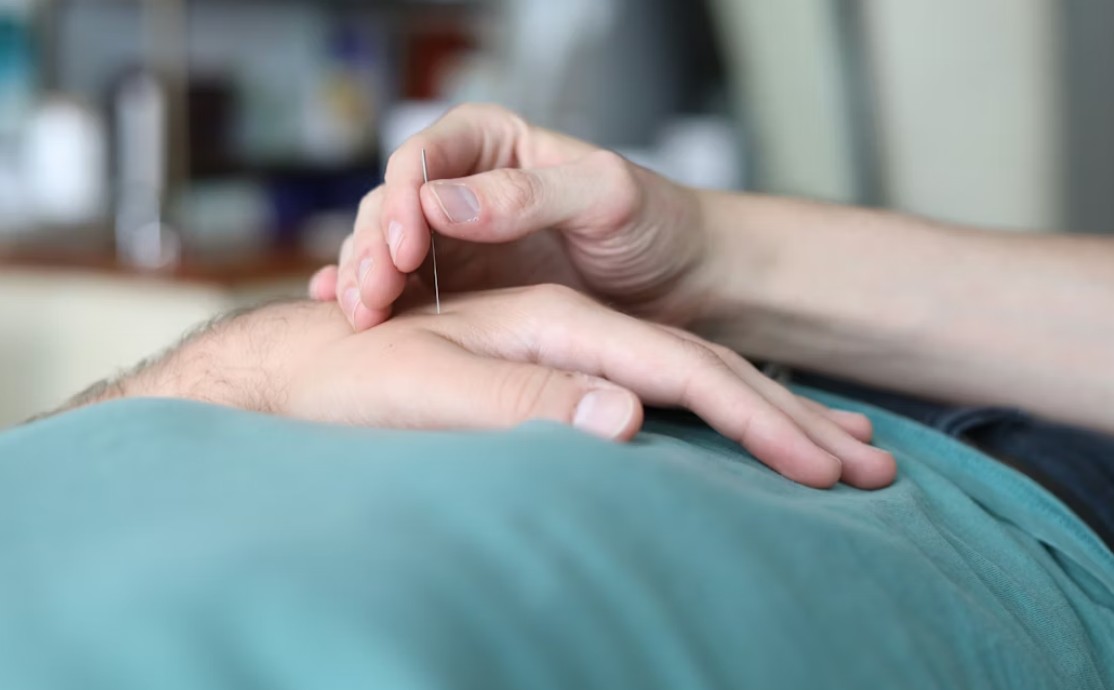
Chronic pain is still one of the hardest problems primary care has to manage. It drives a large share of office visits, complicates surgical recovery, and sits behind a meaningful portion of long-term disability claims.
More than a decade after the opioid crisis forced clinicians and payers to look harder at non-pharmacologic options, most pain pathways are still being rebuilt. Acupuncture has become part of that rebuild.
It now appears inside integrative pain programs, hospital outpatient services, and primary care referral networks across a growing number of U.S. systems. The clinical case is one thing. The operational reality is what is changing demand for trained acupuncturists who can work inside a care team.
A few forces are pushing in the same direction.
Chronic pain is rarely one thing. Musculoskeletal, neuropathic, and centrally mediated components often coexist in the same patient, and a single modality tends to fall short.
Payers and health systems are under steady pressure to improve function and quality-of-life scores while keeping patients off long-term medication where possible.
Guidance has caught up. The American College of Physicians’ 2017 low back pain guideline named acupuncture as a first-line non-pharmacologic option, and that kind of inclusion carries weight when service lines are designed.
Patients have shifted too. People with persistent low back pain, headache, knee osteoarthritis, or symptoms tied to cancer treatment are asking for coordinated care rather than another prescription.
Inside an integrative model, acupuncture is adjunctive. Patients receiving it are usually also seeing physical therapy, behavioral health, medication management, or interventional pain services. The acupuncturist is one provider on a wider team.
The evidence is uneven across conditions but reasonable for several common presentations: chronic low back pain, neck pain, knee osteoarthritis, and chronic tension or migraine headache.
The realistic framing is functional improvement and a drop in pain interference. Dramatic symptom elimination is not the promise.
Patient selection matters as much as technique. Practitioners working inside a care team are expected to recognize contraindications, flag presentations that fall outside their scope, and route patients back when medical evaluation is the right next step.
Designing a clinical service is harder than describing one. An integrated acupuncture service needs the same infrastructure any embedded service does:
None of this is unusual. It mirrors what any embedded service is expected to provide.
It is also what separates a referral that lands cleanly from one that frustrates the referring clinician.
A 52-year-old patient with persistent low back pain has worked through a course of physical therapy and short-term pharmacologic management without a full return to function.
Primary care refers them through an integrative pathway. The plan: a defined course of acupuncture alongside continued PT, with a specific functional goal such as returning to a recreational activity.
Progress is reviewed at set intervals using shared outcome measures, and the team adjusts together based on response.
As more systems formalize these pathways, demand grows for acupuncturists who can step into a clinical team and operate without friction.
Recruiters call it clinic-ready. It covers more than technical proficiency. It means professionalism. Safety awareness. Clarity about scope. Structured documentation. Patient education. The ability to communicate concisely with referring clinicians.
That profile is harder to find than a generalist practitioner, and it is changing how programs are evaluated by hiring managers and prospective students alike.
The training pipeline matters more as demand rises, and many prospective practitioners begin by comparing accredited acupuncture schools in the U.S. before choosing the program that best prepares them for collaborative, clinic-ready practice.
Hiring managers are watching the same thing from the other side. They favor curricula that emphasize clinical reasoning, safety, interprofessional communication, and supervised exposure to integrated settings.
Over time, that scrutiny tends to lift the floor on entry-level competence.
Integrative pain management is moving from concept into operational practice. Referral pathways, shared documentation, outcome tracking, and team-based decisions are becoming routine inside the services that have done the work to build them.
Acupuncture is one of several offerings being absorbed into that model. Demand for practitioners who can work safely and collaboratively alongside other clinicians will keep growing.
The question for health systems has shifted. It is less about whether to integrate non-pharmacologic options and more about how to operationalize them with the same rigor expected of any other clinical service.


Introduction Healthcare apps are no longer limited to appointment booking or storing patient records. Today, they support telehealth consultations, remote patient monitoring, medical imaging, …
Posted May 18, 2026 Health Technology Mobile Health
Connecting innovation decision makers to authoritative information, institutions, people and insights.

Medigy accurately delivers healthcare and technology information, news and insight from around the world.
Medigy surfaces the world's best crowdsourced health tech offerings with social interactions and peer reviews.
© 2026 Netspective Foundation, Inc. All Rights Reserved.
Built on Oct 27, 2026 at 5:05am