

Managing Editor
@ShahidNShah
@ShahidNShah
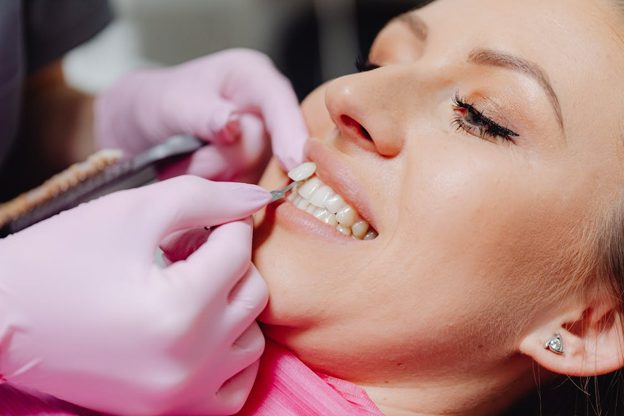
Most people don’t think about their teeth until something hurts. By then, the damage has often progressed well beyond what a simple cleaning can address, and that gap between early signs and late-stage treatment is exactly where restorative dentistry makes its greatest difference.
Restorative dentistry focuses on repairing damaged teeth and replacing missing teeth to restore proper function and stop further deterioration before it spreads. When treated early, patients regain normal chewing ability, clearer speech, and everyday comfort that untreated decay or tooth loss quietly erodes over time.
The long-term value, however, goes further than restoring what was lost. Without timely intervention, surrounding teeth shift into empty spaces, existing tooth decay deepens, and gum disease becomes harder to manage. Each of these complications compounds the next, making future treatment more involved and more expensive. Restoration, in this sense, is fundamentally about preservation, maintaining the structural integrity of the mouth so that minor problems don’t quietly grow into ones that are far harder to reverse.
Restorative care generally falls into two categories: treatments that preserve a damaged tooth still present in the mouth, and treatments that replace a tooth that has already been lost. Understanding which category applies to a given situation helps clarify what a dentist is trying to accomplish and why. The field of modern restorative dentistry has expanded considerably, and today’s treatment planning often blends tooth-preserving care with replacement options depending on long-term function and the degree of damage involved.
When a tooth is damaged but still structurally present, the goal of restorative care is to preserve as much of the natural tooth as possible. Three treatments form the foundation of this category.
Dental fillings address cavities by removing decayed material and sealing the affected area before bacteria can penetrate deeper layers. Dental crowns take over when decay or fracture has compromised enough of the tooth that a filling alone cannot provide adequate support, capping the remaining structure to restore its shape and strength.
Root canal therapy is reserved for cases where infection has reached the pulp, the innermost layer containing nerves and blood vessels. Rather than extracting the tooth, the procedure clears the infection and seals the canal, allowing the natural tooth to remain functional. Each of these restorative dental procedures targets a specific degree of damage, with treatment choice guided by how much healthy tooth structure remains.

Once a tooth is lost, the treatment priority shifts from repair to replacement, since an empty space creates its own chain of structural problems over time.
Dental bridges span the gap left by a missing tooth by anchoring to the teeth on either side, restoring chewing surface and preventing neighboring teeth from drifting. Dentures offer a removable solution for patients who have lost multiple teeth or a full arch, while dental implants provide a fixed alternative that integrates with the jawbone directly. Treatment selection depends on bone density, the number of teeth involved, and long-term support needs.
It is worth noting that cosmetic dentistry may address how teeth look, but restorative care is always primarily functional and health-driven, focused on what the mouth needs to work correctly rather than simply what it looks like.
Timing is one of the most consequential factors in restorative dentistry, not just for immediate comfort, but for the trajectory of oral health over years and decades. Addressing a problem early almost always results in a narrower, less complex treatment path than addressing the same problem after it has progressed.
Some oral health changes are easy to dismiss, but certain symptoms consistently indicate that the underlying problem is already progressing. Waiting tends to allow straightforward issues to develop into ones that require significantly more involved care.
Common signs that warrant prompt attention include:
None of these symptoms resolve on their own. Each reflects a structural or bacterial process that continues without intervention.
When treatment is postponed, the consequences often extend well beyond the original problem. Tooth decay that reaches the pulp leads to infection, which can affect surrounding bone and soft tissue if left unaddressed.
Missing teeth carry their own long-term risks. The jawbone beneath an empty socket begins to resorb without the stimulation a tooth root provides, and bone loss in that area can affect neighboring teeth and alter bite alignment over time.
Shifting teeth, gum disease, and weakened adjacent structures tend to develop gradually, which makes them easy to overlook until they become significantly harder to treat. The earlier a problem is caught, the narrower the treatment required to resolve it.
The effects of restoring oral function extend well beyond the mouth itself. When teeth are missing or damaged, chewing efficiency drops, and that has a direct impact on nutrition. People with compromised dentition often avoid harder, fibrous foods, which tends to narrow dietary variety over time and affects overall health in ways that are gradual but meaningful.
There is also a broader relationship between oral health and systemic diseases that deserves careful attention. Peer-reviewed research1 has explored associations between chronic oral inflammation, untreated gum disease, and conditions affecting the cardiovascular system, metabolic function, and other organ systems.
These associations do not establish simple cause and effect, and the relationship is complex, with multiple factors contributing. What can be said more directly is that untreated gum disease creates persistent sources of bacterial activity and inflammation in the body. The American Dental Association has long emphasized that the mouth functions as part of the broader biological system, not in isolation from it. Leaving active infection or structural instability unaddressed means the body continues managing an ongoing problem rather than operating without it.
Restoring damaged or missing teeth removes those sources of instability. When oral function is repaired and inflammation is reduced, the conditions for better general health improve, even if the precise mechanisms remain an active area of research.
How long a restoration holds depends significantly on what happens after the appointment. Dental crowns, dental implants, and dentures all require consistent home care to perform as intended, and even well-placed restorations can fail prematurely without it.
Daily brushing and flossing remain the foundation. Plaque buildup around the margins of crowns or beneath the gumline near implants can compromise surrounding tissue over time, affecting both oral health and the stability of the restoration itself. Regular checkups allow a clinician to catch early signs of wear, shifting, or irritation before they become structural problems.
Certain lifestyle factors also affect durability in ways patients don’t always anticipate. Grinding places excessive force on restorations, particularly crowns and bridges, and often goes unnoticed until damage appears. Smoking impairs healing and increases the risk of implant failure and gum disease. A diet high in acidic or hard foods adds to cumulative wear across all restoration types.
When a restoration feels loose, uncomfortable, or noticeably different, following up promptly matters. Waiting typically allows the underlying issue to develop further. On the clinical side, preventive dental practices and careful treatment planning both contribute to how well restorations hold over time. In some cases, CAD/CAM technology improves the precision of fit for crowns and other fixed restorations, reducing the gaps where wear and bacterial infiltration tend to begin.
Long-term oral health outcomes depend on three converging factors: timely intervention, the right restorative approach for the degree of damage present, and consistent maintenance once treatment is complete. None of these elements works well in isolation.
As discussed throughout this article, bone loss, bite alignment changes, and spreading decay all develop gradually, and each one narrows the range of viable treatment options that follow. When restorative dentistry addresses problems early, it limits those downstream effects before they compound.
The goal, across every stage of care, is preserving function, comfort, and structural stability. Oral health is not restored in a single appointment and then finished. It is sustained through the decisions made before, during, and long after treatment.
Natarajan, P., Madanian, S., & Marshall, S. (2025). Investigating the link between oral health conditions and systemic diseases: A cross-sectional analysis. Scientific Reports, 15, Article 10476. https://pmc.ncbi.nlm.nih.gov/articles/PMC11947117/


Medical records tell part of the story. When injuries are severe, disputed, or medically complex, those records rarely explain the full picture to a judge, a jury, or an insurance company evaluating a …
Posted May 15, 2026 #HealthLaw
Connecting innovation decision makers to authoritative information, institutions, people and insights.

Medigy accurately delivers healthcare and technology information, news and insight from around the world.
Medigy surfaces the world's best crowdsourced health tech offerings with social interactions and peer reviews.
© 2026 Netspective Foundation, Inc. All Rights Reserved.
Built on Oct 10, 2026 at 6:05pm