

Managing Editor
@ShahidNShah
@ShahidNShah
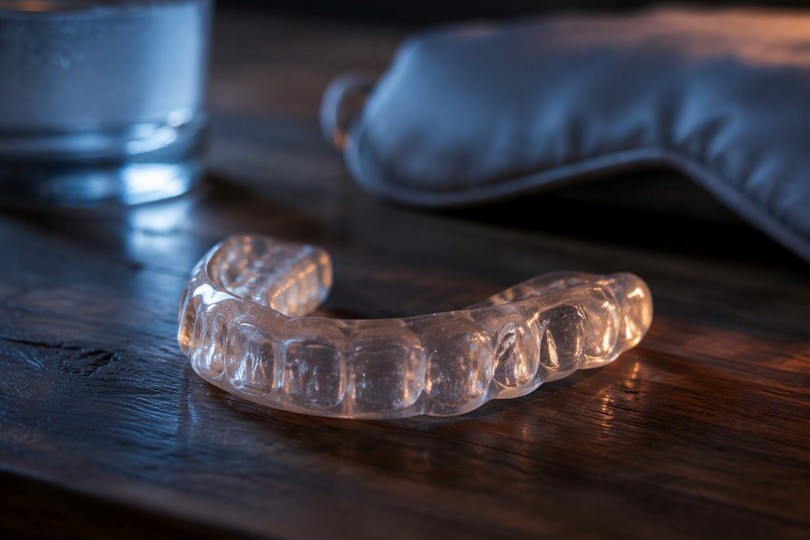
Morning jaw pain typically occurs due to muscles of mastication that remain tight as you sleep; nighttime clenching/grinding may be a common cause for this condition. In addition, if morning jaw pain is accompanied by a temporal headache or your teeth are becoming increasingly sensitive for unknown reasons, it may indicate that you are experiencing night time clenching/grinding.
While the presence of these symptoms could be indicative of a dental problem (such as a crack in a tooth), they can also indicate an inflammation of a temporomandibular joint. So can sinus pressure. So can a handful of less common medical conditions.
Two terms get confused constantly. TMJ names the temporomandibular joint itself. TMD refers to disorders of that joint and the muscles and tissues around it.
Sleep bruxism is repetitive jaw-muscle activity during sleep. Sometimes that means grinding the teeth against each other. Just as often it means clenching them hard or holding the jaw braced for long stretches.
Plenty of people do this without ever making a sound a partner could hear. Silence proves nothing.
Sustained contraction leaves the masseter along the angle of the jaw tender by morning. The temporalis over the temple grows tender too. Grinding adds a second problem. Sliding tooth-on-tooth contact loads enamel and restorations in a way ordinary chewing never does.
The temporalis fans out across the side of your head, well above the ear. Overnight activity in that one muscle can register as temple tenderness. It can also feel like a dull band of pressure rather than jaw soreness at all.
A familiar low-grade pressure that eases within an hour behaves differently from a sudden hard headache. Facial weakness or confusion needs urgent medical care, not a bruxism explanation. Headache with new neurological symptoms such as weakness, speech difficulty, vision loss, or confusion also requires urgent evaluation.
Headaches don’t prove clenching. They overlap with it.
Most people register the pattern long before they work out the cause. Watch for these:
No single line on that list confirms sleep bruxism. A cluster that repeats over several weeks carries far more weight than one rough morning after a hard day.
A dentist often spots the mechanical signs before you feel much of anything. Flattened biting surfaces and thinned enamel appear during an examination. So do chipped restorations and teeth that have loosened slightly.
Scalloped borders on the tongue and a ridge along the inside of the cheek suggest sustained pressure. Pressing on the chewing muscles can turn up tenderness you’d written off as normal.
Wear alone is not a verdict. Enamel changes can reflect a habit you dropped a decade ago. They can also reflect an acidic diet or the way your teeth happen to meet. A dentist reads wear against your symptom history rather than in isolation.
The dominant finding determines what happens next. Comprehensive Dental Care, a Henderson practice that also treats patients across the wider Las Vegas area, answers the question patients ask most. Can TMJ be reversed? It points back to the cause. Pain driven by temporary muscle overload often settles with conservative care. Structural joint disease or an untreated sleep-related factor needs broader clinical support. Worn or cracked teeth and visible bite strain point toward a dental or muscular contributor. Muscle tenderness and a restricted opening feed the same judgment. Its TMJ guidance is practice material rather than independent research, so weigh it accordingly.
Recurrence is the signal.
Assessment becomes reasonable once the pain outlasts several days or keeps returning. The same goes for soreness that interferes with eating or limits how far you can open. A pattern that is intensifying rather than settling deserves attention sooner than one that’s fading on its own.
Use the table below to place what you’re experiencing.
| Pattern | What It May Suggest | Appropriate Response
|
|---|---|---|
| Mild soreness after an unusually stressful night | Temporary muscle tension or isolated clenching | Monitor the pattern and reduce avoidable jaw strain |
| Pain on several mornings each week | Recurring clenching or another ongoing cause such as muscular TMD | Arrange a dental assessment |
| Tooth sensitivity alongside new wear or cracks | Repeated mechanical stress or a separate dental problem | Seek a prompt dental examination |
| Morning symptoms with loud snoring or marked daytime sleepiness | A sleep-related breathing concern may coexist | Discuss sleep screening with a qualified clinician |
| Jaw locking or a sudden drop in how far you can open | Disc, joint or other mechanical dysfunction | Obtain timely clinical assessment |
| Jaw discomfort with chest pressure or breathlessness | Possible medical emergency | Seek emergency care |
An examination usually opens with symptom timing and medication history. It then moves on to tooth wear and bite contacts. The clinician measures range of motion and presses the muscles for tenderness. The clinician also notes any joint noise. Imaging stays selective. It is ordered when a specific question needs answering rather than as a routine first step.
Time can change some of these conditions without any treatment. In a study of untreated TMJ disc displacement without reduction, 43% became asymptomatic after 2.5 years. That means a displaced joint disc that doesn’t slide back into its usual position. Another 33% reported reduced symptoms.
Read that narrowly. It describes one diagnosed joint condition, not all TMD and certainly not nighttime grinding. It’s no reason to leave a worsening morning pattern unexamined.
A custom night guard puts a barrier between the upper and lower teeth. It separates the biting surfaces and spreads load across a wider area. Some people wake with less muscle strain. The wear pattern that builds up on the appliance also shows a dentist where the forces are landing.
In one long-term study of patients with early-stage TMJ disorders treated with dental splints, 64% were completely relieved of symptoms. Another 22% were moderately relieved over follow-up periods of one to nine years.
One study, one population. Those results describe a defined group with a specific diagnosis. They don’t establish that a nightguard cures bruxism or ends every case of morning soreness. A guard protects teeth and can reduce strain. It doesn’t reliably switch off the muscle activity underneath.
An over-the-counter tray isn’t interchangeable with a professionally fitted appliance either. A poor fit can be uncomfortable enough that you stop wearing it. Uneven contact makes the wear pattern harder to read later. Fit matters.
The short-term measures are modest but real. Choose foods that require less force for a while. Skip gum entirely. During the day, check whether your teeth are touching. The resting position should keep them slightly apart with your lips closed.
Heat suits some people and cold suits others. Follow clinician guidance and your own tolerance instead of a fixed rule.
Stress management may reduce daytime jaw bracing. Calling it a cure oversimplifies things. Awareness training and breathing exercises fit some patterns. Behavioral therapy fits others. Which one helps depends on what sets the bracing off in the first place. Don’t guess at medication doses. If you take other drugs or have contraindications, ask a clinician or pharmacist first. Do this before reaching for pain relief, particularly once the pain has become a daily event.
Neck position and jaw-muscle tension interact. This is especially true for people who spend long stretches at a workstation with their heads pushed forward. A better setup may ease a muscular pain pattern.
It won’t repair a damaged joint or a cracked tooth.
Physical therapy can address movement and muscle tone. Skip the generic resisted-opening drills copied off a video. Exercise must be individualized when movement hurts or the jaw catches. Loading a joint that locks can make the problem worse.
The wider plan follows the same logic. Decay and fracture call for one response. Muscle pain calls for another. Inflammatory arthritis or disc displacement takes a different approach. Whatever the working diagnosis, conservative and reversible options deserve discussion before anyone reshapes teeth or considers surgery.
Sleep bruxism and obstructive sleep apnea appear together often enough that Mayo Clinic lists sleep-related breathing problems among the conditions associated with grinding. Both involve brief awakenings and shifts in autonomic nervous-system activity during sleep. Coexistence still doesn’t prove that one causes the other. Bruxism happens without apnea. Plenty of people with apnea never report jaw pain.
Loud habitual snoring is worth raising with a clinician. Raise witnessed pauses in breathing or gasping during sleep promptly.
Unrefreshing sleep and daytime sleepiness bad enough to affect your driving or your work push the question toward medicine rather than dentistry. A dentist can spot the oral signs and screen for risk. Diagnosing obstructive sleep apnea belongs to a sleep physician or another qualified medical clinician.
A protective bruxism guard and a mandibular advancement device are different appliances built for different jobs. The first shields tooth surfaces. The second repositions the lower jaw to help keep the airway open in selected apnea cases. A clinician prescribes it after diagnosis. If you suspect apnea, don’t assume a generic mouthguard addresses the breathing disorder. It doesn’t.
Pain on opening can come from irritated chewing muscles or from inflammation around the joint itself. Disc dysfunction and dental infection produce it too. So does trauma or restricted movement after a prolonged bout of clenching. Locking or swelling calls for prompt assessment. So do fever or a rapidly shrinking opening range.
Clicking on its own is common and isn’t automatically evidence of disease. Painful clicking is different. So is a click that comes with locking or interferes with chewing.
Aching on both sides often fits a muscular pattern. The paired chewing muscles can tighten together during clenching. It can also accompany inflammatory disease or a widespread pain condition. Location alone can’t determine the cause. Symmetry isn’t proof of stress. It only describes where the pain sits.
Most jaw pain is not an emergency. “Starts with jaw pain” is too broad a phrase to point at any one diagnosis. Dental infection and inflammatory disease can be behind it. So can cardiovascular risk. Age and accompanying symptoms affect which cause matters most.
If jaw pain occurs alongside chest tightness, difficulty breathing, nausea, cold sweats, or upper-body discomfort, seek immediate emergency medical attention. These symptoms can indicate a heart attack. Don’t delay care to see a dentist.
Otherwise, a dentist is the sensible first call for recurring morning soreness, painful chewing, or new cracks in enamel. Breathing symptoms or neurological changes call for medical evaluation instead. So does anything that looks systemic rather than local.
Morning timing narrows the field without closing it. The right response depends on what the examination turns up. This includes any sleep symptom that belongs to a physician rather than a dentist. Start a record tonight. Note which mornings the pain appears and any accompanying symptoms. Then give that record to the clinician best placed to read it.


Revenue cycle management sounds like back-office jargon until the day a practice can’t make payroll because too many claims are still sitting unpaid. It covers the entire financial journey of a …
Posted Aug 26, 2026 Revenue Cycle Management
Connecting innovation decision makers to authoritative information, institutions, people and insights.

Medigy accurately delivers healthcare and technology information, news and insight from around the world.
Medigy surfaces the world's best crowdsourced health tech offerings with social interactions and peer reviews.
© 2026 Netspective Foundation, Inc. All Rights Reserved.
Built on Oct 8, 2026 at 6:09pm