

Managing Editor
@ShahidNShah
@ShahidNShah

The word “rehab” tends to summon a single image: a residential facility, a suitcase, thirty days away from everything. That image describes one level of care among several, and for a large share of people seeking help, it is not the right one.
Outpatient treatment lets a person live at home, keep working, and continue caring for their family while receiving structured clinical care. For the right candidate, it is not a lesser option – it is the appropriate one. Here is what it actually involves.
Outpatient is not a single thing. It spans a range of intensity, and knowing the distinctions makes it much easier to evaluate what a program is offering.
Partial hospitalization (PHP) is the most intensive outpatient level, typically five days a week for several hours each day. It is often used as a step down from inpatient care, or for someone who needs substantial structure but does not require overnight supervision.
Intensive outpatient (IOP) generally runs three to five days per week, three or so hours per session, with evening options common so people can keep working. This is the level most often described as the working person’s treatment program.
Standard outpatient (OP) means weekly or twice-weekly individual therapy, group sessions, and medication management as needed. It usually functions as a step down from IOP or as an entry point for someone whose situation is relatively stable.
Movement between levels is normal and expected. Starting at IOP and stepping down to OP over a few months is a typical arc, and a program that never adjusts intensity is not paying attention.
Treatment starts with an assessment, usually one to two hours. Expect questions about substance use history, mental health history and diagnoses, medical conditions and current medications, family history, trauma, legal issues, living situation, and support system.
This part goes better when you are blunt. Understating use is the most common instinct and the least useful one – it produces a treatment plan built on incorrect information, and it can be a safety issue if withdrawal risk gets underestimated.
The assessment produces a recommended level of care and an initial treatment plan. If the recommendation surprises you, ask why. A good clinician can explain the reasoning.
Some people need medically supervised detox before beginning outpatient treatment. This depends on the substance and the degree of physical dependence.
Alcohol is the clearest case. Physical dependence on alcohol can make unsupervised withdrawal dangerous, with risks including seizures and delirium tremens. Anyone seeking help for alcohol addiction should be medically evaluated before stopping, and should never attempt to detox alone at home after prolonged heavy use. Benzodiazepine withdrawal carries similar risk. Opioid withdrawal is rarely medically dangerous but is severe enough that medical support meaningfully improves the odds of getting through it.
Detox is stabilization, not treatment. It handles the physical piece and takes a few days. The actual work starts afterward.
In an IOP, a typical week includes group therapy several times weekly, individual therapy weekly or biweekly, medication management appointments as needed, family sessions where appropriate, and periodic drug and alcohol screening.
Group is where most of the hours go, and it is the part people dread most going in. It is also the part many people end up valuing most, largely because it is the first room where the thing they have been hiding is simply the ordinary topic of conversation.
Common therapeutic approaches include cognitive behavioral therapy, dialectical behavior therapy, motivational interviewing, relapse prevention planning, and trauma-focused work when relevant. Medication-assisted treatment is available for both alcohol and opioid use disorders and has strong evidence behind it – if a program dismisses MAT on principle, that is worth asking about.
Federal parity law requires most health plans that cover mental health and substance use treatment to do so on terms comparable to medical and surgical coverage. New Jersey has additional state requirements around substance use disorder benefits.
In practice: call the number on your insurance card and ask specifically about behavioral health benefits, in-network facilities, whether prior authorization is required, and what your deductible and copay look like. Most treatment centers will also run a verification of benefits for you before you commit to anything, and there is no reason not to take them up on that.
Work. Evening IOP tracks exist specifically so people do not have to choose. If you do need time off, the Family and Medical Leave Act may apply, and treatment for a health condition is protected information.
Confidentiality. Substance use treatment records receive protection under federal law that is stricter than standard medical privacy rules. Your employer does not get told.
Transportation. Ask about location and parking early. Programs fail on logistics more often than on clinical grounds – a three-times-weekly commitment across an hour of traffic tends not to survive month two.
Family involvement. Most programs include a family component. It helps, and the people around you have usually been carrying more than they have said.
Ask about accreditation, whether co-occurring mental health conditions are treated on site, whether psychiatric providers are on staff, what the group sizes are, what aftercare planning involves, and what happens if you have a setback. That last answer is revealing — programs that discharge people for relapsing are treating a symptom of the condition as a violation of the rules.
New Jersey Behavioral Health Center offers outpatient behavioral health and substance use treatment across multiple levels of care, with integrated support for co-occurring conditions. An assessment costs you an hour and gives you a concrete recommendation rather than a guess.
Outpatient treatment asks something of you that residential care does not: you go home every night, to the same house and the same triggers, and you practice the new thing in the actual environment where you will have to live it. That is harder in the short term. For many people it is also why it holds.
If you or someone you know is in crisis, call or text 988 to reach the Suicide and Crisis Lifeline.

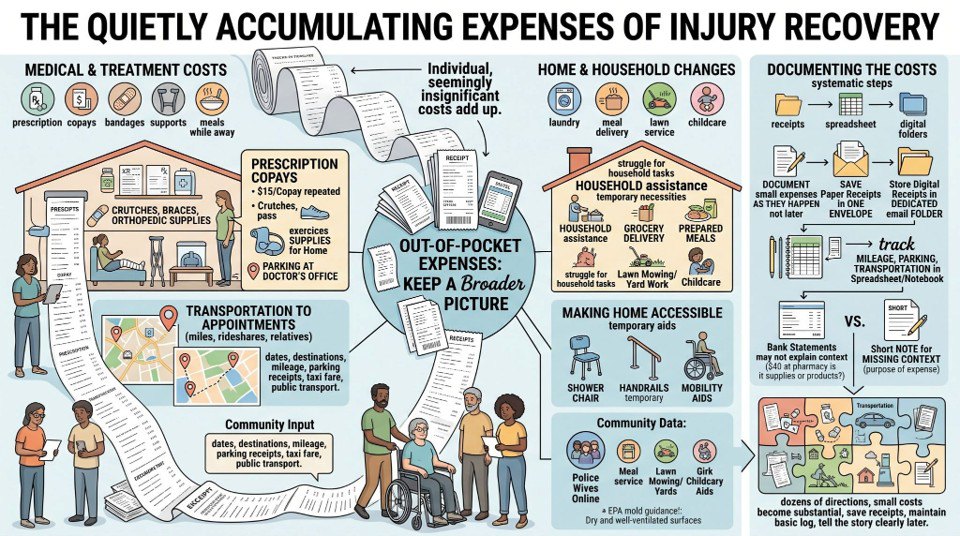
After a serious injury, the largest expenses tend to get the most attention. Hospital bills, surgery, rehabilitation, and lost income can quickly become major financial concerns. But there is another …
Posted Aug 26, 2026 Healthcare Costs
Connecting innovation decision makers to authoritative information, institutions, people and insights.

Medigy accurately delivers healthcare and technology information, news and insight from around the world.
Medigy surfaces the world's best crowdsourced health tech offerings with social interactions and peer reviews.
© 2026 Netspective Foundation, Inc. All Rights Reserved.
Built on Oct 8, 2026 at 6:09pm