

Managing Editor
@ShahidNShah
@ShahidNShah
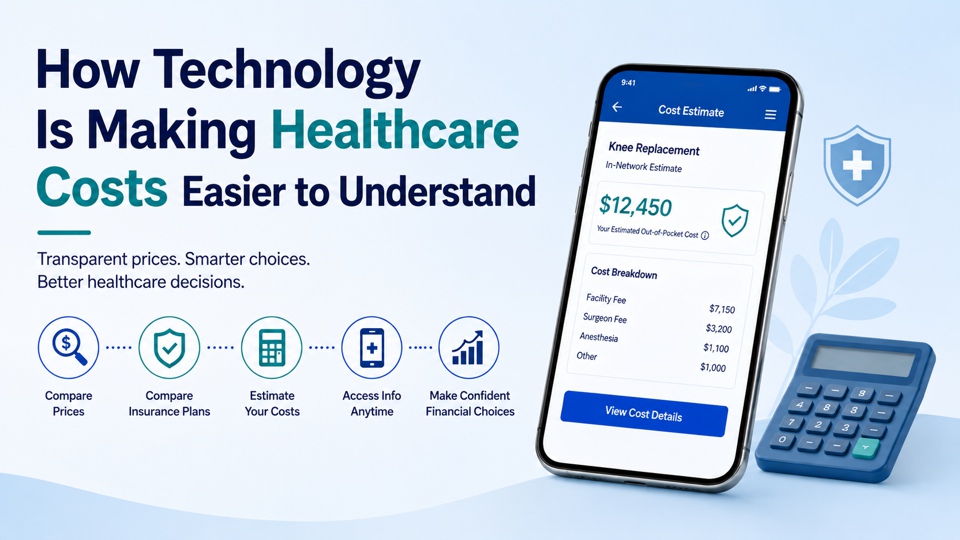
The healthcare industry is widely known for its high costs. It places a major strain on both people looking for treatment and the organizations providing care. However, the swift development of advanced technologies has fundamentally changed the healthcare industry. From wearable technology to telemedicine, technology is opening the door to more accessible and reasonably priced options.
Nowadays, digital tools, artificial intelligence, and data analytics have made healthcare pricing more transparent than before. Such innovations enable customers to understand insurance coverage, calculate medical costs, and make better financial choices about their health. Not only this, but there is more added to healthcare costs. Let’s discuss them in this article.
It’s important to understand why healthcare costs have traditionally been so difficult to estimate. People often face multiple challenges such as:
These challenges can lead to financial stress and make it more difficult for people to budget for medical costs. However, technology has simplified this process through advanced comparison platforms that allow users to Compare Health Insurance plans using tools such as a Plan Cost Calculator. These solutions help customers in selecting the best coverage options by offering detailed insights into premiums, deductibles, copayments, and expected annual spending.
Digital tools enable more efficient information sharing and access for patients, insurers, and healthcare professionals. Healthcare platforms have begun using cost-transparency solutions to provide affordable care to people. Here is how digital tools are changing healthcare costs:
Hospitals and insurers must now disclose their negotiated prices in accordance with federal transparency regulations. While raw data files tend to be complex, many consumer-facing platforms have emerged to convert that data into something usable.
These tools allow patients to view expected prices for common treatments by pulling pricing data and presenting it in simple language before making an appointment.
Artificial intelligence is becoming important to simplify medical bills. Instead of creating a general price range, machine learning models can now account for a patient’s location, deductible status, and particular insurance plan to produce a customized estimate.
The change from “average cost” to “your likely cost” has drastically changed how people set aside money for medical treatment.
Selecting the right coverage has long been one of the most difficult aspects of controlling healthcare costs. Nowadays, comparing health insurance plans side by side is much easier with the help of digital marketplaces. It assesses premiums, deductibles, and network coverage all in one location.
These tools help individuals feel much more confident because they can compare health insurance plans so thoroughly, with actual numbers attached to each option.
Nowadays, the majority of large health systems and insurers use mobile apps that give patients quick access to cost information. Usually, these apps let users verify current out-of-pocket and deductible balances and look for in-network service providers based on price and rating.
This type of on-demand access has replaced the previous practice of calling an insurance helpline and sitting on hold for basic account information.
Virtual care platforms have added another layer of pricing clarity. Now, many telehealth providers display low, initial consultation costs before a customer even schedules an appointment. This eliminates the uncertainty that usually comes with in-person visits.
Moreover, some platforms go one step further by comparing the cost of a virtual visit to an in-person visit for the same problem to help patients balance convenience and cost in real time.
The tools presently available are just the beginning. Some emerging trends suggest that cost transparency will become increasingly more accurate, customized, and integrated into the care process over the coming years. These might include:
Some health systems are experimenting with providing pricing at the point of care itself instead of estimating costs before or after a visit. This would make cost a factor in collaborative decisions rather than a secondary consideration. Also, this enables a doctor or patient to view the financial costs of a particular test or treatment choice during the visit.
As AI models improve, cost estimators are expected to advance from single-procedure pricing to forecasting a patient’s predicted annual healthcare costs based on medical history, chronic diseases, and normal use patterns. Compared to individual price points, this would provide patients with a broader financial picture.
Inconsistent data formats across insurers and providers remain one of the biggest obstacles to accurate pricing tools. The goal of industry initiatives to standardize the publication of pricing data, including blockchain-based verification in some pilot programs, is to increase the reliability of the fundamental data and make it simpler for third-party platforms to understand.
One can expect higher-level data exchange between insurance providers and healthcare systems. This will allow estimated costs to incorporate negotiated rates, prior authorization restrictions, and current deductible status. This would also close many of the gaps that currently make estimates approximate rather than exact.
Healthcare cost transparency is still a work in progress. Not every state or system has fully adopted technology, and data quality varies among providers. However, the trend is evident: technology is gradually displacing guesswork with true visibility into actual costs of healthcare. Increased transparency makes it possible for people to assess options, predict costs, and take charge of their healthcare finances.


Most of what changed about this procedure over the last decade happened before anyone reaches an operating room. That’s genuinely surprising, since the technology gets marketed as though it …
Posted Aug 26, 2026 Cosmetics Health Technology
Connecting innovation decision makers to authoritative information, institutions, people and insights.

Medigy accurately delivers healthcare and technology information, news and insight from around the world.
Medigy surfaces the world's best crowdsourced health tech offerings with social interactions and peer reviews.
© 2026 Netspective Foundation, Inc. All Rights Reserved.
Built on Oct 8, 2026 at 6:09pm