

Managing Editor
@ShahidNShah
@ShahidNShah
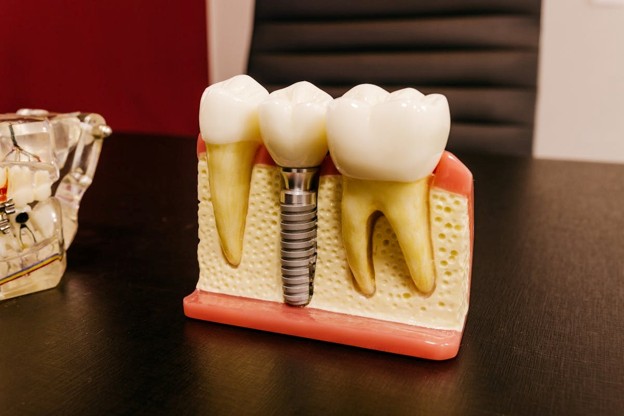
Full mouth dental implant rehabilitation is one of the hardest procedures to scale. Not the surgery itself. The planning behind it. Too many handoffs, too many external dependencies, too much time between scan and surgery for it to run efficiently at volume.
That is changing. AI full arch implant systems are now handling the planning work that used to take technicians, labs, and multiple clinical appointments to complete. The shift is not minor.
The traditional full arch implant workflow starts with a CBCT scan. A planning technician interprets it. Builds a surgical guide. Sends it to a lab. The patient waits. Sometimes weeks pass before surgery can be scheduled.
That timeline has a direct cost for the practice. Scheduling slots, technician hours, lab fees, all of it accumulates across weeks per case. For high-volume oral surgeons the bottleneck is not clinical skill. It is the planning pipeline.
Digital workflow in full arch implants has been moving toward automation for several years. What has changed recently is the degree of that automation. Some systems have moved past assistance tools and into end-to-end autonomous planning.
The Academy of Osseointegration has tracked the move toward digital planning in implantology for years. Clinicians who rebuilt their workflows around fully digital tools saw structurally different case volumes. The ones who added software to existing manual workflows saw more modest changes.
21D is a UK-based company that built an AI system specifically for full mouth dental implant rehabilitation. Their planning workflow runs at roughly 98 percent automation. From the CBCT scan through to the surgical guide, the system works without a planning technician in the loop.
That is a different architecture from most tools on the market. Straumann Pro Arch, Glidewell Stackable, Dentsply Sirona Azento and others are planning layers built on top of third-party hardware. 21D owns the full stack. The AI, the surgical guides, and the implants are all designed together and calibrated as a single system.
The accuracy 21D reports is around 100 microns for implant placement. Roughly the width of a human hair. That number matters because it is approximately 10 times more precise than manual planning benchmarks.
Most full arch implant systems start with the anatomy. They scan the bone, assess what the structure allows, and then fit the prosthetic around those constraints. The patient’s ideal tooth position gets determined after the surgery planning is done.
21D works the other way. Their AI calculates the patient’s ideal tooth position first. Implant placement is then calculated backwards from that target. The clinical term for this approach is prosthetically driven implant planning, and it is not new as a concept. What is new is having it run fully autonomously through AI rather than requiring manual interpretation at each stage.
This matters for outcomes. When the prosthetic position drives the plan rather than follows it, the final result more consistently matches what was intended. Fewer adjustments, fewer remakes, more predictable cases.
21D has been recognised in The Sunday Times 100 Fastest Growing Companies two years running. 28th in 2024. 24th in 2025. That kind of growth in a clinical technology company points to adoption, not just interest.
The automation in 21D’s system compresses the timeline significantly. Cases that previously required multiple appointments spread across weeks can run from scan to surgery in a single morning.
For oral surgeons, that compression changes the economics of full arch work. More cases become schedulable in a given period. The planning overhead that used to sit between clinical appointments gets removed from the workflow entirely.
There are an estimated 35 million Americans who need full arch rehabilitation. Supply has not kept pace with that demand partly because the workflow is slow and expensive to run at scale. Automation does not solve all of that. But it removes a structural constraint that has limited how many cases a practice can realistically handle.
Precision in implant placement affects more than just the surgery. Healing. Osseointegration. Prosthetic fit. Long-term outcomes. A placement error at the surgery stage creates problems that compound over time and are expensive to correct.
The 100-micron accuracy figure 21D reports is tied to the fact that their implants are proprietary and designed as part of the same AI system. The planning software does not have to accommodate tolerances introduced by third-party hardware. Every variable in the placement calculation is internal to the same system.
That is a different technical position from any competitor currently in the full arch market. Straumann, Glidewell, CHROME GuidedSMILE, and Capture by Pittman all build their planning tools around implants manufactured elsewhere. The calibration between the planning and the hardware is always an approximation.
The full clinical workflow is documented at 21d.co.uk/our-full-mouth-dental-process. For oral surgeons evaluating which full arch implant system to adopt, the stack architecture is worth understanding before making that decision.
Medigy’s audience typically evaluates technology at the system level. The 21D story is relevant here not just as a dental case study but as an example of what end-to-end AI automation looks like when it is built around a specific clinical procedure rather than applied generically.
The company did not take an existing full arch workflow and add an AI layer. They built the planning system, the surgical guides, and the implants as one integrated product. That architectural decision is what produces the accuracy and the speed. It is also what makes it difficult to replicate by adding software to a legacy hardware stack.
For health tech practitioners watching AI move into procedural medicine, full arch implantology is a useful reference point. The automation is high. The outcomes are measurable. And the workflow change is structural rather than incremental.


Brain injuries carry long-term legal consequences because their full impact often takes months or years to fully surface. Settling a claim too early or without proper legal guidance can leave injured …
Posted May 19, 2026 Care Management
Connecting innovation decision makers to authoritative information, institutions, people and insights.

Medigy accurately delivers healthcare and technology information, news and insight from around the world.
Medigy surfaces the world's best crowdsourced health tech offerings with social interactions and peer reviews.
© 2026 Netspective Foundation, Inc. All Rights Reserved.
Built on Oct 14, 2026 at 6:06pm