

Managing Editor
@ShahidNShah
@ShahidNShah
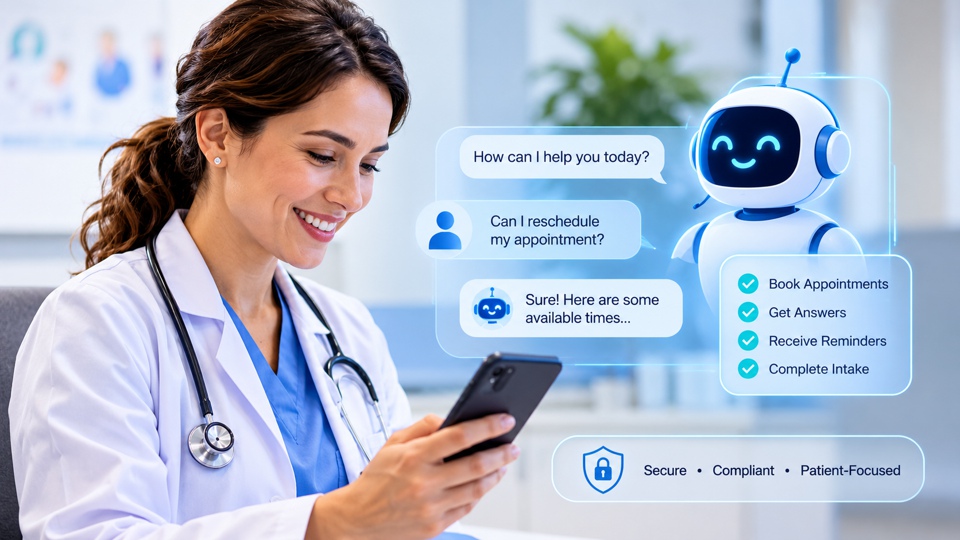
Healthcare providers spend a significant part of their day answering patient questions, managing appointment requests, sending reminders, and explaining routine instructions. These tasks may seem simple, but they can quickly overwhelm front-desk teams and delay responses to patients who need help.
The problem becomes more noticeable when a clinic handles hundreds of inquiries across phone calls, emails, patient portals, and website forms. Patients may wait hours for basic information, miss appointments because they never receive reminders, or struggle to understand what they need to do before a consultation.
AI chatbots offer a practical way to manage some of this communication. They can respond to routine questions, guide patients through administrative processes, and help healthcare teams stay connected with patients between visits. However, their value depends on how well they fit into existing workflows and where human support remains necessary.
Patient communication often breaks down because healthcare teams rely on several disconnected channels. A patient might call to reschedule an appointment, send a message through a portal to ask about preparation instructions, and later email the clinic about a follow-up visit.
Each interaction creates another task for staff members who may already be managing reception, records, billing, and scheduling.
Three common problems make this situation harder to manage.
Delayed responses to routine questions: Patients frequently contact clinics for information about opening hours, appointment availability, accepted insurance, and preparation instructions. When staff cannot respond quickly, patients may call repeatedly or abandon the process.
Missed appointments and follow-ups: A patient may forget an appointment or overlook a follow-up instruction. Manual reminder systems are difficult to maintain when staff must contact large numbers of patients individually.
Confusing communication between visits: Patients do not always know whom to contact when they have questions after leaving a clinic. If instructions are unclear or difficult to find, they may become frustrated or delay contacting the care team.
These issues do not necessarily require more staff or another communication platform. In many cases, the first step is to identify repetitive interactions that can be handled through a reliable automated system.
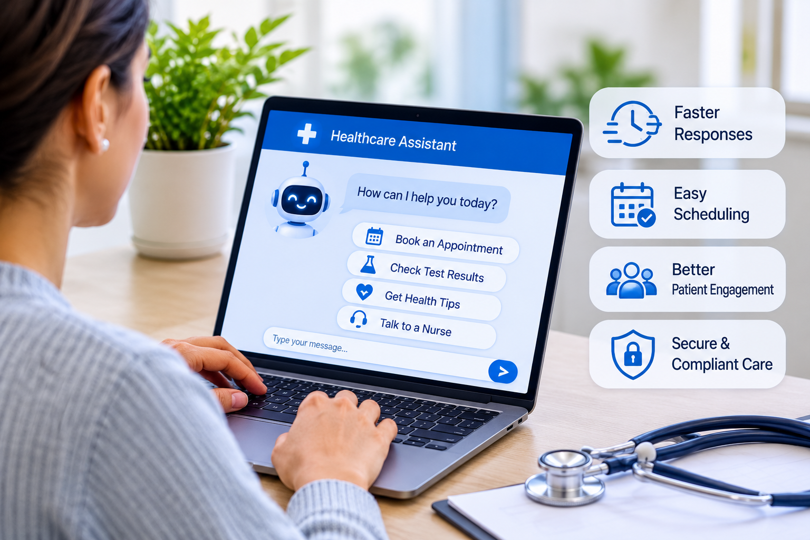
A healthcare chatbot can act as a first point of contact for routine patient interactions. Instead of requiring staff members to answer every basic question, the chatbot can provide approved information and guide patients toward the right next step.
The following use cases offer practical starting points.
Patients often ask the same questions before scheduling a consultation. They want to know whether a clinic accepts their insurance, what documents they need, where the facility is located, or whether a particular service is available.
A chatbot can answer these questions using information approved by the healthcare organization.
For example, a patient visiting a clinic website might ask, “Do I need to bring my previous test reports to my appointment?”
The chatbot can provide the clinic’s approved instructions and explain how to contact the reception team if the patient needs further assistance.
This approach reduces repetitive inquiries while allowing staff to focus on requests that require personal attention.
To make this work, clinics should maintain a clear knowledge base and review it regularly. Outdated office hours, incorrect insurance information, or old preparation instructions can create more confusion than the chatbot solves.
Appointment scheduling is one of the most useful areas for healthcare chatbot automation.
Patients often contact clinics outside normal business hours. If nobody is available to answer the phone, they may postpone booking or choose another provider.
A chatbot connected to the clinic’s scheduling system can help patients:
For example, someone looking for a consultation at 9 PM could use the clinic’s website chatbot to check available appointments rather than waiting until the next morning.
The important part is integration. A chatbot that collects appointment requests but does not connect with the actual scheduling system may create extra work for reception staff. Real-time availability and confirmation are essential if the goal is to reduce manual coordination.
Patient intake can involve several steps, including collecting basic information, confirming contact details, identifying the reason for a visit, and sharing required forms.
When these steps happen manually, patients may arrive with incomplete information or spend valuable time filling out paperwork at the clinic.
A well-designed chatbot can guide patients through an intake process before their appointment. It can ask approved questions, explain which forms are required, and direct patients to secure submission channels.
For example, a patient booking a specialist consultation could receive a guided checklist covering identification, referral documents, and previous medical reports. Healthcare providers can support these interactions through AI chatbot development services that help automate patient intake and connect chatbots with existing healthcare systems.
However, clinics should avoid collecting sensitive medical details through an ordinary website chat. Any information that qualifies as protected health information must be handled through appropriately secured systems and processes.
Communication should not end when a patient leaves the clinic.
Patients may need reminders about upcoming appointments, instructions for routine follow-up, or information about how to access their care team.
Chatbots can support these interactions by delivering approved reminders and answering basic questions about next steps.
For example, after a consultation, a patient might receive a reminder to complete a scheduled follow-up or review instructions provided by the healthcare team.
This can help patients stay informed without requiring staff to send every message manually.
Clinics should also provide an easy way for patients to reach a human representative. A chatbot must not become a barrier when someone needs to report a new symptom, discuss a concern, or clarify an instruction that requires clinical judgment.
Automation is most useful when it removes unnecessary delays without making healthcare feel impersonal.
Patients still want to know that someone is listening, especially when they are worried about their health. A chatbot should therefore handle straightforward communication while recognizing when a conversation needs human attention.
For instance, it can answer a question about clinic hours or help someone locate an appointment confirmation. But if a patient describes worsening symptoms, reports a possible medication reaction, or asks whether they should change their treatment, the system should not attempt to make a clinical decision.
Instead, it should direct the patient to the appropriate healthcare professional or established urgent-care pathway.
This distinction is important for patient trust. Healthcare chatbots should have clear escalation rules, rather than trying to answer every question.
Medigy’s coverage of AI chatbots and patient engagement also highlights how conversational tools can help healthcare organizations connect with patients beyond traditional office interactions.
Choosing a chatbot based only on its ability to generate natural-sounding responses is a common mistake. Healthcare organizations need to consider reliability, integration, privacy, and patient safety before introducing one.
A few practical checks can prevent expensive implementation problems.
Do not automate every patient interaction at once.
Begin by reviewing the questions and requests that consume the most staff time. If appointment inquiries are the biggest challenge, start with scheduling assistance. If patients frequently ask about preparation instructions, build a chatbot around an approved information library.
A focused implementation is easier to test, measure, and improve.
A chatbot should fit into the tools a clinic already uses.
Depending on the intended purpose, useful integrations may include:
Without suitable integrations, patients may receive information that does not match current appointment availability or clinic records.
Healthcare providers should also define which systems the chatbot can access and what actions it is permitted to perform.
Healthcare conversations can contain highly sensitive information. A chatbot may collect names, contact details, appointment information, or medical details, so privacy cannot be treated as an afterthought.
For organizations subject to HIPAA, the system must be designed around applicable privacy and security obligations.
The HHS HIPAA Security Rule outlines administrative, physical, and technical safeguards for protecting electronic protected health information.
Before deployment, healthcare providers should evaluate access controls, encryption, authentication, audit logs, data retention, vendor responsibilities, and secure data transmission.
They should also review whether third-party AI providers receive or retain patient information and whether the necessary contractual and compliance arrangements are in place.
Using an AI chatbot does not automatically make a healthcare organization or its software HIPAA-compliant. Compliance depends on the complete system, its implementation, and the organization’s processes.
Even a well-trained chatbot can misunderstand a question or provide an incomplete response.
Healthcare providers should test it against realistic patient questions before making it available to the public. Testing should include unclear requests, spelling mistakes, sensitive questions, and situations that require human intervention.
The chatbot should also make its limitations clear. It should never present itself as a doctor or imply that automated responses replace professional medical advice.
Staff members should be able to review conversations when appropriate, correct recurring problems, and take over interactions that need personal attention.
A chatbot should solve a measurable problem, not simply add another feature to a healthcare website.
Providers can track a few practical indicators before and after implementation:
| Performance indicator | What it helps measure |
| Average response time | Whether patients receive information faster |
| Appointment completion rate | Whether more inquiries turn into confirmed bookings |
| Missed appointment rate | Whether reminders improve attendance |
| Staff workload | Whether repetitive inquiries decrease |
| Human escalation rate | How often patients need additional support |
| Patient satisfaction | Whether the communication experience improves |
These measurements should be reviewed together. A low escalation rate is not automatically a sign of success if patients cannot reach a staff member when they need one.
Patient feedback is equally important. Short surveys and conversation reviews can reveal whether chatbot responses are clear, useful, and easy to understand.
There is no single chatbot configuration that works for every healthcare organization. A small medical practice may need appointment scheduling and basic FAQs, while a larger healthcare network may require multilingual support, patient intake automation, and integrations across several systems.
The development process should begin with the organization’s communication needs, not the technology itself. Providers should identify the tasks they want to automate, define the information the chatbot can access, establish escalation rules, and decide how success will be measured.
Organizations exploring AI chatbot development services should look for solutions that account for healthcare workflows, secure integrations, data protection, and ongoing maintenance. The goal is not to create a chatbot that can answer everything. It is to build one that handles the right tasks reliably and knows when to involve a person.
Patient communication problems rarely come from a lack of messages. They often come from delays, disconnected systems, repetitive administrative work, and unclear next steps.
AI chatbots can help healthcare providers address these issues by making routine interactions faster and easier to manage. However, successful implementation requires more than a conversational interface. It needs accurate information, suitable system integrations, strong privacy safeguards, and clear access to human support.
As healthcare organizations continue exploring AI-driven solutions, companies such as MindRind reflect the growing role of custom software development in addressing practical challenges across healthcare operations.
The best starting point is simple: identify one recurring patient communication problem, automate it carefully, and measure whether the experience actually improves. When technology supports the healthcare team instead of standing between patients and care, it can make everyday communication more responsive and manageable.

Chief Editor - Medigy & HealthcareGuys.

Company information is drawn from each company’s own pages and is current as of [publication date]. Verify directly before signing anything. Introduction Choosing a partner to build, extend or …
Posted Nov 23, 2026 EHR / Clinical Workflow
Connecting innovation decision makers to authoritative information, institutions, people and insights.

Medigy accurately delivers healthcare and technology information, news and insight from around the world.
Medigy surfaces the world's best crowdsourced health tech offerings with social interactions and peer reviews.
© 2026 Netspective Foundation, Inc. All Rights Reserved.
Built on Nov 24, 2026 at 5:05am