

Managing Editor
@ShahidNShah
@ShahidNShah
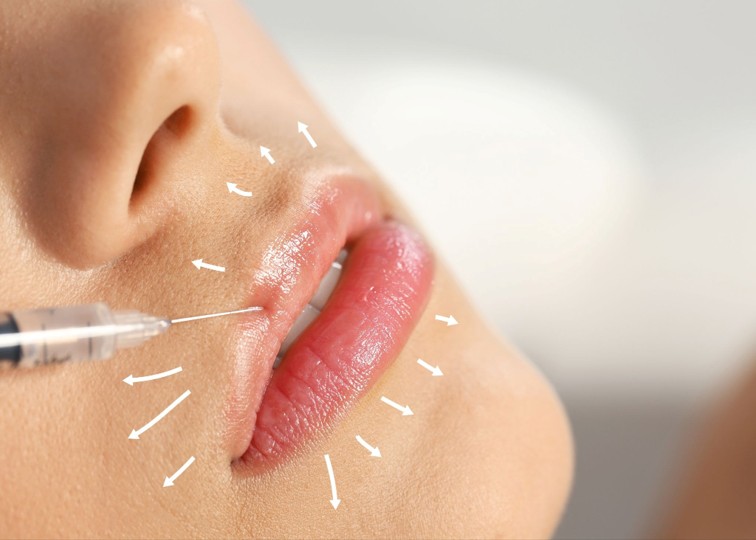
Lip fillers are often grouped together as one cosmetic treatment, even though the materials and technologies behind them can be very different. Some products are soft gels that gradually disappear, some use the person’s own body fat, and others involve a permanent implant. The choice affects not only how long the result lasts, but also how the lips move, how much noticeable volume can be created, and how easily the result can later be adjusted.
There is also more to lip enhancement than making lips larger. Someone with naturally thin lips may want extra projection, while another person may mainly want help with vertical lines, a less defined cupid’s bow, or age-related tendency to lose volume. The best approach usually starts with the existing natural lip shape and lip structure, then works toward the desired look rather than forcing every mouth into the same proportions.
Modern HA lip fillers are gel-based dermal fillers made with a form of hyaluronic acid, a naturally occurring substance already present in skin and connective tissues. The gel attracts water and creates controlled volume inside the lip tissue. Because manufacturers can change the way the molecules are linked together, one hyaluronic acid product can feel very different from another.
Some formulations are flexible and move easily with the mouth, while denser gels provide stronger definition or projection. Hyaluronic acid fillers last 6 to 12 months, although the exact duration can vary depending on the product, injection area, metabolism, and amount used. Softer fillers may work particularly well when the aim is subtle enhancement, whereas firmer products can provide more volume or clearer contour.
Most HA lip fillers are FDA-approved for safety and effectiveness and can be used for several different details:
Examples within this category include Juvederm fillers and Restylane Silk, although individual products have different textures and intended uses. For licensed medical practices reviewing professional sourcing options, Juvéderm fillers at Pdcosmetics may appear among the products considered for clinic-based aesthetic treatments.
Another practical feature of hyaluronic acid is that it can be broken down with an enzyme called hyaluronidase when medically appropriate. This makes it different from permanent materials, although reversibility does not eliminate the usual risks associated with filler injections.
Collagen fillers belong to an older generation of injectable treatments. Collagen provides structural support throughout the skin, so placing collagen directly into the lips could restore volume and soften lines without using a synthetic implant. Earlier animal-derived versions, however, sometimes required allergy testing because of the possibility of an allergic reaction. Collagen fillers are rarely used today because of their shorter longevity and higher risk of allergic reactions.
Their role in modern cosmetic treatment is smaller than it once was. Hyaluronic acid products became easier to adjust and offered a wider choice of textures, while newer regenerative approaches began focusing on encouraging the body’s own collagen production instead of simply injecting collagen itself.
Collagen still matters when discussing filler technology because it helped shape the move from basic space-filling materials toward products designed around tissue behavior. It also explains why not every injectable that improves facial volume is automatically suitable for the highly mobile lips.
Fat transfer lip fillers use a person’s own fat rather than a manufactured gel. During fat grafting, a cosmetic surgeon removes a small quantity of fat from another area, processes it, and carefully transfers selected cells into the lips. The idea sounds simple, but technically it is closer to a small surgical procedure than a standard lip filler appointment.
The lip injection process usually involves several separate stages:
Fat can provide soft volume and, when part of the graft survives, results may last much longer than temporary injectables. The challenge is that not all transferred cells remain permanently, so the amount of surviving volume is somewhat less predictable. Early swelling can also make the lips appear much larger than the eventual desired volume.
Lip implant surgery approaches lip augmentation from a completely different direction. Instead of injecting a biodegradable substance, a flexible implant is inserted through tiny incisions and positioned inside the lip. It is designed to remain there rather than gradually being absorbed.
The appeal is obvious: the amount of augmentation is not dependent on regular reinjection. At the same time, permanent placement changes the decision considerably. Implant position, infection, scar tissue, sensation, movement, and the possibility of later removal all become relevant issues that do not exist in quite the same way with temporary fillers.
A permanent option may suit a narrow group of cases, but permanence alone does not make it the right filler alternative. Permanent silicone injections are generally avoided because they carry a risk of long-term inflammation and other serious complications. Qualified plastic surgeons normally consider the person’s anatomy, expected change, existing tissue, and tolerance for surgery before recommending this route.
The ingredient listed on the box tells only part of the story. Two hyaluronic acid products can contain the same basic substance yet behave differently because of molecular size, concentration, cross-linking, elasticity, and manufacturing process. These characteristics influence whether the gel spreads easily, holds projection, or blends quietly into surrounding tissue. Calcium hydroxylapatite and poly-L-lactic acid are not commonly used in the lips. These materials are generally chosen for other facial areas, where their structural or collagen-stimulating properties are more useful.
For lips, flexibility matters a great deal. The mouth is constantly moving during speaking, eating, smiling, and expression. A gel that provides attractive noticeable volume at rest still needs to move naturally once the lips are active.
Different filler technologies allow an experienced injector to select a product according to the job rather than simply according to brand. A flexible product may work for a subtle lip enhancement, while another formulation may be better suited to building shape or helping enhance volume in a specific area.
The desired effect can change even within the same pair of lips:
That is why the right lip filler is not necessarily the product capable of creating the greatest amount of volume. For most patients, proportion and placement matter at least as much as the number of milliliters injected.
A filler does not create its final shape by itself. The depth of injection, angle of the needle or cannula, size of each deposit, and location of the product all affect the outcome. The same gel can therefore create either subtle enhancement or obvious added fullness, depending on how it is used.
For example, injections placed along the lip border can emphasize definition, while carefully distributed product within the body of the lip can create soft volume. Work around the mouth may focus instead on smoothing fine lines without substantially increasing lip size. There is no single injection map that suits every face.
The available treatment options differ considerably in commitment. Hyaluronic acid fillers gradually break down, which allows the result to change over time. Fat transfer can last much longer but is less predictable, while implants provide a more permanent structural change.
Someone seeking a youthful appearance after mild age-related volume loss may need far less product than someone pursuing obvious lip augmentation. Likewise, a person interested primarily in definition may benefit from a very different technique from someone who wants consistently fuller lips.
Lip anatomy varies enormously. The height of the upper lip, width of the mouth, amount of visible pink lip, tooth support, facial profile, and strength of the existing border all change how added volume will appear. This is why copying another person’s treatment plan rarely produces the same visual result.
A good filler appointment usually includes assessment before any product is chosen. The injector can evaluate movement, symmetry, previous filler, surrounding lines, and the condition of the lip tissue. From there, the right filler can be matched to both the anatomy and the level of change requested. Choosing a certified provider helps support safer treatment and more predictable results.


Morning jaw pain typically occurs due to muscles of mastication that remain tight as you sleep; nighttime clenching/grinding may be a common cause for this condition. In addition, if morning jaw pain …
Posted Aug 26, 2026 Pain Management
Connecting innovation decision makers to authoritative information, institutions, people and insights.

Medigy accurately delivers healthcare and technology information, news and insight from around the world.
Medigy surfaces the world's best crowdsourced health tech offerings with social interactions and peer reviews.
© 2026 Netspective Foundation, Inc. All Rights Reserved.
Built on Oct 8, 2026 at 6:09pm