

Managing Editor
@ShahidNShah
@ShahidNShah

Digital health has moved from the margins of healthcare into the centre of care delivery. Patient portals, virtual consultations, remote monitoring tools, digital triage systems and artificial intelligence are now part of the everyday healthcare conversation. For hospitals, insurers, health systems and technology vendors, the promise is clear: faster access, better efficiency and more personalised support.
But one critical question is still too often treated as secondary.
Do patients trust the technology enough to use it, rely on it and share sensitive information through it?
That question matters because digital health does not succeed through technical performance alone. A platform may be accurate, secure and well integrated into clinical workflows, but if patients do not understand it, believe in it or feel safe using it, adoption can stall. In healthcare, trust is not a soft measure. It is part of the infrastructure that allows innovation to work.
The World Health Organization’s Global Strategy on Digital Health 2020–2025 makes clear that digital health initiatives need more than technology. They require robust strategies that integrate human, organisational, financial and technical resources. That broader view is essential because healthcare innovation affects people at moments of vulnerability, uncertainty and high personal risk.
For this reason, patient trust should be measured before digital health tools are launched at scale, not after problems appear. Market research companies such as Savanta help healthcare organisations understand patient attitudes, stakeholder expectations and trust barriers, giving leaders clearer evidence before they introduce new services, communications or technology-enabled care models.
Healthcare leaders often evaluate digital tools through operational and clinical criteria. Does the system reduce administrative burden? Can it improve access? Does it integrate with existing records? Is it compliant, secure and cost-effective? These are necessary questions, but they are not sufficient.
Patients ask different questions, even if they do not phrase them in technical language.
Will this tool understand my situation? Who can see my data? What happens if the system makes a mistake? Can I still speak to a clinician? Is this being used to improve care, or simply to reduce costs?
These concerns are not signs of resistance to innovation. They are rational responses to the sensitivity of healthcare. Unlike online shopping or entertainment, healthcare decisions involve diagnosis, treatment, medication, privacy, family history and sometimes life-changing outcomes. The threshold for trust is therefore much higher.
A patient who hesitates to use a digital symptom checker may not be rejecting technology. They may be uncertain about accountability. A patient who avoids a remote monitoring app may not dislike convenience. They may be worried about who reviews the data and how quickly someone will respond. A patient who distrusts AI-supported advice may not be anti-AI. They may simply want to know whether a qualified clinician remains involved.
Artificial intelligence has accelerated the trust challenge in healthcare. Patients are already using AI tools to understand symptoms, interpret lab results and prepare for appointments. Recent polling reported by the Associated Press found that roughly one-quarter of U.S. adults had used an AI tool for health information or advice in the previous 30 days, while many still expressed uncertainty about accuracy, privacy and professional oversight.
This creates a complicated reality for healthcare systems.
On one hand, AI may help patients access clearer explanations, manage questions between appointments and navigate complex information. On the other, AI can produce errors, omit context or create a false sense of certainty. In medicine, that matters. A confident but inaccurate answer can delay care, increase anxiety or lead patients toward inappropriate self-management.
Trust in healthcare AI should not mean blind confidence. It should mean informed confidence. Patients need to know when AI is being used, what it is being used for, what its limits are and when a clinician is responsible for the final decision.
Transparency is therefore not a communications extra. It is a safety and adoption requirement.
Patient trust in digital health is rarely based on a single factor. It usually depends on a combination of experience, communication, perceived competence and emotional reassurance.
Patients are more likely to trust a digital health tool when they understand its purpose, see a clear benefit and feel that human care has not disappeared. They also need confidence that personal information is protected and that the technology has been tested with people like them.
Several trust factors matter in practice:
The last point is particularly important. Many patients do not object to digital healthcare. They object to feeling pushed into a system that leaves them alone when something becomes confusing or worrying.
Digital health works best when it extends the care relationship rather than replacing it.
Too many digital health products are tested for usability after the core proposition has already been designed. By that stage, major assumptions are already built into the service. The language, workflow, consent process and escalation model may all reflect what designers, vendors or administrators believe patients need, rather than what patients actually experience.
Patient insight should come earlier.
Before launch, healthcare innovators should understand what patients expect from the service, what would make them hesitate, which words create confusion and which situations require human reassurance. They should also test whether different patient groups respond differently. Older patients, younger patients, people with chronic conditions, carers, lower-income groups and digitally excluded populations may all have distinct concerns.
This matters because digital health inequity is not only about access to devices or broadband. It is also about confidence, literacy, disability, language, culture and prior experiences with healthcare systems.
A tool designed around the most confident users may look successful in a pilot but fail when scaled to a wider population.
Healthcare organisations already measure adoption, usage, satisfaction and clinical outcomes. Patient trust should sit alongside those measures.
A digital health service might have high registration numbers but low repeat use. It might produce efficient triage but leave patients uncertain about next steps. It might reduce call volumes while increasing anxiety among patients who feel they cannot reach a person. Without measuring trust, these warning signs can be missed.
Useful trust metrics may include:
These measures can help healthcare leaders distinguish between technical adoption and meaningful acceptance. They can also show where communication, design or service support needs to improve.
Digital health will continue to expand because the pressures facing healthcare systems are real. Demand is rising, workforces are stretched and patients increasingly expect faster, more flexible access to information and support. Technology will be part of the response.
But the future of digital health cannot be built on efficiency alone.
Patients need to believe that digital tools are safe, useful and designed around their needs. Clinicians need to trust that these tools support care rather than fragment it. Healthcare leaders need evidence that innovation improves outcomes without weakening the human relationship at the centre of medicine.
The missing metric is trust. Without it, even promising digital health tools can struggle to gain acceptance. With it, technology has a better chance of becoming what healthcare needs it to be: not a replacement for care, but a more effective way to support it.

Chief Editor - Medigy & HealthcareGuys.
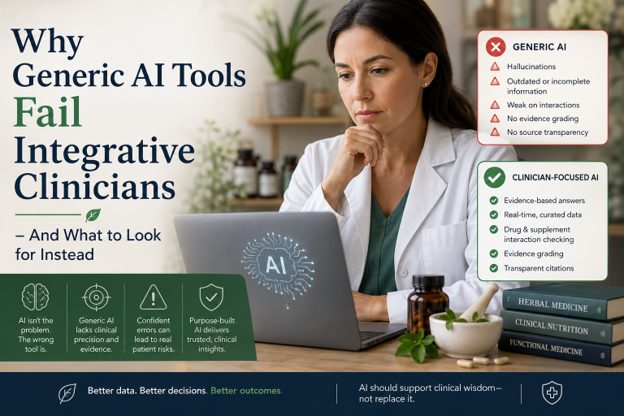
The arrival of large language model (LLM) AI tools in everyday professional life has been rapid and far-reaching. From writing assistants to coding tools to general-purpose chatbots, AI has become …
Posted Jun 9, 2026 Artificial Intelligence Health Technology
Connecting innovation decision makers to authoritative information, institutions, people and insights.

Medigy accurately delivers healthcare and technology information, news and insight from around the world.
Medigy surfaces the world's best crowdsourced health tech offerings with social interactions and peer reviews.
© 2026 Netspective Foundation, Inc. All Rights Reserved.
Built on Oct 14, 2026 at 6:06pm