

Managing Editor
@ShahidNShah
@ShahidNShah
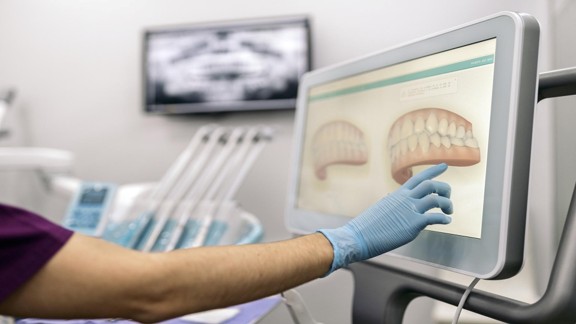
Dental technology has changed significantly over the past decade, and the practices keeping pace with those changes are delivering a different quality of care than what most patients have come to expect. Better imaging, AI-assisted diagnostics, and smarter patient engagement tools are closing the gap between what dentistry could catch early and what it historically did not catch until a problem was already significant.
The shift matters most in preventive care. When the diagnostic tools available to a general practice improve, the window for early intervention widens. Conditions that previously required a restoration or more involved treatment can be addressed when they are smaller, less expensive to treat, and less disruptive to the patient. Practices like Parthenon Dental represent the approach where technology is embedded in the diagnostic and treatment workflow rather than used as a supplementary tool. Understanding which technologies are driving the most meaningful clinical improvements, and how they are being applied, is useful context for anyone tracking how digital health innovation is reaching the primary care dental setting.
Conventional dental radiography has been a diagnostic staple for decades, but its limitations are well documented. Two-dimensional X-rays miss interproximal decay in its early stages, provide limited information about bone structure, and require clinical interpretation that varies with experience and fatigue. Digital radiography improved image quality and reduced radiation exposure, but the more significant advancement has been the adoption of cone beam computed tomography (CBCT) in general practice settings.
CBCT provides three-dimensional imaging of the teeth, bone, and surrounding structures at a fraction of the radiation exposure of traditional CT scanning. In a preventive context, this matters because it allows clinicians to identify early-stage bone loss, root abnormalities, and anatomical variations that would not be visible on a standard radiograph. The detection window for conditions like periodontal bone loss, impacted teeth, and early cysts shifts meaningfully when three-dimensional data is available. Practices that have adopted CBCT report catching conditions earlier and presenting patients with a wider range of treatment options as a result.
One of the more underappreciated technology shifts in modern dentistry is the routine use of intraoral cameras. These small, wand-mounted cameras produce high-resolution images of the oral cavity that can be displayed on a chairside monitor in real time. The clinical benefit is improved visibility for the practitioner. The patient engagement benefit may be equally significant.
Research on treatment acceptance consistently shows that patients who can see a condition are more likely to understand its severity and follow through on recommended treatment. A verbal description of a cracked cusp or early decay at the gumline does not produce the same response as a clear photograph showing the patient exactly what the clinician is looking at. In a preventive model, where the goal is to address small problems before they become large ones, patient buy-in at the early stage matters considerably. Practices that have integrated intraoral cameras into routine hygiene appointments report improved case acceptance on preventive interventions compared to documentation-only models.
Artificial intelligence tools designed specifically for dental radiograph analysis have moved from pilot programs into active clinical use at a meaningful number of practices over the past several years. These tools analyze radiographic images and flag areas of concern, including interproximal decay, bone loss patterns, calculus deposits, and periapical abnormalities, producing annotated outputs that the clinician reviews and confirms.
The value is not in replacing clinical judgment. It is in reducing the variability inherent in human interpretation and creating a more consistent detection baseline across patient visits and providers. A 2022 study published in the Journal of Dentistry found that AI-assisted caries detection on bitewing radiographs achieved sensitivity and specificity comparable to experienced clinicians, with particular improvement in detecting early lesions that fall below the threshold where treatment decisions have historically been inconsistent.
For practices focused on preventive outcomes, the practical benefit of AI-assisted diagnosis is catching lesions at a stage where remineralization protocols and minimally invasive intervention are still viable options, rather than at the stage where a restoration is the only path forward.
The relationship between periodontal disease and systemic health conditions including cardiovascular disease, diabetes, and adverse pregnancy outcomes is now well established in the research literature. Practices that take preventive care seriously have begun incorporating structured periodontal risk assessment tools into their hygiene protocols rather than treating periodontal status as a standalone oral health concern.
Digital periodontal charting systems that track probing depths, bleeding on probing, and recession over time allow clinicians to identify progression trends that a single-visit snapshot misses. When that data is integrated with patient health history and updated at each visit, it creates a longitudinal picture of periodontal status that informs both oral and systemic health conversations. Some practices have begun coordinating with primary care physicians when periodontal findings are consistent with systemic risk factors, which represents a meaningful step toward the kind of integrated care model that health systems have been working toward in other specialties.
Preventive dentistry depends heavily on patients showing up at the intervals their care requires. A practice can have the most sophisticated diagnostic technology available and still produce poor preventive outcomes if its patient population is not maintaining consistent recall visits. Automated patient communication platforms have improved recall compliance in practices that have implemented them systematically.
These platforms do more than send appointment reminders. The more capable systems segment patients by risk level, send condition-specific educational content between visits, and track which communication touchpoints are producing the highest engagement and recall response rates. For patients managing chronic conditions like periodontal disease or high caries risk, consistent communication between appointments supports the behavioral changes that make clinical interventions more effective.
The cumulative effect of these tools, when implemented together rather than in isolation, is a care model that catches problems earlier, communicates findings more effectively, tracks progression more consistently, and keeps patients engaged between visits. None of these technologies is a substitute for clinical skill or the provider-patient relationship that drives long-term health behavior. But they extend the clinician’s capability in ways that are producing measurable improvements in early detection rates and treatment acceptance.
The practices achieving the strongest preventive outcomes are not necessarily the ones with the most technology. They are the ones that have integrated the right tools into a coherent clinical philosophy and trained their teams to use them consistently. That integration, rather than any individual technology, is what separates a practice that is genuinely delivering preventive care from one that has modernized its equipment without changing its approach.


The Fast Facts Astaxanthin is a powerful antioxidant that may support eye health, skin health, exercise recovery, cardiovascular wellness, and healthy aging. Choosing a high-quality astaxanthin …
Posted Jun 9, 2026 Wellness & Prevention
Connecting innovation decision makers to authoritative information, institutions, people and insights.

Medigy accurately delivers healthcare and technology information, news and insight from around the world.
Medigy surfaces the world's best crowdsourced health tech offerings with social interactions and peer reviews.
© 2026 Netspective Foundation, Inc. All Rights Reserved.
Built on Oct 15, 2026 at 5:05am