

Managing Editor
@ShahidNShah
@ShahidNShah
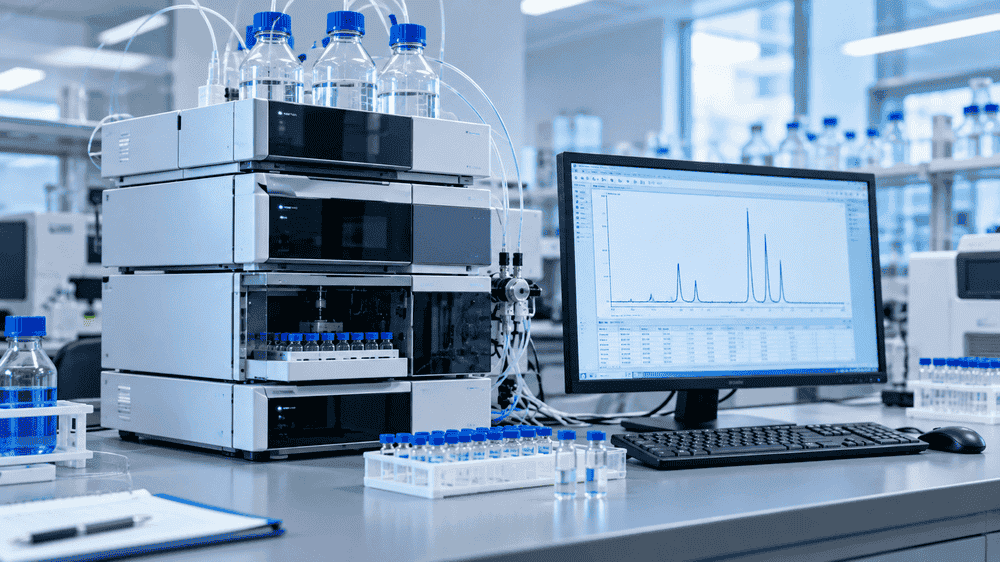
When it comes to scientific research, the quality of laboratory materials matters. Even small differences in a sample’s composition can affect how researchers interpret experimental results. That’s why analytical testing plays such an important role in modern laboratories, particularly when working with peptides.
One method you’ll often encounter in peptide research is high-performance liquid chromatography, commonly known as HPLC. This analytical technique helps scientists separate the components of a sample and evaluate its composition.
But what exactly does HPLC testing involve, how does it help assess peptide purity, and what should you know when reviewing a laboratory report? Let’s break it down.
High-performance liquid chromatography is an analytical technique used to separate, identify, and quantify components within a mixture. It is widely used in pharmaceutical development, biotechnology, chemical analysis, and scientific research.
The technique works by passing a liquid sample through a column containing a specialized material called the stationary phase. A liquid solvent, known as the mobile phase, carries the sample through the column.
Different compounds interact with the stationary phase in different ways. As a result, they travel through the column at different rates and emerge at different times.
A detector records the compounds as they leave the column, producing a chromatogram. This graph provides information about the separated components and helps analysts evaluate the sample.
HPLC is particularly useful for peptide analysis because peptides can be accompanied by related substances, synthesis byproducts, degradation products, and other impurities that may need to be assessed.
Although the equipment can look complicated, the basic process is relatively straightforward.
The analyst prepares the peptide sample using a method appropriate for the material and the intended analysis. Proper preparation helps minimize contamination and ensures that the sample is suitable for testing.
A measured quantity of the prepared sample is injected into the HPLC system. The mobile phase then carries it into the analytical column.
As the sample moves through the column, its components interact differently with the stationary phase. These differences allow the system to separate compounds that might otherwise appear together in a mixture.
A detector monitors the compounds as they exit the column. Depending on the analytical method, detection may use ultraviolet light or another suitable technique.
The system generates a chromatogram showing detector response over time. Analysts examine the resulting peaks to evaluate the separation and estimate the relative amounts of detected components when the method supports that interpretation.
The final result depends on the equipment, sample preparation, analytical conditions, and quality of the testing method.
Peptide purity describes the proportion of a sample attributable to the intended peptide relative to other detected components, according to a specified analytical method.
For example, a laboratory report might state that a sample has an HPLC area percentage of 97%. This generally means that the peak assigned to the target compound represents 97% of the total integrated signal across the peaks included in that calculation.
However, this figure requires careful interpretation.
An HPLC area percentage is not automatically the same as the sample’s total mass purity. Different compounds may produce different detector responses, and some impurities may not be detected effectively under the selected conditions.
Water, residual solvents, salts, and certain other substances may also require separate analytical methods.
Consequently, a high HPLC purity percentage does not, by itself, establish the complete composition of a sample or confirm every aspect of its quality.
Analytical testing helps researchers understand the materials they are working with and assess whether the available documentation supports their intended research.
Here are several reasons HPLC testing can be valuable.
Identifying Potential Impurities
Peptide synthesis and subsequent handling can introduce unwanted substances. Depending on the manufacturing process, these may include incomplete sequences, related peptide products, or degradation products.
HPLC can help separate some of these components from the target compound, making them easier to evaluate.
Supporting Quality Control
Manufacturers and laboratories can use validated analytical methods to monitor consistency between batches. Significant changes in chromatographic profiles may indicate differences that warrant further investigation.
However, HPLC is only one part of a broader quality-control process.
Improving Research Documentation
A clearly documented analytical method and corresponding chromatogram provide useful information for evaluating a sample’s reported purity.
Researchers can use this information alongside other available test results when determining whether the documentation is adequate for their work.
Helping Researchers Compare Analytical Results
When two samples are tested using comparable methods, their chromatograms and reported results may help identify differences in their detected composition.
Comparisons are less meaningful when testing conditions, detectors, integration settings, or reporting conventions differ substantially.
HPLC and mass spectrometry are often used together in analytical laboratories, but they answer different questions.
HPLC primarily separates the components of a mixture. Under appropriate conditions, it can also support quantitative analysis.
Mass spectrometry measures the mass-to-charge ratios of ions. This information can help researchers investigate molecular mass and support the identification of a target compound.
For peptide analysis, the two techniques can complement each other. HPLC may show a dominant chromatographic peak, while mass spectrometry can provide additional evidence about the identity of the compound associated with that peak.
Neither method automatically answers every question about sample quality. Additional tests may be needed depending on the material and the intended application.
If you’re reviewing an HPLC report, looking at the headline purity percentage is only the starting point.
Consider these important details:
It’s also worth distinguishing between a sample-specific analytical report and a general specification sheet. A report tied to a particular lot provides more relevant evidence about that tested sample than a document that simply lists expected specifications.
Even a detailed report should be interpreted in light of the analytical method’s limitations.
When evaluating research materials, transparent documentation can make the review process more straightforward. Researchers should look for clear product identification, relevant batch information, and analytical results that explain what was tested and how.
For example, USAPD is a resource researchers may encounter when exploring peptide-related products and testing documentation. As with any supplier, it is important to review the actual documentation available for the specific material rather than relying on general marketing statements.
A reported purity percentage should be supported by appropriate analytical evidence, and claims about compound identity should be backed by suitable identification methods.
Researchers should also remember that laboratory testing does not establish clinical effectiveness, prove that a product is suitable for human use, or replace applicable regulatory requirements. Materials designated for research use only should be handled according to their stated intended use.
HPLC testing is an important tool in peptide analysis because it helps separate the components of a sample and provides information that can support purity assessment and quality control.
However, interpreting the results requires more than looking at a single percentage. The analytical method, chromatogram, sample identification, and supporting test results all contribute to a more complete understanding of the available evidence.
By learning how HPLC works and recognizing its limitations, readers can better evaluate laboratory reports and understand the role analytical testing plays in scientific research. Ultimately, transparent documentation and appropriate analytical methods are essential for making informed decisions about research materials.

Booking a dentist should not feel like a coin flip. A polished website and a friendly front desk cannot tell you whether the license is active, what treatment will actually cost, or how the office …
Posted Oct 30, 2026 Dental Care Dentistry
Connecting innovation decision makers to authoritative information, institutions, people and insights.

Medigy accurately delivers healthcare and technology information, news and insight from around the world.
Medigy surfaces the world's best crowdsourced health tech offerings with social interactions and peer reviews.
© 2026 Netspective Foundation, Inc. All Rights Reserved.
Built on Oct 31, 2026 at 5:05am