

Managing Editor
@ShahidNShah
@ShahidNShah
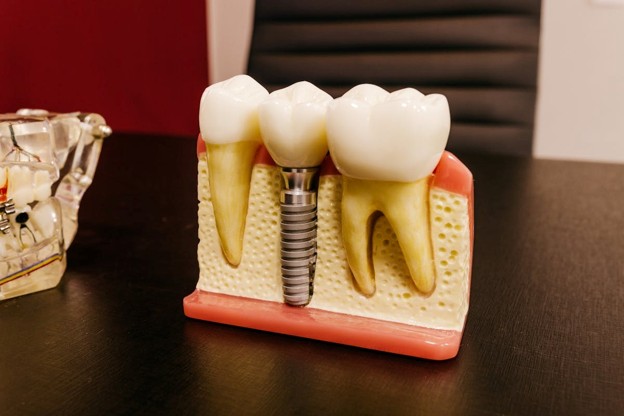
Dental implants are no longer the straightforward titanium post procedure they were twenty years ago. The technology, planning tools, and clinical techniques behind them have advanced considerably, and the patient experience — from the precision of placement to the speed of healing — has changed significantly as a result. In Houston, TX and at leading dental practices across the country, patients are now accessing a level of planning accuracy and predictability that simply wasn’t possible a decade ago.
If you’re exploring implants or wondering why outcomes seem to have improved so much in recent years, here’s what’s actually driving those changes.
The most significant development in implant dentistry in recent years isn’t the implant itself — it’s the planning process. Cone Beam Computed Tomography (CBCT) scanning gives clinicians a three-dimensional map of the jaw, showing bone density, height, and width with submillimetre precision. This is a fundamentally different starting point from the two-dimensional X-rays that older planning workflows relied on.
The scan data is used to generate a virtual implant placement plan — a simulation where the surgeon can assess the optimal position, angle, and depth for each implant before a single incision is made. The planned position accounts for the anatomical structures that need to be avoided (nerve canals, sinus floors), the available bone volume, and the intended position of the final restoration. What was previously informed approximation is now precise, pre-tested placement.
Digital planning is only useful if it translates accurately into the surgical procedure. Surgical guides — custom-fabricated devices that fit precisely over the patient’s teeth or gums and constrain the drill to follow the planned trajectory — are what close that gap. The guide physically prevents the surgeon from placing the implant outside the planned path, bringing the precision of the virtual model into the real-world procedure.
Flapless guided surgery — where the implant is placed through a small punch in the gum rather than a full incision — has become more common as guided accuracy has improved. This approach reduces surgical trauma, minimises postoperative discomfort, and shortens healing time without compromising placement precision. For many patients, the procedural experience is considerably less involved than they expected.
Traditional implant protocols required a healing period of three to six months between implant placement and attachment of the final crown — during which the patient wore a temporary restoration. This timeline was driven by the time required for osseointegration: the process by which the titanium implant fuses with the surrounding bone.
Advances in implant surface technology and placement technique have made same-day or early-load protocols viable for an increasing proportion of patients. Implant surfaces are now engineered at the micro and nano level to accelerate osseointegration. When primary stability (the mechanical stability of the implant at placement) meets specific criteria, a provisional crown can be attached immediately, giving the patient a functional and aesthetic tooth on the day of surgery.
Patients researching dental implants in Houston, TX will find that modern prosthodontic-led practices combine these contemporary protocols with careful, case-specific clinical decision-making — ensuring that immediate or early-load choices are based on bone quality, implant stability, and individual patient factors rather than applied as a blanket approach.
One of the most significant expansions in implant dentistry over the past decade is the improvement in bone grafting and regenerative techniques. Patients who previously lacked sufficient bone volume for implant placement — either from long-standing tooth loss, periodontal disease, or extraction site resorption — can now undergo bone augmentation procedures that rebuild the foundation for implant placement.
Modern bone grafting materials include allograft (processed donor bone), xenograft (bovine-derived bone mineral), and synthetic alternatives, each with specific properties suited to different clinical situations. Guided bone regeneration (GBR) membranes protect the graft site and direct bone growth precisely where it’s needed. Platelet-rich fibrin (PRF) — derived from the patient’s own blood — is increasingly used to accelerate site healing and improve graft integration.
According to the American Academy of Implant Dentistry, over 3 million people in the United States have dental implants, and that number is growing by roughly 500,000 per year. The expansion of bone augmentation options is a significant contributor to that growth — more patients are now viable candidates than would have been a decade ago.
The implant itself is only half the equation. What sits on top of it — the abutment and crown — determines the final aesthetic and functional outcome. Zirconia has become the dominant material for implant-supported restorations in visible areas because of its combination of strength, biocompatibility, and natural appearance. It refracts light in a way that resembles natural enamel and does not produce the grey shadow at the gum line that metal-based restorations can create over time.
The restoration phase is ideally led by a prosthodontic team — specialists whose training is specifically focused on the planning and fabrication of dental restorations. That level of restorative expertise, combined with the advanced placement technology described above, is what produces implant results that are functionally excellent and visually seamless.
Dental implants have always been considered the gold standard for tooth replacement. What’s changed is the consistency and predictability with which that standard is actually delivered. CBCT-guided planning, surgical guides, advanced surface technology, expanding bone augmentation options, and high-performance restorative materials have together produced a procedure that is more accurate, more comfortable, and accessible to more patients than at any point in its history.
For patients exploring dental implants in Houston, TX, finding a practice that pairs this technology with genuine clinical expertise makes all the difference. Sinada Dental offers consultations that cover the full clinical picture — bone assessment, treatment timeline, restoration planning, and a clear explanation of which modern techniques apply to your specific case. The technology is only useful if the team explaining it to you actually understands it at a clinical level. That’s where the process starts.


Mental health care has evolved significantly over the last decade. Advances in neuroscience, digital health technology, personalized medicine, and therapy approaches are helping people manage …
Posted Jun 1, 2026 Mental Health Wellness & Prevention
Connecting innovation decision makers to authoritative information, institutions, people and insights.

Medigy accurately delivers healthcare and technology information, news and insight from around the world.
Medigy surfaces the world's best crowdsourced health tech offerings with social interactions and peer reviews.
© 2026 Netspective Foundation, Inc. All Rights Reserved.
Built on Oct 8, 2026 at 6:09pm