

Managing Editor
@ShahidNShah
@ShahidNShah
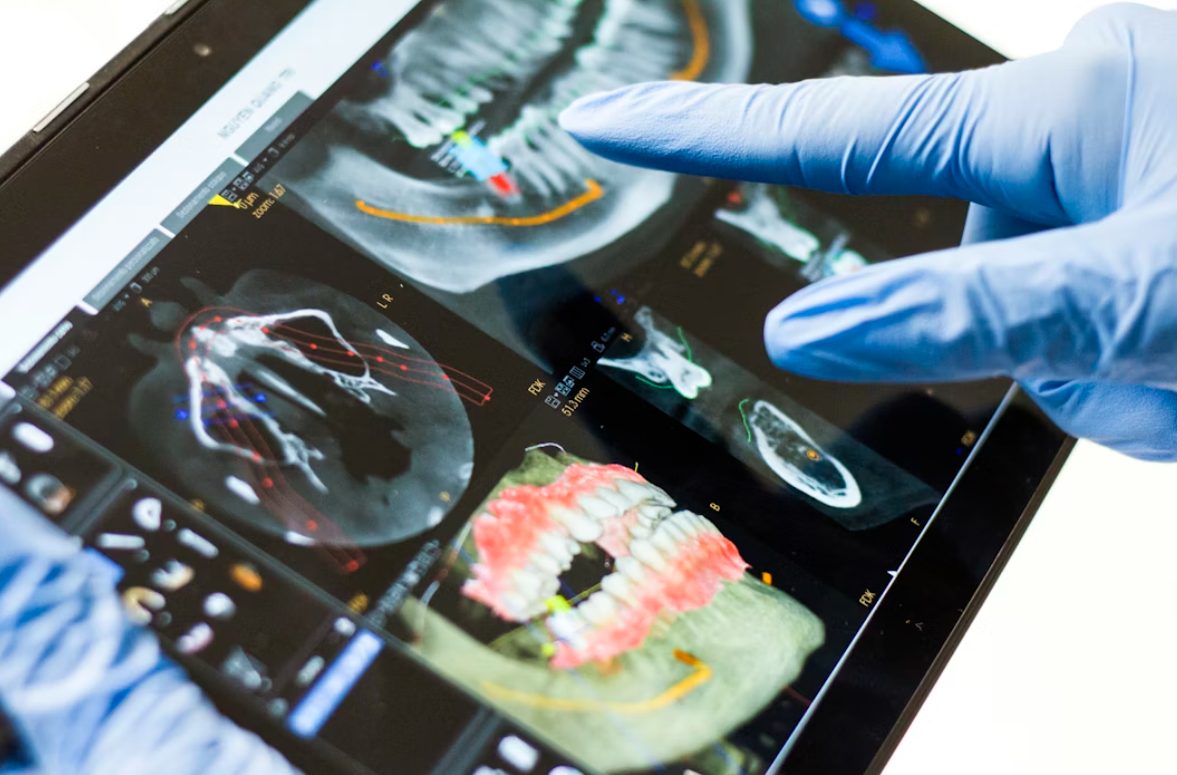
Porcelain veneers have been a fixture of cosmetic dentistry for decades, but the process of designing and placing them looked remarkably similar from the 1980s through the early 2010s. A dentist took impressions, sketched ideas, and worked with a ceramist to fabricate restorations that the patient saw for the first time at the placement appointment. The skill required to consistently produce beautiful results in this workflow made veneers one of the most artisanal procedures in dentistry.
Digital Smile Design has fundamentally rewritten that workflow. For patients, the change is most visible in transparency, predictability, and the ability to actually see their planned outcome before any tooth is touched. For practitioners, the change runs deeper, integrating photography, 3D imaging, simulation software, and digital fabrication into a cohesive treatment process.
Digital Smile Design, often abbreviated DSD, is less a single piece of software and more a methodology. It combines high-resolution digital photographs of the patient’s face and smile, intraoral scans of the teeth and bite, video recordings of natural smile dynamics, and 3D modeling software to design the proposed final restorations within the context of the entire face.
This matters because the smile doesn’t exist in isolation. It exists between two lips, framed by a chin and a forehead, lit by the angles of the cheekbones, and animated by speech and expression. Designing teeth that look correct on a stone model but wrong on the actual person is a failure mode that the old workflow couldn’t reliably prevent. Digital design largely solves that problem.
Historically, patients had to trust their dentist’s verbal description of what their veneers would look like, supplemented at best by wax-up models that gave a rough idea. Many patients accepted treatment somewhat on faith, hoping the final result matched their imagination.
With digital design, that ambiguity is largely eliminated. The patient sees a photorealistic rendering of the proposed outcome before treatment begins, often during the initial consultation. They can request adjustments. They can compare options for tooth length, shape, color, and proportion. The treatment plan becomes a collaborative design conversation rather than a one-way prescription.
Beyond on-screen previews, the digital design can be translated into a physical mock-up directly in the patient’s mouth. This is sometimes called a trial smile or a mock-up. A temporary composite material is applied to the existing teeth in the exact shape of the proposed veneers, without any tooth preparation. The patient can then look in a mirror, smile, talk, and even walk around for a few hours to evaluate the design before committing.
This step has fundamentally changed how veneer treatment is approved. The patient experiences the proposed smile physically, not just visually. Any concerns surface before the final design is finalized.
The dental ceramist who fabricates the veneers has historically worked from impressions, written notes, and the dentist’s drawings or photos. The translation from clinical intent to physical restoration depended on the ceramist’s interpretation. Even excellent ceramists could produce work that didn’t quite match the dentist’s vision because the communication channel was lossy.
Digital design replaces that with precise 3D files. The ceramist receives the exact proposed shape, contour, and characterization for each tooth. They can fabricate the veneers either through traditional layered porcelain techniques or through CAD/CAM milling, depending on the case. Either way, the design intent transmits perfectly from planning to fabrication.
One of the most clinically significant benefits of digital design is reduced tooth preparation. When the dentist can see exactly how much porcelain thickness is needed for each part of each veneer, they can prepare the underlying tooth with greater precision. The old approach often involved removing more enamel than strictly necessary to give the ceramist room to work. Digital planning allows for preparation only where it’s actually needed, sometimes preserving most of the natural tooth structure entirely.
This matters for long-term outcomes. Enamel that remains intact is enamel that can never be replaced. Conservative preparation preserves the tooth’s underlying integrity and improves long-term bonding strength.
Modern smile design relies heavily on standardized photographic protocols. Patients are photographed in specific poses, with calibrated lighting, capturing rest position, full smile, and a range of expressions. Video captures dynamic motion, like how the upper lip moves during speech or laughter. These records become the reference frame for everything that follows.
The level of documentation also creates clear before-and-after records, which patients increasingly want as both reassurance and as keepsakes. Practices investing in veneers in Waldorf MD and similar cosmetic markets increasingly use these workflows as both clinical tools and as part of the patient experience.
Digital workflows allow cosmetic planning to integrate with orthodontic and restorative considerations in ways that were previously fragmented. If a patient’s teeth would benefit from minor alignment correction before veneer placement, the orthodontic plan can be modeled into the smile design from the start. The final outcome is planned holistically rather than as a series of disconnected procedures.
This integration often shortens overall treatment time, improves aesthetic outcomes, and reduces the need for aggressive preparation. A small amount of pre-veneer orthodontic correction can sometimes eliminate the need for the most invasive parts of veneer treatment entirely.
Digital design isn’t magic. It depends on accurate inputs, skilled clinical judgment, and high-quality fabrication. A poorly executed digital workflow can still produce mediocre results. The technology amplifies the skill of the clinician using it; it doesn’t replace skill.
The most successful practices treat digital design as a foundation, not a finish line. The clinician’s eye, the ceramist’s artistry, and the dentist’s understanding of facial aesthetics still drive the ultimate outcome. The software makes those expert decisions more reproducible and more transparent to the patient.
Digital smile design is becoming standard at sophisticated cosmetic practices, but adoption varies widely. Practices that have invested fully in the workflow can deliver consistently better outcomes, but the investment in equipment, software, training, and protocol development is substantial.
For patients, the practical implication is that not every dentist offering veneers offers digital smile design. Asking about the planning workflow is reasonable. A practice that shows you a digital preview before treatment, walks you through a mock-up, and integrates digital fabrication is likely operating at the current standard of care for cosmetic work.
Perhaps the most underrated change is what digital workflows do for patient agency. A patient seeing a realistic preview of their treatment outcome is no longer guessing. They’re choosing. They can ask informed questions, request specific adjustments, and approve the plan with genuine understanding of what they’re committing to. The asymmetry between patient and provider, which has historically defined cosmetic dentistry, shrinks meaningfully.
For a procedure as significant as porcelain veneers, that shift in agency is its own benefit, separate from the clinical improvements. Patients leave treatment having actively participated in their result rather than passively received it. That participation tends to translate into higher satisfaction and longer-term care of the restorations.


The expectation that only doctors, nurses, and clinical technicians need CPR training is steadily disappearing across the healthcare industry. Hospitals, clinics, dental practices and outpatient …
Posted May 11, 2026 Healthcare Emergency Department Accidents
Connecting innovation decision makers to authoritative information, institutions, people and insights.

Medigy accurately delivers healthcare and technology information, news and insight from around the world.
Medigy surfaces the world's best crowdsourced health tech offerings with social interactions and peer reviews.
© 2026 Netspective Foundation, Inc. All Rights Reserved.
Built on Oct 25, 2026 at 5:05am