

Managing Editor
@ShahidNShah
@ShahidNShah
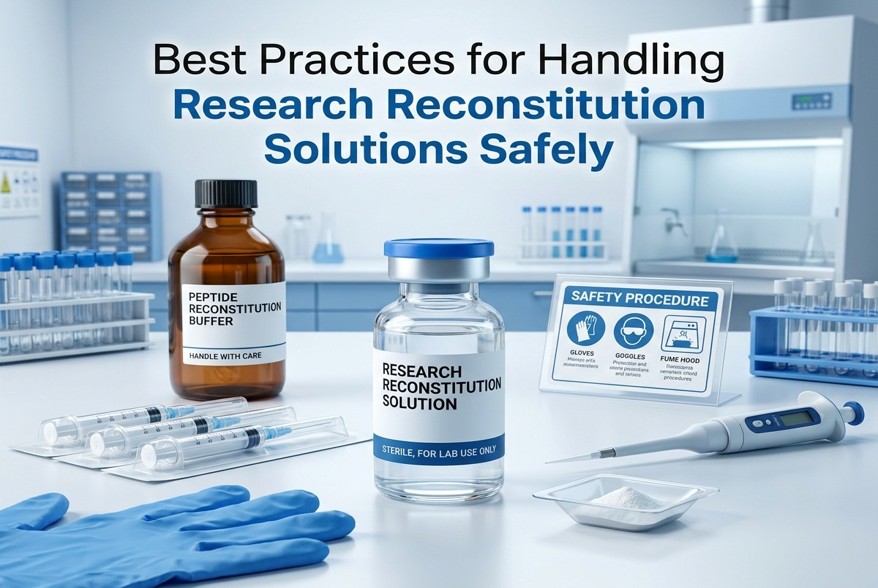
Anyone working in a research setting knows that how you handle your materials matters just as much as the research itself. Reconstitution solutions are a fundamental part of preparing lyophilized compounds for use in laboratory studies. Handled correctly, they preserve the integrity of your samples. Handled poorly, they can compromise weeks of work in seconds.
If you are new to this process or simply want to sharpen your technique, this guide covers the key practices every researcher should follow.
Reconstitution involves dissolving a dry, freeze-dried compound back into liquid form so it can be used in research applications. The solution used to do this is not just plain water in most cases. It is a carefully formulated liquid designed to dissolve the compound fully while maintaining its stability.
The most common reconstitution solutions include bacteriostatic water, sterile water, and acetic acid solutions, depending on the compound being prepared. Using the wrong solution for a particular compound can lead to degradation, poor solubility, or inaccurate results.
Before you begin, your workspace should be clean and free from contaminants. Use a sterile surface or a laminar flow hood if one is available. Wipe down your work area with an appropriate disinfectant and allow it to dry before placing any materials on it.
Cross-contamination is one of the most common and preventable causes of compromised research samples. Taking two minutes to prepare your environment properly saves far more time than troubleshooting contaminated results later.
Syringes, vials, and needles should all be sterile and used only once. Never reuse a needle or syringe between vials, even if you believe the contents are the same. This is a basic but critical rule in any research setting.
When adding solution to a lyophilized vial, inject slowly along the side of the vial rather than directly onto the powder. This gentle approach minimizes foaming and mechanical stress on the compound.
Researchers sourcing their materials should look for pharmaceutical-grade options. A quality Peptide Reconstitution Solution should come in a properly sealed, sterile vial with clear labeling that includes batch information and expiration dates.
Once a compound has been reconstituted, storage temperature becomes the primary factor in how long it remains stable. Most reconstituted research compounds should be refrigerated at around 2 to 8 degrees Celsius if they will be used within a short period, or frozen at minus 20 degrees Celsius for longer storage.
Never leave reconstituted samples at room temperature for extended periods. Even a few hours of uncontrolled temperature exposure can affect the quality of your sample.
Every time a reconstituted sample is frozen and thawed, there is potential for degradation. Prepare aliquots before freezing so you only thaw the amount you need for a given session. This simple step significantly extends the usable life of your prepared samples.
This sounds obvious, but unlabeled or poorly labeled vials are a genuine problem in busy research environments. Every vial should carry the compound name, concentration, date of reconstitution, and your initials. A label made at the moment of preparation takes seconds and prevents costly confusion later.
For those looking to standardize their workflow, using a reliable Peptide Reconstitution Solution with consistent specifications helps ensure reproducibility across different research sessions and batches.
Shaking a vial vigorously to speed up dissolution is one of the most damaging things you can do. Instead, gently swirl or roll the vial between your palms. If the compound is slow to dissolve, give it time. Patience here protects the structural integrity of the compound.
Both the reconstitution solution and the compound itself have shelf lives. Using expired materials introduces unnecessary variables into your research. Always check dates before beginning any preparation.
Good research practice requires that every step be documented. Note the lot number of your solution, the date of preparation, the volume used, and any observations during the process. This record is invaluable if questions arise about your results later.
Safe handling of reconstitution solutions comes down to consistency. Clean environment, sterile technique, proper storage, and clear documentation are the pillars of reliable research preparation. These habits protect your samples, your results, and the validity of your work.
Building these practices into your standard routine from the start makes every research session more dependable.
Disclaimer: All peptides and reconstitution solutions referenced in this article are intended strictly for laboratory and scientific research purposes only. They are not intended for human or animal consumption, medical use, or therapeutic application. Always follow your institution’s safety protocols and applicable regulations when handling research materials.


The experience of tooth pain occurs at its most inconvenient times. The condition starts as mild cold sensitivity and later develops into extreme pain that lasts indefinitely for some Livingston, New …
Posted May 8, 2026 Dental Care Dentistry
Connecting innovation decision makers to authoritative information, institutions, people and insights.

Medigy accurately delivers healthcare and technology information, news and insight from around the world.
Medigy surfaces the world's best crowdsourced health tech offerings with social interactions and peer reviews.
© 2026 Netspective Foundation, Inc. All Rights Reserved.
Built on Oct 20, 2026 at 5:05am