

Managing Editor
@ShahidNShah
@ShahidNShah

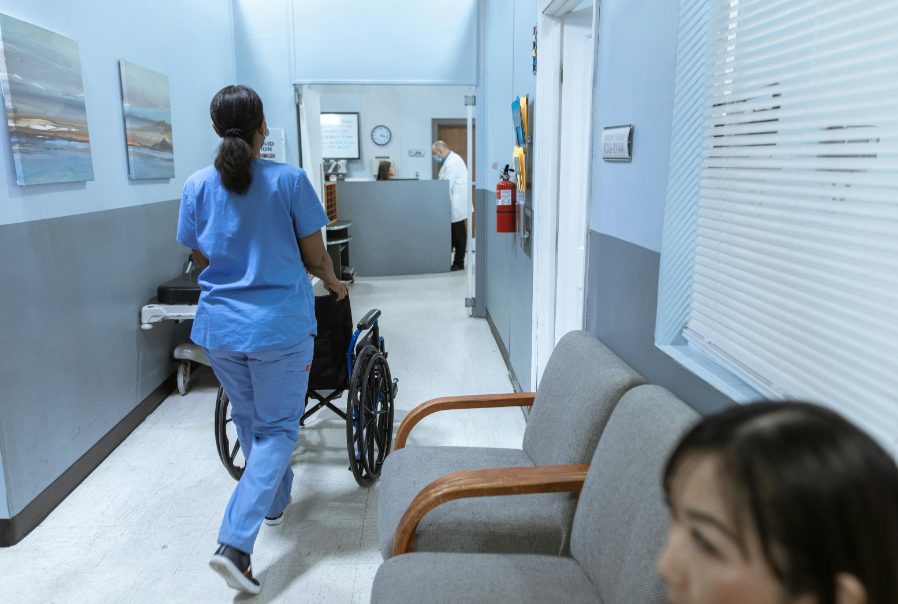
Modern healthcare is becoming more connected and the way you prepare for clinical work is changing with it. Clinical placements, once shaped by paperwork and uncertain schedules, now rely on digital platforms to make each hour in a hospital more meaningful and structured.
By removing many of the old logistical barriers, these systems make nursing education more responsive to both students and healthcare providers. The result is a clearer path to building clinical skills, helping you step into patient care with greater confidence and focus.
Waiting weeks for placement confirmations is quickly becoming a thing of the past. Digital placement hubs now coordinate much of the process, matching your learning needs with appropriate hospital departments. Instead of worrying about where you will be assigned next, you can spend more time focusing on the competencies that actually shape your future role.
These platforms also give you a clearer view of your progress. Rather than relying on physical logbooks that can be misplaced, your experiences are recorded in secure digital systems. This allows instructors to track your development in real time, making it easier for them to provide guidance that reflects what is actually happening during your shifts.
Moving into a clinical environment today requires more than traditional training. It also demands an understanding of the digital systems now embedded in healthcare. Educators are adapting by developing their own expertise, ensuring they can guide you through this evolving landscape.
To do that, many are turning to MSN nurse educator online programs to build the skills needed to teach in technology-driven settings. These programs help instructors lead virtual simulations, interpret placement data and integrate digital tools into their teaching.
When your educators understand both clinical practice and the technology behind it, your learning experience becomes more consistent and relevant.
This kind of preparation also means the tools you use are grounded in real nursing principles. Instead of feeling like add-ons, digital systems become part of a structured, evidence-based approach to care. With informed guidance, you can better understand the data you encounter in clinical settings and apply it more effectively.
Before you perform complex procedures on real patients, digital platforms give you a safe space to practice. High-fidelity simulations let you work through challenging scenarios, from sudden patient deterioration to detailed medication decisions, all within a controlled setting.
You are able to engage with situations that may not appear during a standard rotation, helping broaden your clinical exposure. At the same time, performance data is available almost immediately, allowing you to reflect on what worked and what needs improvement.
Repeating tasks in this environment helps build familiarity, so your responses become more natural over time.
This preparation does not replace hands-on care. Instead, it strengthens it. When you have already worked through the technical aspects in a simulated space, you can focus more fully on the human side of care when you are with actual patients.
The traditional model of delayed evaluations is being replaced by more immediate feedback. Digital placement systems allow preceptors to share observations shortly after each shift, giving you a clearer sense of how you are progressing.
This creates a more responsive learning process. Instead of waiting for formal reviews, you can adjust your approach right away and apply feedback while the experience is still fresh. Over time, this builds a stronger connection between learning and practice.
It also improves oversight across your training. Universities can monitor whether placements are providing the range of experiences you need. If something is missing, the data highlights it early, allowing you to make changes without disrupting your overall progression.
As telehealth and remote monitoring become more popular, clinical placements extend beyond the boundaries of actual hospitals. You might be faced with activities such as assessing patients via video consultations or analyzing data obtained through wearable technology.
Furthermore, some tasks involve working with several digital platforms simultaneously while maintaining interaction with your patient.
In other words, you have to learn another set of skills when interacting with patients online. It is necessary to establish rapport with them and demonstrate empathy as before, but now it can be done via a digital screen rather than in person.
Some additional cues, such as tone of voice, speech pace or even eye contact in a camera viewfinder, should be used in this case. Digital tools are helpful for acquiring these skills.
Eventually, after completing your study program, you become familiar with a variety of situations associated with the use of digital platforms during work in healthcare facilities. Whether you decide to work in an emergency department or provide remote medical consultations, you will be ready to face the challenges of this job successfully.
Chief Editor - Medigy & HealthcareGuys.
For patients managing allergies or sensitivities, finding medications that do not trigger reactions can be challenging. Many commercially available pharmaceuticals contain common irritants such as …
Posted Apr 28, 2026 Pharmaceuticals, Biotechnology & Drug Discovery Technologies
Connecting innovation decision makers to authoritative information, institutions, people and insights.

Medigy accurately delivers healthcare and technology information, news and insight from around the world.
Medigy surfaces the world's best crowdsourced health tech offerings with social interactions and peer reviews.
© 2026 Netspective Foundation, Inc. All Rights Reserved.
Built on Oct 14, 2026 at 4:06pm