

Managing Editor
@ShahidNShah
@ShahidNShah
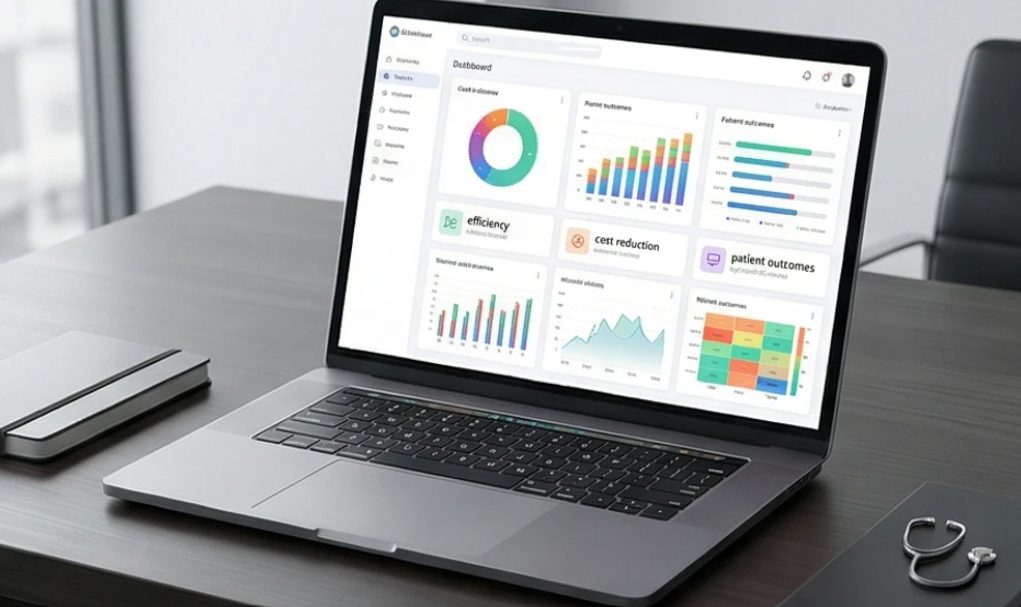
The promise of data-driven healthcare has been around for decades. The infrastructure to actually deliver on it is only just catching up.
Modern healthcare analytics solutions do more than generate reports. The best platforms ingest data from dozens of clinical sources, normalize it across incompatible systems, apply machine learning to surface risk and opportunity, and deliver insights in formats that clinicians and executives can act on — in real time, not next quarter.
But choosing the right health analytics platform is harder than it looks. The market ranges from broad enterprise systems used by the largest hospital networks in the country to specialized clinical analytics solutions built for specific domains like oncology, clinical trials, or FHIR-native interoperability. One-size-fits-all doesn’t exist here.
This guide covers the 9 best healthcare analytics software platforms available in 2026, with honest assessments of what each does well, who it’s built for, and what it costs. Kodjin leads the list — and for good reason.
| Rank | Solution | Primary Focus | Standout Capability | Pricing |
|---|---|---|---|---|
| #1 | Kodjin | FHIR-native clinical analytics | AI pathway & temporal analysis | Custom quote |
| #2 | Health Catalyst | Enterprise performance analytics | AI predictive modeling + DOS | $500K+ / yr |
| #3 | Arcadia | Value-based care & population health | Risk adjustment & quality metrics | $500K+ / yr |
| #4 | Epic (Cogito) | EHR-embedded analytics | SlicerDicer real-time cohorts | Enterprise millions |
| #5 | Oracle Health | EHR predictive decision support | Real-time ML risk models | $500K+ / yr |
| #6 | Optum | Claims & utilization analytics | Payer-provider financial insights | Custom enterprise |
| #7 | MedeAnalytics | Revenue cycle intelligence | Customizable KPI dashboards | From $50K / yr |
| #8 | Innovaccer | Unified population health | Patient record unification | Custom enterprise |
| #9 | Tableau | Healthcare data visualization | Interactive dashboards & blending | $15–$70/user/mo |

Kodjin is built differently from every other platform on this list. While most healthcare analytics software starts with a data warehouse and retrofits interoperability on top, Kodjin began with a different premise: what if the analytics layer was built directly on a FHIR-native data model, so clinical meaning was preserved at every stage of processing? The outcome is a true healthcare analytics solution for organizations that need both deep interoperability and serious analytical capability — not a trade-off between the two.
That architectural decision has compounding implications. When clinical data is stored as FHIR resources rather than flattened into a proprietary schema, queries can be expressed in clinical terms. Patient cohorts can be defined by medical logic. Temporal relationships — how a patient’s condition evolved over time — are preserved without complex joins or data engineering workarounds.
The result is a healthcare analytics platform that feels fundamentally closer to how clinicians actually think about patients and populations. That’s not a marketing claim. It’s an architectural outcome.
Kodjin’s FHIR-native foundation unlocks four analytical capabilities that warehouse-based clinical analytics solutions consistently struggle to replicate:
Kodjin is purpose-built for health systems navigating multi-EHR environments, digital health companies building FHIR-based infrastructure, and healthcare data teams that have outgrown rigid BI dashboards. It’s particularly strong for organizations running complex care coordination programs, multi-site operations, or real-world evidence initiatives that require clinical depth alongside interoperability compliance.
If your team spends more time preparing data than analyzing it, and your current healthcare analytics platform can’t answer clinical questions without a data engineering sprint, Kodjin is worth a close look.
Custom implementation and enterprise pricing. Contact Kodjin directly for project scoping and a tailored quote.

Health Catalyst’s Data Operating System (DOS) is one of the most established healthcare analytics platforms in the US market. It aggregates clinical, financial, and operational data across the enterprise, normalizes it, and makes it available through a library of pre-built applications and custom analytics workspaces.
Its AI predictive modeling covers readmission risk, sepsis prediction, and surgical quality benchmarking. The platform’s breadth makes it a practical choice for large integrated delivery networks that want analytics coverage across the entire organization — not just one domain.

Arcadia’s cloud-based healthcare analytics platform was built specifically for the demands of value-based care — where providers share financial risk and need visibility into quality, utilization, and population risk across complex payer-provider relationships.
Its risk stratification, quality measure tracking, and predictive modeling tools are well-suited for ACOs, Medicare Shared Savings participants, and health systems managing commercial risk contracts. Strong payer-provider data connectivity is the platform’s defining feature.
For organizations fully standardized on Epic, the Cogito analytics suite offers the lowest-friction path to clinical reporting. Because Cogito connects directly to live Epic data, there’s no external ETL and no warehouse synchronization delay — reports and dashboards reflect the current state of the EHR.
SlicerDicer, Epic’s self-service cohort exploration tool, is genuinely capable for operational and department-level analysis. The trade-off is portability: Cogito analytics are scoped to Epic-source data, which limits cross-vendor or multi-system analysis.

Oracle Health (formerly Cerner) integrates analytics directly into EHR workflows as embedded alerts and decision-support triggers — not as a separate reporting tool. Its real-time ML models score patients for sepsis risk, readmission likelihood, and clinical deterioration, delivered to clinicians at the point where they can act.
Oracle’s enterprise cloud infrastructure gives health systems a path toward modern data architecture while maintaining analytics continuity across clinical workflows. The platform’s expanding cloud ecosystem also creates integration opportunities with enterprise financial and operational systems.

Optum brings a distinct advantage to the healthcare analytics software market: scale. As a subsidiary of UnitedHealth Group, Optum sits on one of the largest claims and clinical datasets in the US, making its population-level analytics particularly powerful for payers and large provider organizations managing utilization and financial performance.
Its platform covers financial optimization, population health insights, and payer-provider benchmarking at a scale that few competitors can match. For organizations where claims data is the primary analytical currency, Optum’s depth of longitudinal data is a genuine differentiator.

MedeAnalytics targets a focused problem set: performance intelligence for revenue cycle management and payer-provider benchmarking. Its platform gives health systems and payers visibility into financial metrics, quality indicators, and operational KPIs through customizable dashboards and structured reporting workflows.
It’s not a clinical depth platform — MedeAnalytics won’t deliver pathway analytics or temporal clinical modeling. But for organizations primarily focused on financial performance and quality reporting, it’s a practical, accessible entry point into healthcare analytics solutions at a price point well below enterprise-scale alternatives.

Innovaccer’s unified data platform is built around a core capability: aggregating fragmented patient records from disparate source systems into a single longitudinal view. Its Master Patient Index and data normalization layer make it a strong choice for health systems dealing with significant data fragmentation across multiple EHRs, care settings, and provider organizations.
Risk stratification and population health management applications sit on top of that unified data foundation. For organizations where patient record fragmentation is the primary barrier to effective population health analytics, Innovaccer addresses the root problem.

Tableau is not a purpose-built healthcare analytics platform — it’s a general business intelligence and visualization tool that healthcare organizations use to build custom dashboards and reports on top of existing data infrastructure. That distinction matters: Tableau requires a clean, structured data source to work well, which means the heavy lifting of clinical data normalization and integration sits elsewhere.
Where Tableau excels is in flexibility and visual depth. Analytics and data teams with strong SQL skills can build sophisticated, interactive dashboards that surface operational and clinical trends in formats that executive and clinical audiences can actually engage with. At $15–$70 per user per month, it’s also the most accessible price point on this list.
Nine platforms. Very different architectures, strengths, and price points. Here’s a practical framework for narrowing the field.
Start with your data environment. If you’re running a single EHR and primarily need operational reporting, an embedded solution like Cogito (Epic) or Oracle Health is the path of least resistance. If you’re managing data across multiple EHRs or building toward FHIR-based interoperability, a platform with native FHIR support — like Kodjin — becomes strategically important.
Then think about the primary use case. Value-based care contracts and population risk management point toward Arcadia or Health Catalyst. Revenue cycle and financial benchmarking point toward MedeAnalytics or Optum. Clinical depth, pathway analysis, and real-time cohort logic point toward Kodjin. Patient record unification at scale points toward Innovaccer.
Finally, consider build versus buy. Tableau is effectively a build option — powerful, but it requires your team to construct the analytics layer. Every other platform on this list is a more turnkey clinical analytics solution, though the degree of customization varies significantly.
The right health analytics platform isn’t the one with the longest feature list. It’s the one that fits your data reality, your clinical priorities, and your team’s capacity to implement and operate it effectively.
Healthcare analytics has reached a maturity point where the question isn’t whether to invest in a platform — it’s which architecture fits where your organization is headed.
Enterprise solutions like Health Catalyst and Optum offer proven scale and broad coverage. Specialized platforms like Flatiron (for oncology) and Arcadia (for value-based care) deliver domain depth that generalists can’t match. Kodjin represents the FHIR-native frontier: a healthcare analytics software approach built for organizations that need genuine interoperability and clinical intelligence to work together, not separately.
Whatever you choose, the goal remains constant: make clinical and operational data work harder for the people delivering care. In 2026, the tools to do that have never been more capable. The gap between organizations that use them well and those that don’t is growing accordingly.

![8 Best Healthcare Analytics Consulting Companies for Data Integration & Strategy [2026]](/news/contributed-content/f2aee676-73c1-50b8-bd9a-975f89b79a89-featuredImage.jpeg)
Most healthcare organizations don’t have a data shortage — they have a strategy shortage. Claims feeds, EHR exports, lab systems, and pharmacy transactions accumulate faster than teams can make …
Posted Apr 26, 2026 Healthcare Big Data Data Analytics
Connecting innovation decision makers to authoritative information, institutions, people and insights.

Medigy accurately delivers healthcare and technology information, news and insight from around the world.
Medigy surfaces the world's best crowdsourced health tech offerings with social interactions and peer reviews.
© 2026 Netspective Foundation, Inc. All Rights Reserved.
Built on Oct 11, 2026 at 6:05pm