

Managing Editor
@ShahidNShah
@ShahidNShah

When a healthcare service changes how it uses a building, the water system needs consideration. A treatment room may become a store, a ward may close temporarily, or a shower may fall out of use. Reduced use can allow water to stagnate, creating conditions that favour legionella growth.
Facilities managers need to hear about those changes while they are being planned. Clinical teams also need to understand why a room closure or an unused outlet matters to the people managing the water supply. Awareness helps that conversation happen before a maintenance problem interrupts care.
Legionnaires’ disease is a potentially fatal form of pneumonia associated with inhaling airborne droplets containing legionella bacteria. Some patients are more susceptible because of age, illness or a weakened immune system. Healthcare providers should assess their hot and cold water systems and the people who could be exposed.
In Great Britain, the Control of Substances Hazardous to Health Regulations require operators to assess and appropriately prevent or control exposure. HSE’s Approved Code of Practice L8 provides guidance on managing legionella risks. In England, NHS Health Technical Memorandum 04-01 adds healthcare-specific guidance covering water system design and operation.
A healthcare organisation should consider its actual premises and patient population. Arrangements suitable for a small outpatient facility may need substantial adaptation for a hospital with complex water services and vulnerable patients.
The person responsible for managing legionella risks needs sufficient authority, knowledge and experience. They also need to understand the water system. Where responsibilities are shared, the organisation must make clear how each person’s work fits into the overall arrangements.
For a facilities director, a useful test is whether the responsible person can obtain repairs and specialist advice when monitoring identifies a problem. A named individual without access to maintenance resources may struggle to secure timely action. Agree who covers absence and who receives urgent reports outside normal working hours.
Contracting out monitoring or treatment does not remove the need for oversight. Specify what the contractor will do, which findings require immediate contact and who checks that corrective work has been completed.
Human Focus’s Legionella Awareness Training covers health risks, how infection spreads and control principles. It can support staff understanding, alongside instruction on the particular premises and their assigned responsibilities.
In leased healthcare space, clarify who controls the water system. Ask who maintains the central supply and who manages outlets within the clinic. Agree how each party reports a change or failed check to the other. Keep contact details in the local procedures, including cover when the usual contact is unavailable.
The assessment needs an accurate description of the water system and how it operates. Relevant factors include water temperature, stored or recirculating water, possible sources of nutrients for bacteria and the production of droplets. It should also consider who may be particularly susceptible to infection.
Ask whether the assessor has drawings and access to the areas needed for the assessment. Discuss rooms that are intermittently occupied and equipment connected to the supply. Staff who use those spaces may know that an outlet described as regularly used is now rarely opened.
Record the arrangements for planned closures. A department moving temporarily needs to tell the responsible person which outlets will remain in use and who can access the empty rooms. Before reopening, obtain advice on the checks or remedial work needed under the water safety arrangements.
The written control arrangements should explain what needs checking and how unacceptable results are handled. Cleaning and disinfection methods and frequencies should follow the risk assessment, taking account of the system and identified problems.
Instructions need to be usable by the people carrying out the work. Identify the outlets clearly, provide the necessary equipment and explain where results are recorded. When flushing is required, staff need a method appropriate to the location and the risks, including instructions for reporting an inaccessible outlet.
Hot water introduces another consideration in healthcare: scalding. Precautions against scalding should not introduce other risks, including legionella. Temperature controls and mixing arrangements therefore need coordinated assessment and maintenance. Staff should report concerns rather than adjusting system settings without authorisation.
Check that routine tasks can be completed during a working shift. Access restrictions, missing keys and conflicting responsibilities are matters for managers to resolve. Repeatedly recording that a check could not be completed should prompt action on the reason.
Monitoring records should show what was checked, when it was checked and the result. They need to support review of whether the controls are working. Ask for an explanation of repeated abnormal readings and outstanding corrective actions.
A useful management report connects the finding to the response, names the person responsible and gives a date for checking the outcome. Where testing for legionella forms part of the arrangements, its purpose and frequency should reflect the assessed risk. Results should be considered alongside the condition and operation of the system.
Managers considering legionella risk assessment training can review Human Focus’s programme on risk-management principles for responsible persons. Training needs to match the role; complex healthcare assessments may require specialist experience beyond an online course.
NHS England’s water guidance addresses healthcare management, water safety groups and estates teams, as well as designers and contractors. That range of roles is relevant when a service changes rooms, purchases equipment or commissions refurbishment.
Arrange for the appropriate water safety specialists to review proposals before work or operational changes proceed. Include cleaning and clinical colleagues when their activities affect the proposed arrangements. Agree who updates the records and briefs staff when a room returns to use.
At the next service-planning meeting, identify planned changes that affect water use. Give each change a named contact in the facilities team and an agreed review point. That creates a practical opportunity to deal with water safety while the programme and budget can still accommodate the work.

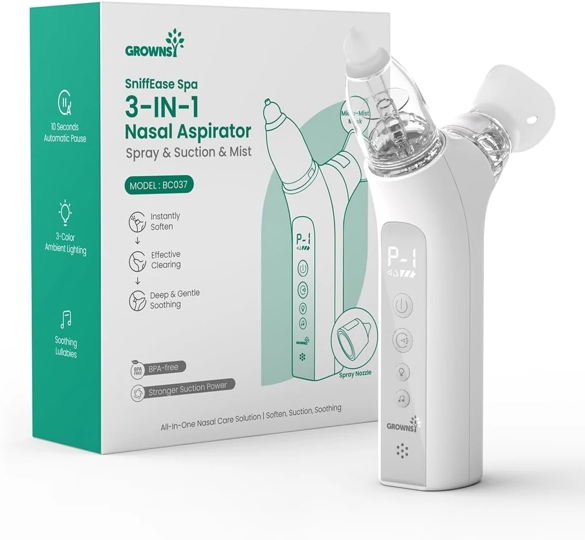
Health technology is no longer limited to hospitals and clinics. More and more, it is moving into the home. Remote monitoring, connected scales and smart thermometers are now common. A quieter part of …
Posted Oct 18, 2026 Pediatricians Health Technology
Connecting innovation decision makers to authoritative information, institutions, people and insights.

Medigy accurately delivers healthcare and technology information, news and insight from around the world.
Medigy surfaces the world's best crowdsourced health tech offerings with social interactions and peer reviews.
© 2026 Netspective Foundation, Inc. All Rights Reserved.
Built on Oct 19, 2026 at 6:05pm