

Managing Editor
@ShahidNShah
@ShahidNShah

Buying an ultrasound device for an aesthetic clinic is not the same as buying an ultrasound device for an emergency department, hospital ward, or general POCUS program.
In facial aesthetics, the most important question is usually not whether a device can scan the heart, abdomen, lungs, and deep vessels. The more practical question is whether it can help clinicians see superficial facial anatomy clearly, quickly, and comfortably during real treatment-room decisions.
That is where EagleView Ultrasound fits into the discussion.
EagleView is a high-frequency wireless linear ultrasound device designed around superficial imaging needs. For aesthetic clinics, its value does not come from being a broad multi-specialty platform. Its value comes from a more focused combination: a 16/20 MHz linear probe, shallow depth settings of 10, 20, 30, and 40 mm, Doppler support, wireless app-based operation, and a one-time purchase model without a required subscription.
For clinics involved in dermal fillers, facial soft tissue imaging, and vascular assessment, the focused design matters.
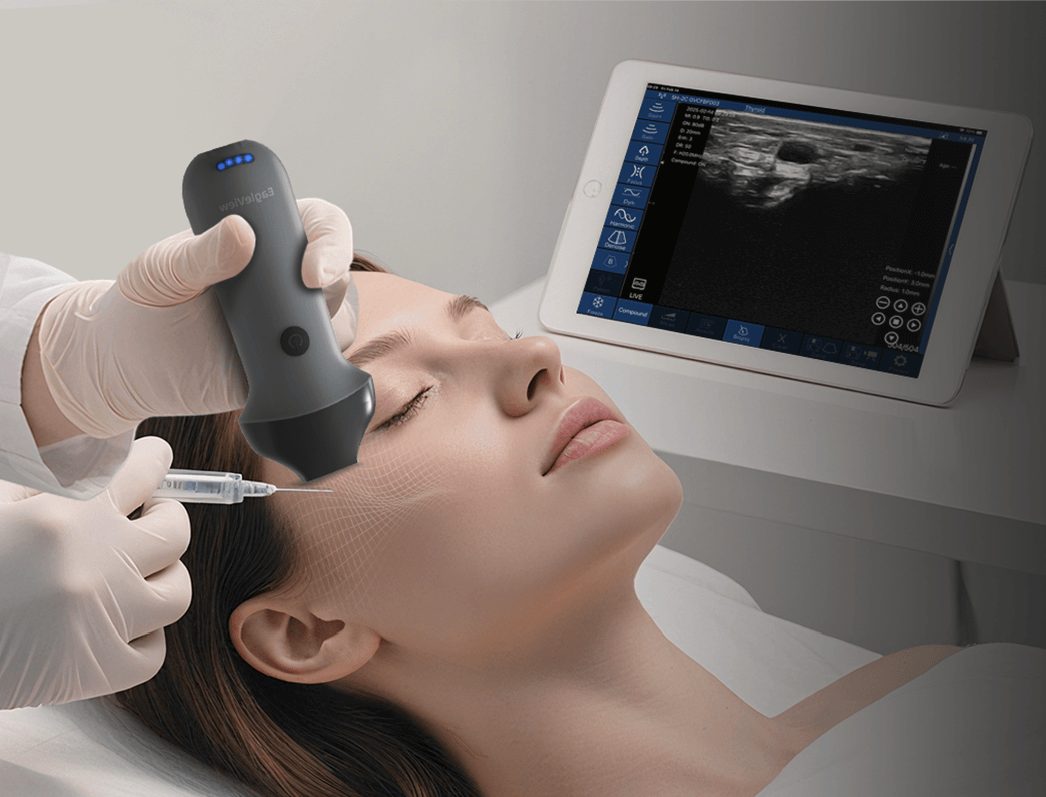
Figure 1. EagleView wireless ultrasound is designed to support superficial facial imaging in aesthetic treatment-room workflows.
This guide explains how aesthetic clinics should evaluate ultrasound devices, which common buying mistakes to avoid, and why EagleView high-frequency linear wireless handheld ultrasound may be a practical fit for clinics that prioritize superficial imaging, workflow simplicity, and predictable ownership cost.
Aesthetic medicine depends on anatomy, but anatomy varies from patient to patient.[1]
Experienced injectors understand expected vessel pathways, tissue layers, and high-risk facial zones. However, surface appearance and palpation cannot always show what is happening beneath the skin. This becomes especially important when a patient has a history of prior filler treatment, swelling, asymmetry, nodules, or concern in a high-risk treatment area.
Ultrasound can help clinicians add a visual layer to their decision-making. In aesthetic practice, it may support:
For these use cases, the device does not need to be the most complex ultrasound system available. It needs to be appropriate for facial appliactions.
That means superficial image quality, a suitable linear probe, shallow depth control, Doppler capability, and treatment-room usability should come before broad general-purpose specifications.
EagleView wireless linear ultrasound is best understood as a focused ultrasound option for clinics that need practical superficial imaging.
Its 16/20 MHz linear probe is aligned with shallow soft-tissue and facial scanning needs. The device offers 10, 20, 30, and 40 mm depth settings, which support the shallow imaging range often needed in aesthetic work. It also supports B-mode, M-mode, Color Doppler, Power Doppler, and PW Doppler, giving clinicians access to core imaging modes for soft tissue and vascular assessment.
The wireless design is another major part of its appeal. EagleView connects to a phone or tablet via Wi-Fi, allowing the clinician to move around the patient more freely and position the screen where it is easiest to view.
For an aesthetic clinic, these details are not minor conveniences. They can determine whether ultrasound becomes part of the daily workflow or remains an expensive device that is rarely used.

Figure 2. The app-based viewing interface allows clinicians to review ultrasound images directly on a phone or tablet during consultation, treatment planning, or follow-up assessment.
One of the most common mistakes is choosing a device because it appears impressive as a general POCUS system.
A broad handheld ultrasound platform may be excellent for emergency medicine, hospital use, vascular access, lung scanning, or cardiac imaging. But aesthetic clinics often need something different.
Facial scanning usually focuses on shallow structures. The clinician may need to identify tissue layers, locate filler, assess superficial vessels, or assess an area of swelling. These targets are often only a few millimeters to a few centimeters beneath the skin.
That is why a dedicated high-frequency linear scanner can make more sense than a broad device designed to cover many unrelated clinical scenarios.
EagleView’s role is not to replace every ultrasound platform. It is to serve clinics that mainly need focused superficial imaging in an aesthetic treatment setting.
High frequency is important, but frequency alone does not define a good aesthetic ultrasound device.[2]
Aesthetic buyers should avoid asking only, “How many MHz does it have?” A better question is:
Can the device clearly show the superficial structures we need to evaluate in real facial treatments?
For facial aesthetics, frequency should be considered together with[2]:
EagleView combines a 16/20 MHz linear probe with shallow depth options of 10, 20, 30, and 40 mm. This pairing is important because aesthetic clinics are not only looking for a high number on a spec sheet. They need a device that can focus on the correct anatomical depth.
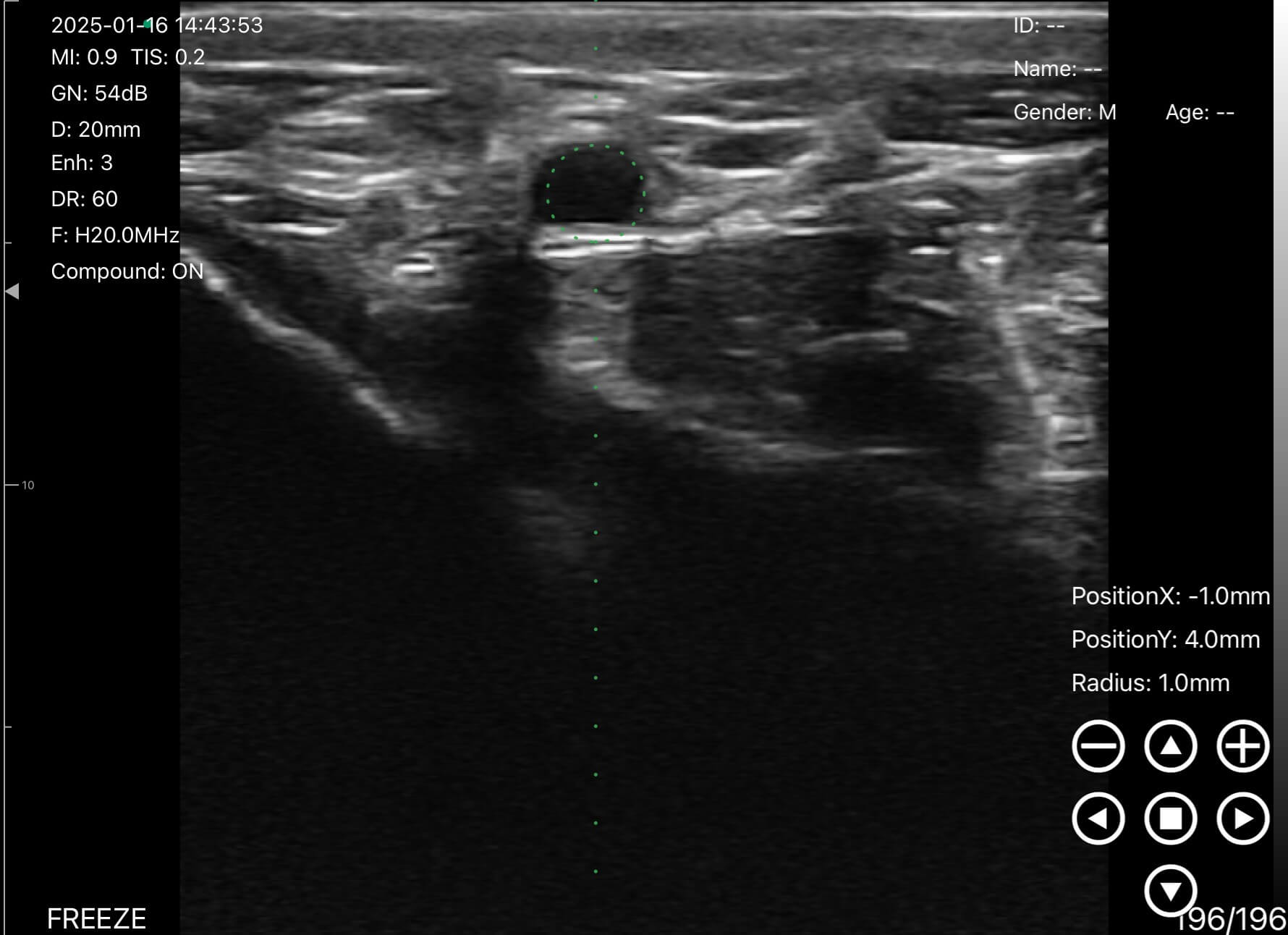
Figure 3. Superficial facial scanning requires attention to shallow tissue layers, which is why probe frequency, near-field clarity, and depth control matter in aesthetic ultrasound.
This is where EagleView’s design becomes relevant. It is built around the type of shallow, superficial imaging that facial aesthetic clinics are more likely to use in daily practice.

Figure 4. A 20 mm depth example illustrates how shallow-depth imaging can support superficial facial soft-tissue assessment.
A device can perform well on paper but still fail in the clinic.
In aesthetic medicine, workflow matters because appointments move quickly. Treatment rooms are often compact. Clinicians need to scan, explain, plan, and document without turning the visit into a complicated imaging session.
If a device is slow to connect, difficult to clean, awkward to position, or limited by cables, it may be used less often.
Wireless design can make a meaningful difference. With EagleView, the scanner connects to a phone or tablet, allowing the clinician to place the screen where it is convenient and scan without cable interference. This can make the device easier to integrate into consultations, treatment planning, and follow-up assessments.
The most expensive ultrasound device is not always the one with the highest price tag. Sometimes it is the one that stays in the drawer because it is too inconvenient to use.
For clinics evaluating EagleView wireless ultrasound, the most relevant features are not just technical specifications. They are practical answers to common aesthetic workflow needs.
| Aesthetic Clinic Need | EagleView Feature | Why It Matters |
| Superficial facial imaging | 16/20 MHz linear probe | Supports shallow soft-tissue visualization |
| Layer-focused scanning | 10, 20, 30, 40 mm depth settings | Helps clinicians focus on facial-depth anatomy |
| Vascular-related assessment | Color Doppler, Power Doppler, PW Doppler | Useful for vessel mapping and assessment when used by trained clinicians[1][2] |
| Treatment-room mobility | Wireless handheld design | Reduces cable interference and improves room flexibility |
| App-based workflow | Phone/tablet connection over Wi-Fi | Allows portable image viewing and documentation |
| Cost predictability | No required subscription | Helps clinics plan long-term ownership cost |
| Focused clinical use | Superficial imaging orientation | Avoids paying for broad features that may not be central to facial aesthetics |
This is the main buying logic behind EagleView. It is not positioned as the most universal ultrasound device. It is positioned as a focused tool for clinics that want practical ultrasound access for superficial scanning and aesthetic workflows.
EagleView may be especially relevant in several common aesthetic scenarios.[1][6]
A patient may arrive without clear information about which filler was used, where it was placed, or how long ago the treatment occurred. In this situation, high-frequency superficial imaging can help clinicians evaluate whether filler appears to be present and where it may be located.
Areas such as the lips, nose, tear trough, temple, and glabella require careful anatomical evaluation. Doppler-supported ultrasound may help clinicians assess superficial vascular structures before treatment planning.
When a patient presents with swelling, unevenness, or a palpable concern, an ultrasound may provide additional information about the superficial tissue area. This can support more informed follow-up decisions.
When correction or dissolution is being considered, ultrasound may help identify the area of interest more precisely. This can support a more targeted and documented approach.
Ultrasound images can also help explain anatomy and treatment considerations to patients. For clinics, this can improve communication and support a more transparent consultation process.
Aesthetic clinics should compare ultrasound devices based on intended use, not simply on brand recognition or the total number of applications.
| Buying Question | Focused Device such as EagleView | Broad General POCUS Device |
| Is the main use facial scanning? | Strong fit | Depends on probe and near-field performance |
| Is superficial imaging the priority? | Yes | Not always |
| Is a high-frequency linear probe important? | Central to the device | May be one of many options |
| Is wireless treatment-room workflow important? | Yes | Varies |
| Is the clinic trying to control long-term cost? | No required subscription model may help | May involve memberships or add-on software |
| Does the clinic need cardiac, lung, abdominal, and deep vascular scanning? | Not the primary fit | Often a better fit |
The point is not that one category is always better than the other. The point is that aesthetic clinics should not buy more devices than they need, or the wrong type of device for their daily use.
If a clinic needs one ultrasound platform for multiple specialties, a broad POCUS system may be more appropriate.
If the clinic mainly needs facial scanning, filler assessment, superficial soft-tissue imaging, and a wireless workflow, EagleView may be the more practical choice.
EagleView is especially suitable for clinics that:
This makes EagleView a strong fit for aesthetic practices that want to add ultrasound without adopting a large, complex, or expensive multi-specialty platform.
EagleView may not be the best fit for every buyer.
Clinics may want a general POCUS device if they need:
This distinction is important. EagleView is strongest when it is evaluated for the job it is designed to do: focused, superficial imaging in a portable, wireless format.
Before choosing an ultrasound device, aesthetic clinics should ask:[2]
If the answers point toward superficial imaging, wireless workflow, and predictable cost, EagleView deserves serious consideration.
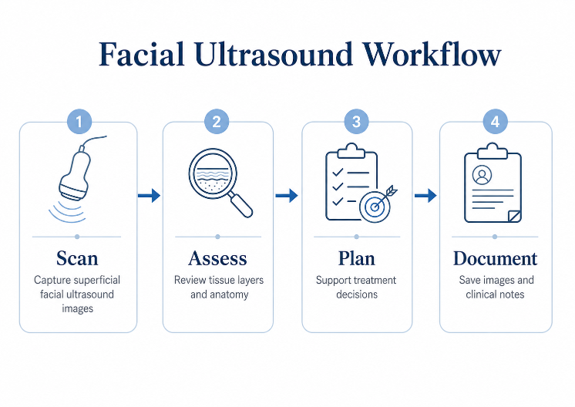
Figure 5. A practical ultrasound workflow can support assessment, planning, documentation, and patient communication.
For aesthetic clinics, the best ultrasound device is not necessarily the one with the longest feature list. It is the one that fits the clinical job.
Facial aesthetic work often requires clear superficial imaging, shallow depth control, Doppler support, easy treatment-room use, and predictable cost. EagleView brings these priorities together in a focused wireless ultrasound device designed for superficial scanning needs.
It is not intended to be a universal ultrasound platform for every clinical specialty. That is not its main advantage. Its advantage is focus.
For clinics that want to integrate ultrasound into facial aesthetics, filler assessment, vascular mapping, and patient communication without taking on unnecessary complexity or recurring subscription costs, EagleView offers a practical and value-oriented path forward.

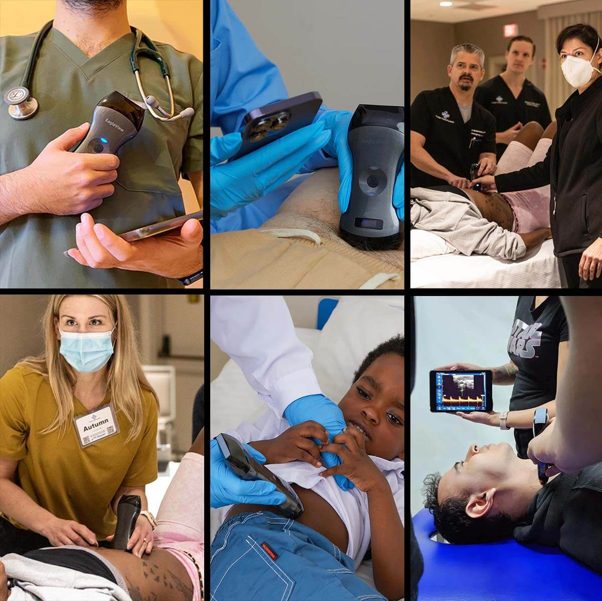
Introduction For many clinicians, handheld ultrasound is not chosen in a vacuum. It is selected for a specific clinical setting: a busy emergency department, an ICU bedside, a procedure room, a mobile …
Posted May 6, 2026 Health Technology Medical Devices
Connecting innovation decision makers to authoritative information, institutions, people and insights.

Medigy accurately delivers healthcare and technology information, news and insight from around the world.
Medigy surfaces the world's best crowdsourced health tech offerings with social interactions and peer reviews.
© 2026 Netspective Foundation, Inc. All Rights Reserved.
Built on Oct 21, 2026 at 5:05am