

Managing Editor
@ShahidNShah
@ShahidNShah
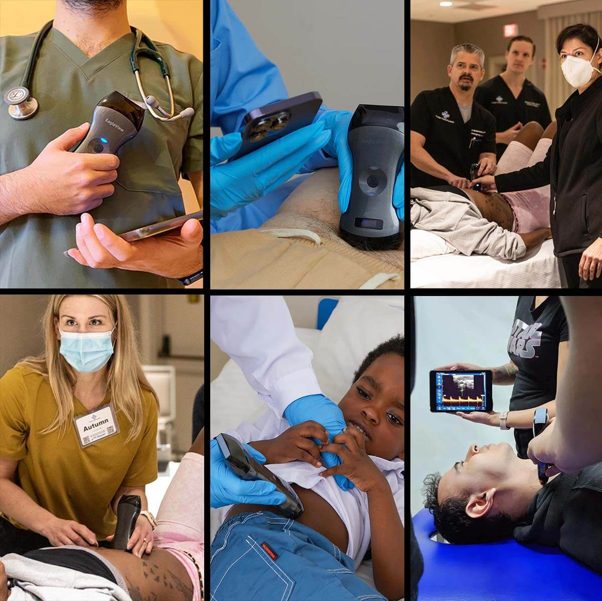
For many clinicians, handheld ultrasound is not chosen in a vacuum. It is selected for a specific clinical setting: a busy emergency department, an ICU bedside, a procedure room, a mobile care environment, or a primary care office where ultrasound is being added to routine assessment.
Each setting creates different expectations. A device that works well for fast lung checks at the bedside may not be the same system a team prefers for vascular access, abdominal assessment, or repeated follow-up scans. For that reason, a practical POCUS buying decision should begin with the clinical environment, the expected exam mix, and the people who will use the system most often.
This guide explores handheld ultrasound through a practical, clinical perspective. Instead of focusing only on brand recognition or specifications, it considers how a portable ultrasound system may support everyday scanning in real clinical workflows.
This article is intended for clinicians and teams evaluating handheld ultrasound for routine point-of-care use. It is most relevant to emergency medicine, critical care, hospital medicine, anesthesia, primary care, mobile care, and training programs that need a system for repeated bedside scanning.
It is not written as a guide to highly specialized departmental imaging. Instead, the focus is on practical POCUS use, where speed, usability, probe coverage, cleaning, battery life, software access, and long-term cost can all affect whether a device is used consistently in daily practice.
In point-of-care ultrasound, the best device is not always the one with the longest feature list. A system that supports fast setup, reliable scanning, simple probe selection, easy cleaning, and predictable cost may be more useful in daily practice than a more complex platform with features that are rarely used.
For many routine POCUS exams, convex and linear imaging cover a large share of bedside needs, including abdominal, lung, vascular, musculoskeletal, and superficial applications. Phased-array or sector capability can still be important, especially for cardiac-focused users, but it may not be the first priority for every clinician or department.
Wireless design is also worth considering. Without a cable between the probe and the mobile device, scanning can feel more flexible at the bedside, and cleaning may be more straightforward after use. When combined with probe versatility, battery life, software access, and total ownership cost, these practical factors can strongly influence which portable ultrasound system offers the best fit.
This comparison uses a practical screening approach rather than a single “best device” ranking. how easily it moves between rooms, the right handheld ultrasound is usually determined by three layers of fit.
The first layer is clinical coverage. A system should support the exams a team performs most often, such as abdominal, lung, vascular, musculoskeletal, superficial, or cardiac-focused assessments. Probe configuration, imaging modes, depth, and preset support all matter at this stage.
The second layer is operational fit. This includes how quickly the device can be set up, how easily it moves between rooms, whether it uses a wired or wireless design, how simple it is to clean, and how well it works for multiple users in the same department or care setting.
The third layer is long-term value. Purchase price is only one part of the decision. Software access, subscriptions, warranty coverage, battery performance, training needs, and future maintenance can all affect the real cost of using a handheld ultrasound system over time.
Using this framework, the comparison below reviews several widely discussed portable ultrasound systems from the perspective of daily POCUS use, not just from the perspective of headline specifications.
The table below compares several commonly discussed handheld ultrasound options across practical purchase factors such as price, probe type, connectivity, and basic probe coverage.
| Feature |
|

Clarius |

GE Vscan |

Philips Lumify |

Butterfly |
| Price | $2700 | $3,590+ | $4,999+ | $7,000+ | $3899+ |
| Probe Type | Dual-head | Single head | Dual-head | Single head | Single head |
| Convex | ✔️ | ✔️ | ✔️ | ✔️ | ✔️ |
| Linear | ✔️ | ✔️ | ✔️ | ✔️ | ✔️ |
| Phased | ✔️ | ✔️ | ✔️ | ✔️ | |
| Signal Transmission | WiFi | WiFi | WiFi | Cable | Cable |
For many POCUS buyers, convex probe capability is one of the most important decision factors because it supports a wide range of common bedside exams. The following table focuses on the comparison of practical specifications that may affect routine use.
| Item | EagleView (CProbe-CL) | Clarius C3 HD3 | GE Vscan Air (CL) | Philips Lumify C5-2 | Butterfly iQ3 |
| Price (USD) | $2700 | $3590 + $595/yr membership | $4999+ | $7000+ | $3899 + membership |
| Array / Probe Type | Dual-head (Convex + Linear + Phased) | Convex | Dual (Convex + Linear) | Convex | CMUT whole-body (covers linear/convex/phased via presets) |
| Frequency (MHZ) | Convex 3.5/5, Linear 7.5/10 | 2–6 | Convex 2–5 | 5–2 | 1–10 |
| Max Depth | Convex 30.5cm, Linear 10cm | 40cm | 24cm | 30cm | 30cm |
| Imaging Modes | B / M / Color / PW / PD | B / M / Color / PD / PW | B / M / CD / PW | Membership tiers include M-mode/Color; higher tiers add Power + PW | B / M / CD / PW / PD |
| Applications | Vascular, MSK, breast, pediatrics, thyroid, carotid, small parts, nerve, abdomen, cardiac, gynecology, obstetrics, urology, kidney, lung | Abdomen, bladder, cardiac, lung, MSK, superficial, nerve, OB/GYN, prostate, labor & delivery, hip, shoulder, spine | OB/GYN, abdominal imaging, MSK, and more | Abdomen, lung, vascular, OB/GYN, MSK | Abdomen, cardiac, lung, vascular, MSK, OB/GYN, bladder, nerve, OB/GYN, small organs, urology, ophthalmic |
| Connectivity | Wi-Fi | Wi-Fi | Wi-Fi | Cable | Cable |
| Weight | 260g / 9.2oz | 308g / 10.9oz | 205g / 7.2oz | 135g / 4.8oz | 309g / 10.9oz |
| Scan Time / Battery | 3–5 hrs | 60 min | 50 min | 2–5 hrs | 2 hrs |
| Warranty | 18/36 months (optional) | 3-year | 3-year | 5-year | 3-year |
| Subscription | No | Membership is not required to function, but gates advanced features & cloud/DICOM | No | 199×12* | Membership tiers $299-$420/yr, $897-$1000/3yr, or $1,500 one-time |
CD: color Doppler, PD: power Doppler, PWD: pulsed-wave Doppler.
A comparison table is helpful, but it still cannot reflect everything that affects real clinical use. It does not fully show image quality and scanning feel, preset tuning, app stability, lag, learning curve, or how naturally a device fits into a clinician’s scanning routine.
Those points are often best evaluated through hands-on use, especially for teams that expect to use handheld ultrasound frequently or across multiple users.
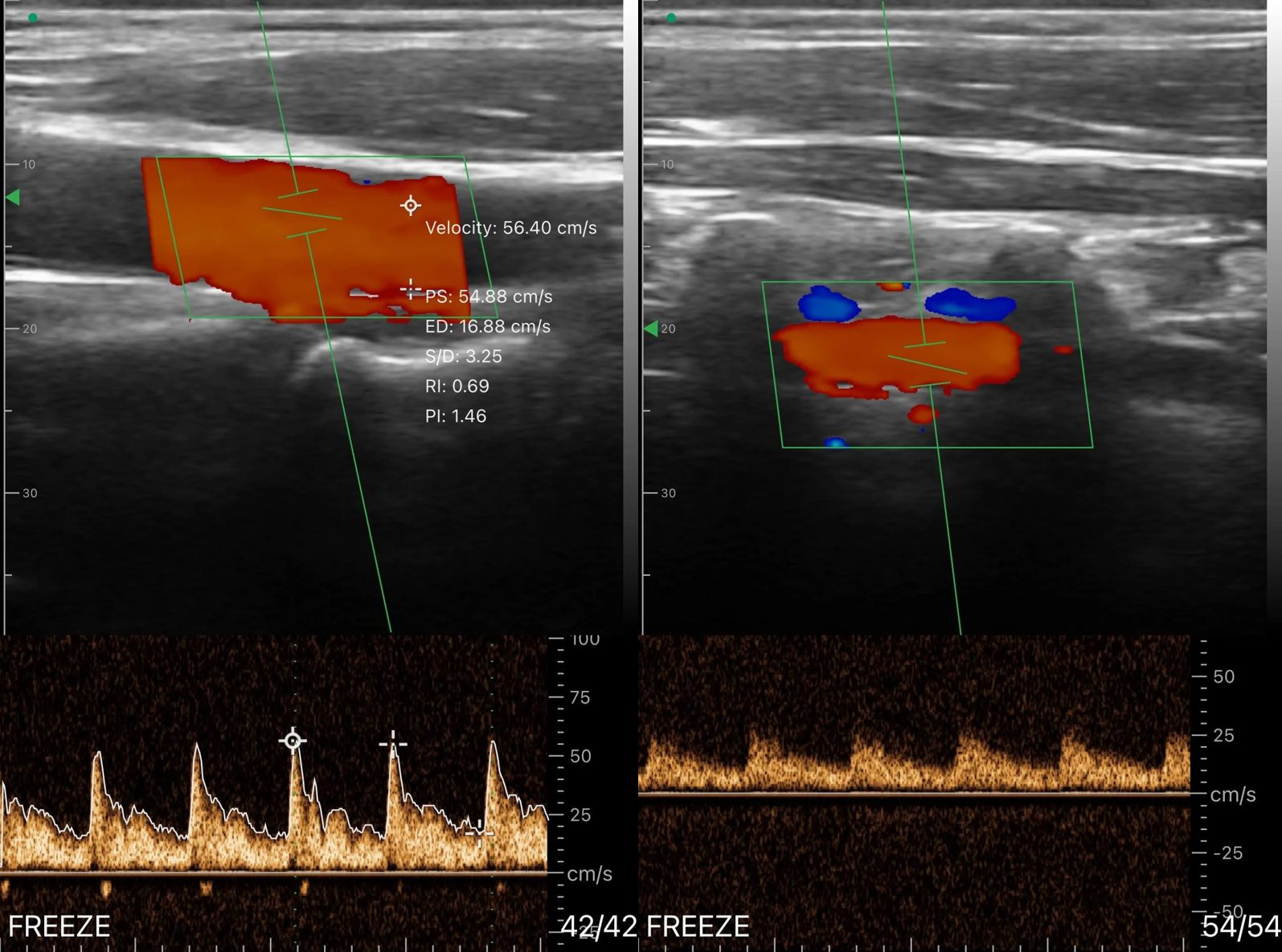
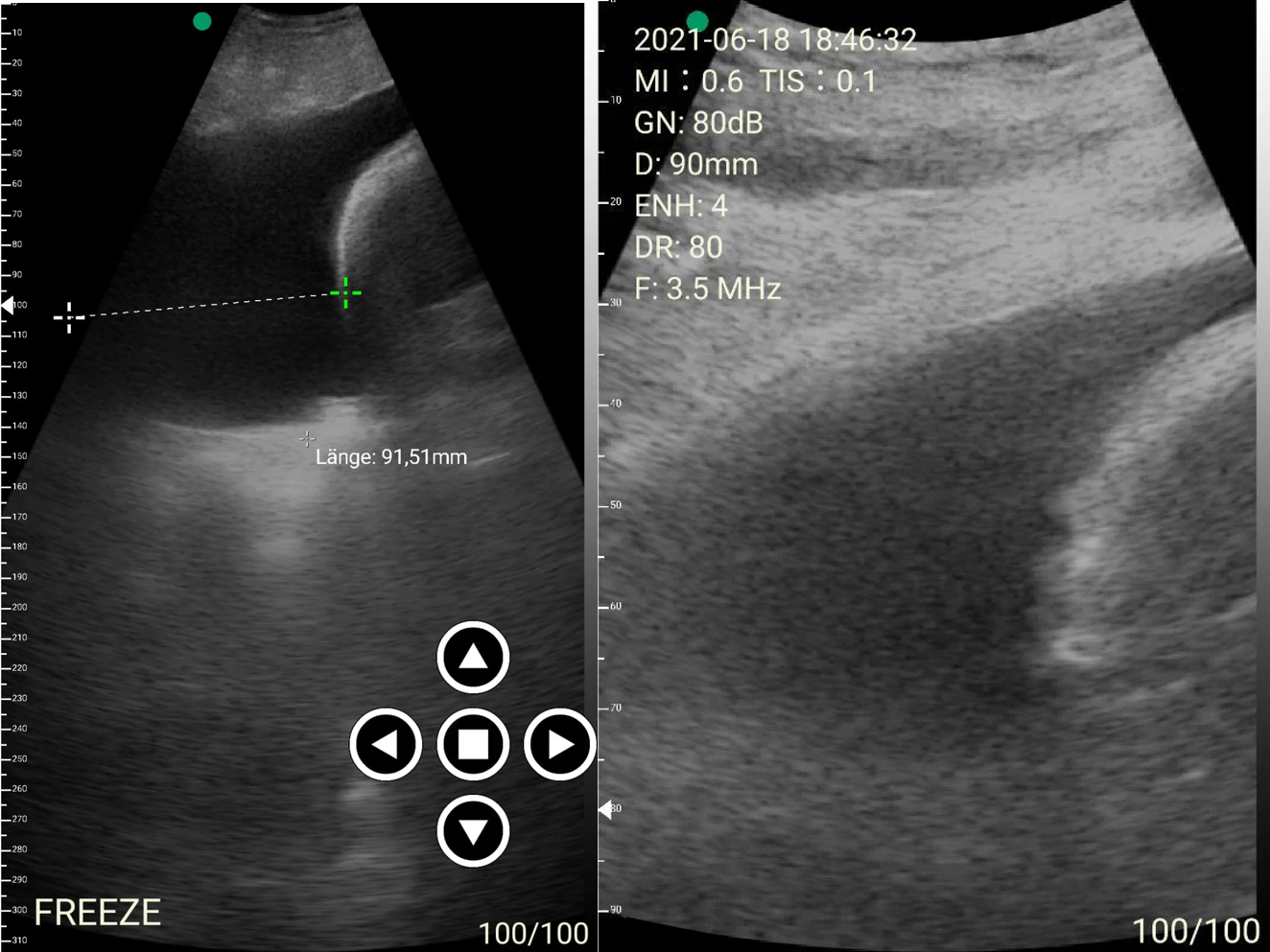
Short clinical examples can help illustrate how a system performs in use, beyond what a specification table alone can show.
The images display the carotid artery and vertebral artery in pulsed-wave Doppler mode.

The image shows the measurement of the inferior vena cava diameter.
The image shows pleural effusion and lung views, including a large pleural effusion with the diaphragm and liver visible.
Different handheld systems reflect different priorities. Some clinicians place greater value on ecosystem maturity and platform familiarity. Others care more about portability, bedside flexibility, or managing long-term cost.
Because of that, there is no single device that is automatically the right answer for every department or every clinician. The best option depends on where the system will be used, how it will be used, and how often it will be used.
In this type of workflow-based evaluation, EagleView Wireless Handheld Ultrasound may be a practical option for clinicians or teams that need broad bedside scanning capability without moving immediately into a higher-cost platform.
Its value is less about replacing every advanced ultrasound system and more about supporting routine POCUS use across common clinical scenarios. For departments, mobile care teams, training programs, or budget-conscious buyers, this can make it a useful option when the goal is to expand access to handheld ultrasound while keeping the system simple enough for everyday use.
EagleView may be especially relevant when users want one device to cover multiple routine applications, including abdominal, lung, vascular, superficial, musculoskeletal, and selected cardiac-related exams. In that context, the appeal is not only the specification list, but the way probe coverage, wireless use, scan time, and cost structure come together for practical bedside deployment.
EagleView may not be the best fit for every user. Clinicians who need a very mature software ecosystem, highly specialized imaging tools, or a platform already standardized across a large hospital network may prefer another system.
For that reason, it is better understood as a flexible handheld ultrasound option for routine POCUS use rather than a universal solution for every specialty or imaging environment.
Choosing a handheld ultrasound for routine POCUS should start with the way the device will actually be used. Clinical coverage, ease of setup, mobility, cleaning, software access, battery life, and long-term cost can all shape whether a system works well in daily practice.
EagleView Wireless Handheld Ultrasound offers a practical combination of multi-application scanning, portable use, and cost-effective implementation. For clinicians or teams looking for a handheld ultrasound system for routine bedside work, it may be a strong option to consider. However, the final decision should still depend on specialty needs, scanning habits, software expectations, and the clinical environment where the device will be used most often.


Most healthcare organizations don’t fail at compliance because they lack effort. They fail because their tools weren’t built for the specific demands of HIPAA, HITECH, and CMS …
Posted May 6, 2026 Health Technology Compliance
Connecting innovation decision makers to authoritative information, institutions, people and insights.

Medigy accurately delivers healthcare and technology information, news and insight from around the world.
Medigy surfaces the world's best crowdsourced health tech offerings with social interactions and peer reviews.
© 2026 Netspective Foundation, Inc. All Rights Reserved.
Built on Oct 21, 2026 at 5:05am
