

Managing Editor
@ShahidNShah
@ShahidNShah

Consumer DNA testing has made genetic information easier to access, but the downloadable raw data file creates a second decision point. Once a person has the file, third-party tools can be used to explore variants that were not discussed in the original provider’s dashboard. That portability can improve genetic literacy. It can also create false confidence if a research association is mistaken for a diagnosis, a medication recommendation, or a complete picture of disease risk.
That distinction matters for consumers, clinicians, and patients who bring direct-to-consumer findings into medical conversations. Responsible raw DNA analysis should help users see what is actually present in the file, explain the evidence behind an interpretation, protect genetic privacy, and make the limits impossible to miss.
Most direct-to-consumer raw DNA files are structured lists of genotype calls at selected genetic markers. A typical entry identifies a marker, often by an rsID, together with its chromosome position and the alleles detected by the provider. The file does not contain a complete genome, a medical record, or a diagnosis.
Coverage varies among testing companies, genotyping arrays, and product versions. The U.S. Food and Drug Administration notes that direct-to-consumer companies do not necessarily test the same variants, so two services may provide different information about the same health topic. A variant that is absent from a raw file, or reported as a no-call, cannot safely be treated as a negative result.
Direct-to-consumer testing also differs from provider-ordered clinical genetic testing. MedlinePlus explains that additional testing through a healthcare provider is generally needed before a consumer result can be used to diagnose a medical condition or guide healthcare decisions (National Library of Medicine [NLM], 2026).
Within those boundaries, a raw DNA file can show whether a supported genotype was recorded at a particular marker. A careful interpretation service can then connect that genotype to peer-reviewed studies, curated databases, or established guidelines and explain the strength and limits of the evidence.
Depending on the marker and the supporting research, this may help a person explore inherited traits, metabolism-related findings, selected medication-related associations, or variants associated with a health outcome. The useful word is association. Most common variants have modest effects, and even a well-replicated association does not determine what will happen to one individual.
For people who already have a compatible file, the GenesUnveiled GeneExplorer is a free browser-based tool that matches supported markers to more than 35 curated gene and SNP insights. It provides a way to inspect selected results from an existing file before deciding whether to pursue broader interpretation. GeneExplorer is designed to process the raw file locally in the user’s browser rather than upload or permanently store the DNA file.
Analytical validity asks whether the genotype was measured correctly. A report cannot be reliable if the underlying call is wrong, strand orientation is mishandled, or the file format is misread.
Clinical validity asks whether the detected variant is meaningfully associated with the stated trait, condition, or drug-related phenotype. This requires more than finding one paper. Study design, sample size, ancestry, replication, effect size, and conflicting evidence all matter.
Clinical utility asks whether the information can improve a real healthcare decision or outcome. A finding may be scientifically interesting without being useful for screening, prevention, or treatment. Reviews of direct-to-consumer testing have emphasized that very narrow tests may omit important variants, while very broad interpretations may include findings without established management guidance (FDA, n.d.; Kilbride & Bradbury, 2020).
These layers should not be collapsed into one label. Finding a genotype, linking it to research, and establishing a medical action are three different claims.
Raw DNA interpretation cannot diagnose a condition, exclude a disease, calculate a person’s complete or absolute risk, measure current health, or replace routine screening. It also cannot account for every relevant gene, structural variant, environmental exposure, lifestyle factor, medication, or family-history detail.
Medication-related findings require particular restraint. A pharmacogenetic association from a consumer file should not be used by patients to start or stop a medication, change a dose, or predict a response to a specific drug without appropriate clinical review. The FDA similarly advises that consumer genetic information should not be the sole basis for medical decision-making (FDA, n.d.).
Potentially important variants also require confirmation. In a selected series of 49 samples sent to one clinical laboratory after variants had been identified in direct-to-consumer raw data, 40% of the submitted variants were not confirmed. This was a referral sample, not an estimate of the error rate across every consumer file. It nevertheless demonstrates why a high-impact finding should be confirmed by an accredited clinical laboratory before it affects care or family testing (Tandy-Connor et al., 2018).
Genetic information deserves stronger caution than an ordinary account password. It is enduring, can reveal information about biological relatives, and may remain sensitive long after the original analysis. Reviews of genomic privacy have documented both technical and governance challenges as genetic data are collected, used, and shared (Wan et al., 2022).
As Medigy has emphasized in its coverage of data privacy in healthcare, privacy should be treated as a core design requirement rather than an afterthought. Uploading a raw DNA file to a service creates another copy under that service’s control. Local browser processing can reduce unnecessary transfer and retention, although users must still secure the original file and their own device.
Before selecting an interpretation service, consumers should ask:
Keep the original file private. Store it securely, avoid sharing it through unsecured channels, and preserve an unchanged copy.
Check compatibility and coverage. Confirm that the tool supports the provider’s file format and understand that only markers actually present in the file can be interpreted.
Review the privacy architecture first. Read what happens to the file before selecting it, especially whether it is uploaded, retained, or shared.
Use the result as education. Treat an association as a prompt to read, ask questions, or review family history – not as a diagnosis or prediction.
Confirm medically important findings. A potentially pathogenic, carrier, or pharmacogenetic result should be verified through an appropriate clinical laboratory.
Bring confirmed findings into care. Patients should discuss medically relevant results with a physician, genetic counselor, pharmacist, or other qualified professional before acting.
Raw DNA analysis is most useful as a navigation tool, not a diagnostic engine. It can make an existing file easier to explore and help consumers understand why particular genes or variants appear in research. Its value depends on matching only supported markers, presenting evidence proportionately, protecting privacy, and drawing a bright line between education and medical care.
Transparency matters as much as the final result. Services should explain their sources, allele handling, evidence standards, missing-data rules, and clinical limitations. GenesUnveiled publishes how its DNA reports are built and reviewed so users can evaluate that process rather than relying on a result label alone.
Used within those boundaries, raw DNA data can support better genetic literacy and more focused conversations. The goal should not be to give consumers or patients false certainty. It should be to help them ask better questions and recognize when a question requires clinical confirmation.

Chief Editor - Medigy & HealthcareGuys.
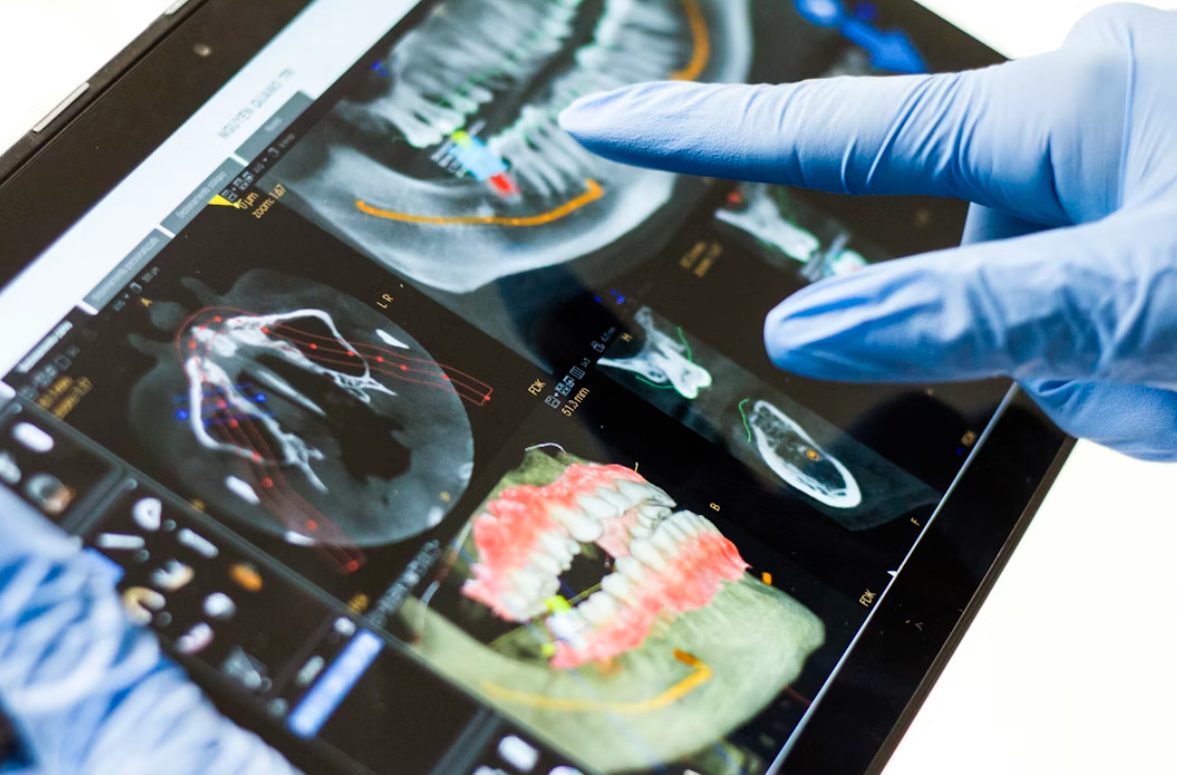
A flat X-ray tells you a tooth is missing and roughly where the bone sits. What it can’t tell you is whether that bone is thick enough at the exact point an implant needs to go or whether a …
Posted Aug 17, 2026 Dental Care Dental Robotics Dentistry
Connecting innovation decision makers to authoritative information, institutions, people and insights.

Medigy accurately delivers healthcare and technology information, news and insight from around the world.
Medigy surfaces the world's best crowdsourced health tech offerings with social interactions and peer reviews.
© 2026 Netspective Foundation, Inc. All Rights Reserved.
Built on Oct 18, 2026 at 6:05pm