

Managing Editor
@ShahidNShah
@ShahidNShah
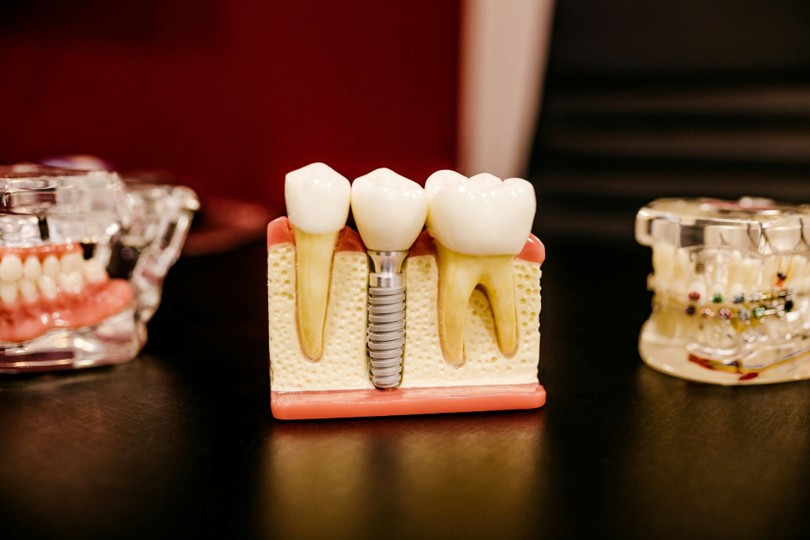
Two patients sit in the same waiting room. Same age, same insurance, same twice-yearly cleaning schedule. One will develop three cavities over the next four years, and the other won’t develop any, and nothing in a standard checkup reliably distinguishes them in advance. That’s the problem predictive tools are actually trying to solve, and it’s a more interesting one than the technology framing suggests.
The shift is away from treating everyone on an identical schedule and toward matching prevention to actual individual risk. Dental practices in Hinsdale and elsewhere are beginning to fold these tools into ordinary appointments rather than treating them as separate high-tech add-ons.
What Predictive Analytics Actually Analyzes
The inputs are less exotic than the term implies, and most of what feeds these models is information a thorough dentist would already be gathering during a normal exam.
What changes is how it gets combined. A human clinician weighs these factors intuitively, which works reasonably well but varies considerably between practitioners, while a model applies consistent weighting across every patient, which is where the reproducibility genuinely comes from, rather than from any single, standout insight.
The output is a categorized risk level rather than a diagnosis. A prospective study published through the NIH’s National Center for Biotechnology Information evaluated an AI risk assessment tool across 150 patients and found 91 percent sensitivity and 88 percent specificity in identifying high-risk cases. That level of agreement across a meaningful sample size is notable precisely because it suggests the model isn’t producing wildly different conclusions from what an experienced clinician would reach on their own.
That alignment figure matters more than the accuracy number. It suggests these tools largely confirm what an experienced clinician would conclude while doing it faster and more consistently, rather than replacing clinical judgment with something fundamentally different. The value isn’t in overriding a dentist’s expertise but in giving that expertise a consistent, repeatable foundation to build on.
The practical output is a recommendation that differs from the default. A high-risk patient might be seen every three or four months, receive prescription-strength fluoride, and get specific dietary counseling. A low-risk patient might reasonably stretch intervals. This is where personalization stops being a marketing word and becomes an actual scheduling decision.
It also means the recommendation comes with a rationale you can interrogate, since the model identifies which factors drove the score. The useful question for any dentist in Hinsdale is not what your risk level is but what pushed it there. Practices like Salt Creek Family Dental treat that breakdown as part of the prevention plan itself rather than as background detail, which gives patients something specific to act on between visits instead of general advice about brushing.
These tools work by identifying key contributors to an individual’s risk, and presenting those factors visually improves patient communication, which is a more modest claim than “prediction” implies. The value lies in clarity and consistency, not in some kind of certainty that removes clinical judgment from the equation entirely.
Models trained on one population may perform worse on another, a known problem in this field. They also can’t see what an examination reveals, and they don’t replace radiographs or clinical judgment. A practice presenting a risk score as a definitive forecast is overselling something genuinely useful, turning a helpful decision-support tool into a claim it was never actually designed to make.
If your dentist mentions using these tools, a few questions make the conversation more useful:
A dentist who answers these specifically is using the tool thoughtfully. One who can’t explain what fed the score is treating it as a black box, which is worth less than it appears.
The genuine change here isn’t the software; it’s the move away from treating every mouth as equivalent. That shift was overdue and doesn’t strictly require algorithms, though consistent scoring makes it easier to apply reliably across a whole practice. What you should expect from a dentist using these tools is a clearer explanation of why your plan looks the way it does and a recommendation that differs from the person before you in the chair. What you shouldn’t expect is certainty, since these models estimate probability rather than predict outcomes. Used well, they make prevention more targeted. Used badly, they become a reason to justify a schedule you didn’t need.


In integrative reproductive health, demand rarely follows a straight line. Some providers see steady, predictable patient flow. Others, particularly those who have spent twenty or thirty years …
Posted Aug 17, 2026 Patient Experience
Connecting innovation decision makers to authoritative information, institutions, people and insights.

Medigy accurately delivers healthcare and technology information, news and insight from around the world.
Medigy surfaces the world's best crowdsourced health tech offerings with social interactions and peer reviews.
© 2026 Netspective Foundation, Inc. All Rights Reserved.
Built on Oct 18, 2026 at 6:05pm