

Managing Editor
@ShahidNShah
@ShahidNShah

Every transfer of a critically ill patient is a chain of handovers. Ward team to transport team, transport team to ambulance or aircraft crew, crew to receiving unit. Each link is a chance for a piece of information to be dropped, and the patient is usually too unwell to correct the record.
The risk is not incompetence. It is that handovers happen in corridors, at speed, with a monitor alarming and a family asking questions. Systems that ignore that reality lose information every time.
A transfer that involves three teams has three handovers, and each one is a compression. The first clinician knows the history, the second knows the plan, the third knows the numbers. By the receiving unit, the picture is a summary of a summary.
Studies of handover failure keep landing on the same causes: interruptions, hierarchy that discourages questions, and no shared structure for what must be passed on. The fix is not more paperwork. It is a fixed format, used the same way by everybody, with a read-back at the end.
Four things, minimum. The working diagnosis and what has been ruled out. The interventions already given, with times and doses. The trend, not the single reading: blood pressure over the last hour is more useful than the number at handover. And the plan if the patient deteriorates en route.
That last item is the one most often skipped, and the one the receiving team needs most. A crew that has been told what to do at 3,000 metres does not have to wake a specialist to ask.
The AHRQ TeamSTEPPS programme sets out handoff structures designed for exactly this: a standard sequence, an opportunity for the receiver to ask, and an explicit confirmation that the message landed. It was written for hospital teams and transfers to transport better than most people expect.
A transport monitor gives the crew a continuous picture, which is a genuine improvement and a new failure mode. Attention goes to the screen, the verbal handover gets thinner, and the crew stops asking the questions they would have asked while watching the patient.
The discipline is to take the handover facing the patient, then look at the screen. Numbers that look stable can sit on top of a patient who is compensating hard, and the crew that only reads the monitor is the crew that misses it.
Moving a patient between countries adds a layer that domestic transfers do not have: insurers, aviation medicine, passports, receiving hospital acceptance, and a family who may be in a different time zone. Each of those is a handover of its own.
What the industry calls medical repatriation is the part of the system that carries those risks at scale, and the operational difference is planning time. A retrieval arranged over days can gather records and brief the receiving team properly. An emergency one cannot, which is why the pre-authorisation conversation matters as much as the aircraft.
There should never be a moment when nobody is clinically responsible. In practice there often is, somewhere between the ward team signing off and the crew taking over, and that gap is where medication doses get missed.
Write the transfer of responsibility down, with a time. It takes ten seconds and it removes the argument later about who knew what.
Staffing makes the difference here. A crew with a critical care paramedic and a nurse can absorb a deteriorating patient. A single attendant driving and monitoring cannot, and the handover should say which of the two is arriving so the receiving team can prepare accordingly.
The receiving unit should confirm the patient arrived, the summary was read, and the plan is understood. That confirmation is not a courtesy. It is the check that the last handover in the chain actually worked, and it is the only one that happens at the point where the patient is safest to reassess.
Where that call is missing, the failure is invisible until weeks later in a case review, which is the worst possible time to discover that a dose or an allergy never travelled.
Communities of practice working on clinical innovation tend to treat this as an information design problem rather than a training problem, which is the more productive framing. People hand over well when the form, the sequence and the expectation are the same every time.

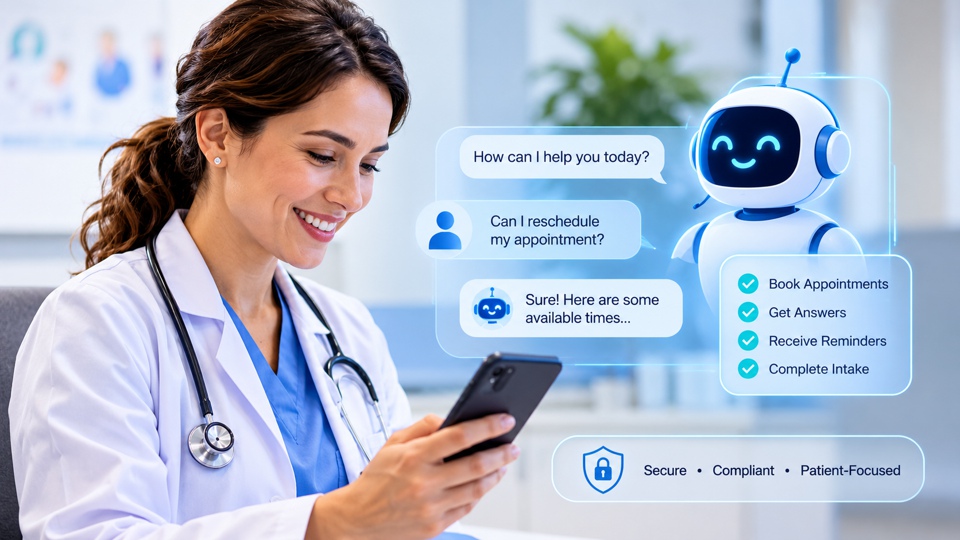
Healthcare providers spend a significant part of their day answering patient questions, managing appointment requests, sending reminders, and explaining routine instructions. These tasks may seem …
Posted Nov 23, 2026 Artificial Intelligence Healthcare
Connecting innovation decision makers to authoritative information, institutions, people and insights.

Medigy accurately delivers healthcare and technology information, news and insight from around the world.
Medigy surfaces the world's best crowdsourced health tech offerings with social interactions and peer reviews.
© 2026 Netspective Foundation, Inc. All Rights Reserved.
Built on Nov 25, 2026 at 5:05am