

Managing Editor
@ShahidNShah
@ShahidNShah
Becoming a dentist requires years of study, clinical training and hands-on experience. Dentists learn how to diagnose, plan treatment and deliver high-quality care.
But running a dental practice requires a very different set of skills.
For many dentists, becoming a practice owner means suddenly taking responsibility for much more than dentistry. There is a team to lead, patients to communicate with, systems to manage, business decisions to make and long-term growth to consider.
Clinical expertise remains essential, but it may no longer be enough on its own.
This is where dental coaching can be valuable. It can help dentists develop the communication, leadership and business skills needed to become more confident and effective practice owners.
Many dentists begin their careers focused almost entirely on becoming better clinicians.
Practice ownership changes that.
The dentist is no longer responsible only for what happens in the treatment room. They may also be managing recruitment, staff performance, patient experience, marketing, finances and the overall direction of the practice.
These responsibilities require skills that are very different from clinical dentistry.
A dentist may be highly capable clinically but struggle to delegate effectively. Another may have a talented team but lack clear systems or accountability. Others may find that patients regularly delay treatment despite receiving a thorough clinical explanation.
Dental coaching can provide an outside perspective on these challenges.
Rather than focusing only on how to attract more patients or increase revenue, coaching can help practice owners look at how the entire practice operates.
Are patients receiving a consistent experience? Is the team aligned? Are treatment options communicated clearly? Are there systems in place to support growth?
These questions can uncover opportunities that are difficult to see when a dentist is busy managing the day-to-day demands of the practice.
Dentistry is highly technical, but patients do not always think about treatment in technical terms.
A dentist may understand the clinical situation perfectly, but if the patient does not understand the explanation or feel comfortable asking questions, they may still hesitate.
Strong patient communication is not about pressure or sales techniques. It is about listening carefully, asking better questions and explaining treatment in a way that makes sense to the individual.
Some patients want detailed information. Others prefer a simpler explanation.
Some respond well to photographs, scans and visual examples, while others need time to talk through their concerns.
Learning to recognise these differences can help dentists become more adaptable communicators.
Almost every dentist has heard it.
A patient appears engaged throughout a consultation and then finishes with: “I’ll think about it.”
Sometimes there is a genuine reason for delaying treatment. In other situations, there may still be uncertainty that has not been fully addressed.
The patient may not understand why treatment has been recommended. They may feel overwhelmed by too much information, worry about the outcome or simply not feel ready to make a decision.
Improving case acceptance begins with understanding these conversations.
Instead of treating hesitation as an objection that needs to be overcome, dentists can become more curious about what the patient actually needs.
What matters most to them? What are they concerned about? What information would help them feel more confident?
A more patient-centred conversation can make treatment discussions feel more natural and help patients make better-informed decisions.
Case conversion is often discussed in terms of numbers, but the quality of the conversation behind those numbers is equally important.
A good treatment discussion should help the patient understand their current situation, the available options and the possible consequences of taking action or delaying care.
It should also give them space to ask questions.
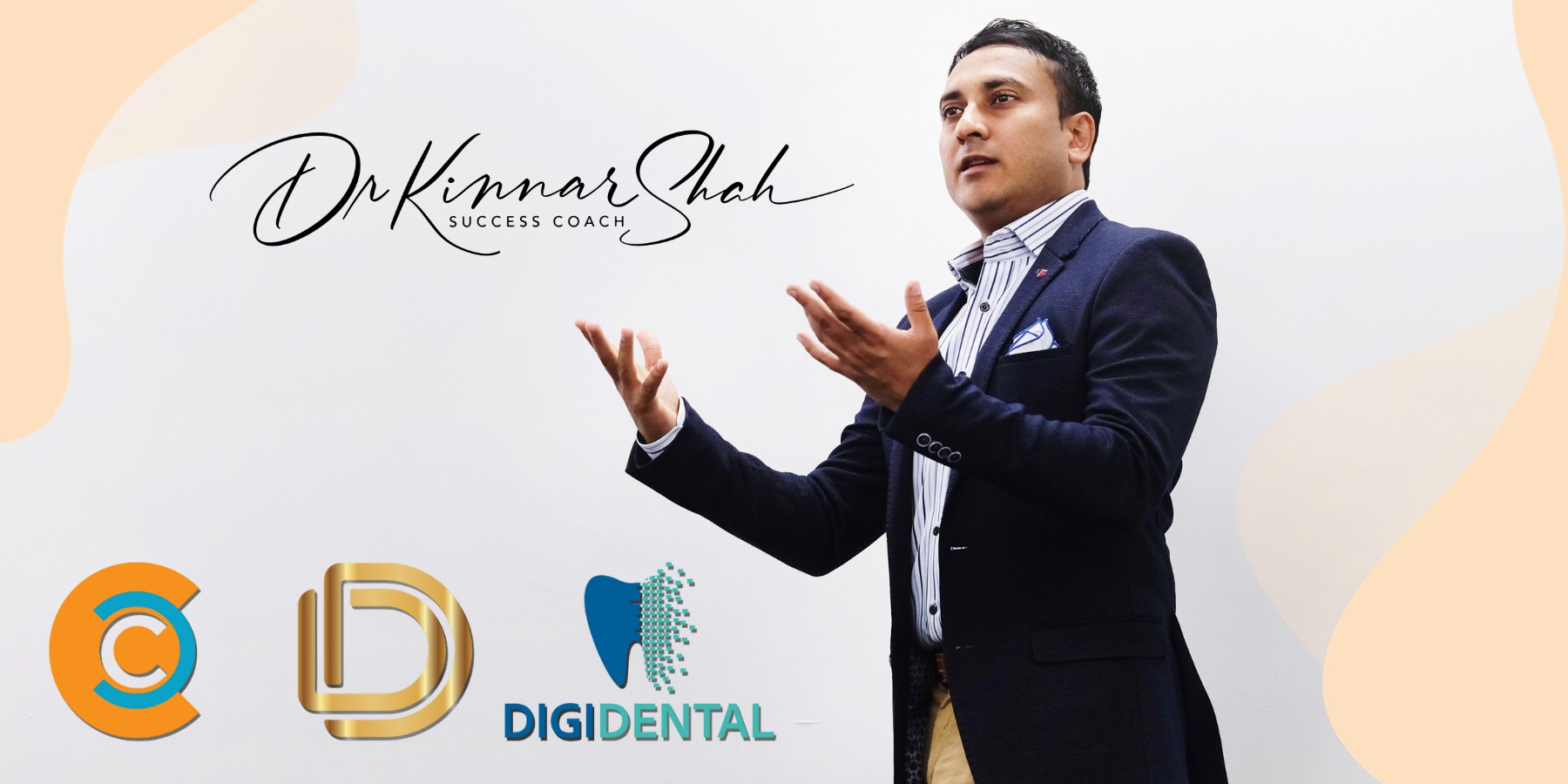
This is one area addressed through Dr Kinnar Shah’s GPS approach to dental case conversion, which focuses on communication throughout the treatment conversation.
A structured framework can help dentists think more carefully about rapport, questioning, tone of voice, body language and the way options are explained.
The purpose is not to make dentistry feel more like selling. It is to make communication clearer.
When patients feel heard and understand what is being recommended, they are generally in a better position to make a confident decision.
Another area used within Kinnar Shah’s coaching is NLP for Dentists, or Neuro-Linguistic Programming.
In a dental setting, NLP can be used as a framework for thinking about rapport, communication, behaviour and how different people respond to information.
Not every patient processes information in the same way.
One patient may want to understand every stage of a procedure. Another may become overwhelmed by too much detail.
One may care most about appearance, while another is more focused on comfort, function or long-term health.
Learning to recognise these differences can help dentists communicate more effectively.
It also encourages greater awareness of tone, pace, body language, listening and the questions being asked.
For many dentists, improving communication is not about changing their personality. It is about becoming more aware of the person sitting in front of them.
Communication is just as important with the dental team.
As a practice grows, a dentist may find themselves leading reception staff, dental assistants, hygienists, oral health therapists, associate dentists and practice managers.
A group of talented people does not automatically become a strong team.
Without clear leadership, staff may have different expectations about responsibilities, patient experience or how the practice should operate.
Practice owners therefore need to develop skills such as delegation, accountability, feedback and team communication.
Good leadership creates clarity.
People should understand what is expected of them and how their role contributes to the wider patient experience.
For dentists who are used to solving problems personally, learning to lead rather than manage every detail themselves can be a major shift.
There are many forms of business coaching available, but dentistry presents its own particular challenges.
A dental practice sits at the intersection of healthcare, leadership, patient experience and business.
Dentists need to balance clinical responsibilities with commercial realities. They work with patients who may be anxious or uncertain, while also managing teams, technology, systems and significant business decisions.
For this reason, some dentists prefer guidance from someone who understands the profession firsthand.
Dr Kinnar Shah’s approach is built around the idea of dentists helping dentists.
His work with dentists and practice owners includes communication, leadership, practice development, NLP and case conversion.
That dental-specific perspective can make coaching more practical and relevant to the situations practice owners face every day.
Clinical excellence will always be at the centre of good dentistry.
But dentists who own or lead practices often need to develop far beyond their clinical skills.
They need to become stronger communicators. They need to lead teams with clarity. They need to understand people, improve systems and make better business decisions.
For Australian dentists looking to develop these areas, working with an experienced dental coach in Australia can provide structure, perspective and practical support beyond the clinical side of dentistry.
The goal is not simply to become better at business.
It is to become a more complete practice owner: someone who can deliver excellent dentistry while also communicating clearly, leading confidently and building a practice that works well for patients, the team and the owner.
Dr Kinnar Shah is a dentist, dental coach and educator who works with dentists and practice owners across Australia. His coaching focuses on communication, leadership, NLP, dental case conversion and practice development.
His approach centres on dentists helping dentists, combining firsthand dental experience with practical coaching for modern practice owners.
For more information, visit KinnarShah.com.
Dr Kinnar Shah
Address: 307 Pitt St, Sydney NSW 2000
Phone: +61 415 188 959
Website: KinnarShah.com


Company Overview Henlius (2696.HK) is a Chinese biopharmaceutical companyheadquartered in Shanghai, focused on the research, development, production and commercialization of biologic drugs. Founded in …
Posted Sep 5, 2026 Pharmaceuticals, Biotechnology & Drug Discovery Technologies Pharmacology
Connecting innovation decision makers to authoritative information, institutions, people and insights.

Medigy accurately delivers healthcare and technology information, news and insight from around the world.
Medigy surfaces the world's best crowdsourced health tech offerings with social interactions and peer reviews.
© 2026 Netspective Foundation, Inc. All Rights Reserved.
Built on Oct 18, 2026 at 6:05pm