

Managing Editor
@ShahidNShah
@ShahidNShah

Most people blame the mirror on sleep, sun, or stress. Fewer realise one of the biggest drivers of an “older” look is hiding inside the mouth, and it has almost nothing to do with wrinkles.
It’s bone.
Every tooth root does more than just hold a tooth in place. It constantly signals the jawbone underneath to stay dense and rebuild itself, the same way weight bearing exercise keeps bone strong elsewhere in the body. Take the root away, whether through extraction, decay, or injury, and that signal disappears. The bone in that area begins to shrink, often losing a noticeable percentage of its width within the first year alone.
You don’t feel this happening. You see it, months or years later, in the mirror.
This process is called bone resorption, and it’s one of the better documented, yet least publicly known, effects of tooth loss. Studies on jawbone density after extraction consistently show the fastest rate of loss happening in the first twelve months, with the change continuing, more slowly, for years afterward. It doesn’t matter whether the tooth was lost to an accident, gum disease, or simple decay. The bone’s response is the same either way, and it’s a key reason dentists increasingly recommend dental implants soon after a tooth is lost rather than waiting.
Bone loss around missing teeth doesn’t stay contained to the mouth. It changes the entire structure your face is built on:
The unsettling part is how quietly this happens. A single missing molar at the back of the mouth, one most people barely think about because it’s not visible when they smile, can still be shifting the shape of the lower face over time. Because chewing forces are distributed across the whole jaw, losing support in one area can gradually affect how the bite comes together, which in turn affects how the lower third of the face is held up.
It’s also cumulative. Lose one tooth and the change might be subtle enough to blame on something else entirely: weight loss, a new skincare routine, simply “getting older.” Lose several over the years, particularly in the back of the mouth where it goes unnoticed the longest, and the combined effect on facial support becomes much harder to miss. Family members or old photos often reveal it before the person experiencing it does.
There’s a common assumption that an empty space where a tooth used to be is a stable, do nothing situation. It isn’t. Bone loss is progressive as long as nothing is replacing the root’s function, and dental implants are currently the only widely used tooth replacement option built specifically to replace that function. The longer the gap sits without a dental implant in place, the more structural support is lost, and the harder (and more involved) it can become to fully restore later on.
This is also why “I’ll deal with it eventually” tends to be more costly advice than it sounds. A case that could have been a straightforward single dental implant in year one sometimes becomes a case requiring bone grafting by year three or four, simply because there’s no longer enough density in that area to support a dental implant without additional preparation first. Time doesn’t just delay the decision. It can change what the decision actually involves.
This is where Dental Implants differ from other tooth replacement options in a way that matters more than most people realise.
A dental implant replaces the root, not just the visible tooth. Through a process called osseointegration, the implant fuses directly with the jawbone and continues to stimulate it, essentially picking up the job the natural root used to do. Dentures and traditional bridges sit on top of the gum or adjacent teeth. They restore appearance and some function, but they don’t replace that root level signal, so the underlying bone loss can continue underneath them regardless. It’s one of the clearest reasons dental implants are considered the gold standard when a tooth needs to be replaced for the long term.
It’s a big part of why some practices treat dental implants as a planning problem, not just a replacement one. At Lidums Dental, the approach to dental implants is guided by the treatment philosophy Dr Arnis Lidums has developed over more than three decades of practice: thorough diagnosis, considered planning, and dentistry built for predictable, long term results. That mindset matters most in exactly this kind of case, where the real risk isn’t the visible gap, but what’s quietly happening to the bone underneath it.
For some patients, tooth loss is only one part of a wider dental problem. Several teeth may be worn, damaged, heavily restored or missing, the bite may have changed over time, or different areas of the mouth may need to be considered together rather than one tooth at a time.
In these situations, Full Mouth Rehabilitation may be considered. It is a coordinated approach to rebuilding oral health, function and the appearance of the smile when multiple teeth or connected areas of the mouth are affected.
Depending on the individual patient, treatment may involve a combination of dental implants, crowns, bridges, dentures, bite rehabilitation or selected cosmetic restorations. The important difference is that the mouth is assessed as a whole, with consideration given to how the teeth, gums, bite, jaw function and existing dental work interact.
At Lidums Dental, Full Mouth Rehabilitation begins with a detailed assessment and personalised treatment planning, with the aim of restoring comfort, function and a natural-looking smile while preserving healthy teeth wherever appropriate.
If you’re missing a tooth, even one you can’t see when you smile, it’s worth getting it properly assessed sooner rather than later. Dental implants can form part of a long-term plan to replace missing teeth and support function. For patients with several worn, damaged or missing teeth, a broader full mouth rehabilitation plan may also be worth discussing. What looks like a small dental problem today can sometimes affect the way the bite, smile and facial support change over time. Early assessment gives you a clearer understanding of your options and allows treatment to be planned around your long-term oral health.
For more information about dental implants, full mouth rehabilitation and long term smile planning, contact Lidums Dental using the details below:
Contact Info:
Organization: Lidums Dental | All-on-X & Cosmetic Dental Center
Address: 75 Hindmarsh Square, Adelaide SA 5000
Phone: (08) 7223 2342
Website: https://www.cosmeticdentistadelaide.com.au/

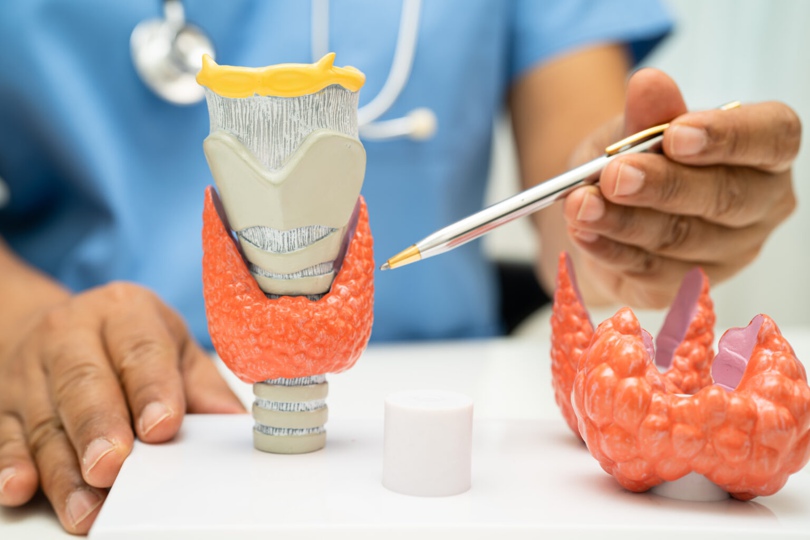
The thyroid gland, a critical component of the human endocrine system, orchestrates metabolic regulation across nearly every physiological subsystem. When structural or functional anomalies arise …
Posted Sep 4, 2026 Care Management
Connecting innovation decision makers to authoritative information, institutions, people and insights.

Medigy accurately delivers healthcare and technology information, news and insight from around the world.
Medigy surfaces the world's best crowdsourced health tech offerings with social interactions and peer reviews.
© 2026 Netspective Foundation, Inc. All Rights Reserved.
Built on Oct 17, 2026 at 5:05am