

Managing Editor
@ShahidNShah
@ShahidNShah
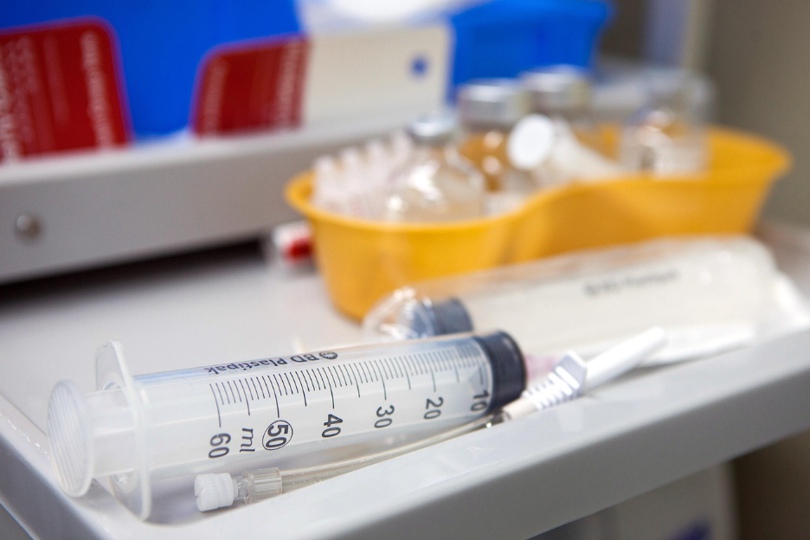
Regenerative medicine has moved fast over the past decade, and so has medical travel around it. People fly to Mexico, Colombia, Thailand, and a handful of other countries every month looking for stem cell therapy, PRP treatments, or exosome protocols that either cost too much at home or aren’t approved there yet.
The problem is that “regenerative medicine clinic” has become a label anyone can slap on a website. The gap between a legitimate operation and a glorified injection room can be wide. Here’s what separates a clinic worth your time and money from one that isn’t.
Where a clinic operates changes what it can legally offer you. The United States restricts most stem cell applications to FDA-approved trials, so a lot of that research and treatment activity has moved elsewhere. Mexico has become one of the more established destinations for this kind of care, partly because of proximity to the US and partly because certain regions have built real infrastructure around it.
A regenerative medicine clinic in Los Cabos, for instance, sits in an area with hospitals, recovery facilities, and specialists who see enough patients to refine their protocols rather than treat each case as a first attempt. A permissive regulatory environment isn’t the same as being unregulated, though.
A clinic worth considering will hold a proper medical license, and its physicians will have credentials you can verify, not a bio page with vague claims. Ask for the doctor’s name, their medical school, and their board certifications, then look them up independently. If a clinic hesitates to give you that, treat it as a warning sign.
Ask exactly what’s being injected and where it comes from. Some clinics use a patient’s own cells, drawn from bone marrow or fat tissue, generally considered lower risk since no donor tissue is involved. Others use donor-derived products, such as umbilical cord tissue or exosomes, and sourcing standards vary a lot between countries and even between clinics in the same city.
A clinic that can walk you through its lab process, sourcing partners, and how cells are tested before use is operating on a different level than one that hands you a brochure and a consent form. Roughly 41% of Americans who travel abroad for medical care end up in Mexico, and that volume has pushed some clinics to build lab standards that actually hold up to scrutiny, while others still cut corners because demand outpaces oversight.
Nearly every clinic website has a wall of glowing testimonials, and almost none of them mention failure rates, complications, or how long results actually lasted. What you want instead is a clinic willing to talk about outcomes in specific terms: how many patients with your condition they’ve treated, what percentage saw real improvement, and what the timeline looked like.
A patient I spoke with who went through joint treatment abroad said the clinic that impressed her most wasn’t the one with the flashiest reviews. It was the one whose doctor spent twenty minutes explaining why her case might not respond as well as others, given her specific diagnosis. That kind of honesty is rare, and it usually predicts a clinic’s integrity better than any five-star review.
Regenerative treatments don’t work like a single office visit, and then you’re done. Recovery involves physical therapy, follow-up imaging, and monitoring for weeks or months afterward. A clinic that treats you and sends you home with a phone number that never gets answered isn’t offering complete care, no matter how good the injection itself was.
Ask what happens if complications come up once you’re back home. Good clinics coordinate with local providers or run a telehealth system for follow-up. This is one of the areas where cutting corners costs patients the most, because the procedure might go fine while healing gets mismanaged afterward.
Price comparisons between countries can be dramatic, and that’s part of why medical travel for this kind of care has grown. A quote that seems too low relative to everything else you’ve researched is worth questioning rather than celebrating. Find out what’s included: the procedure, imaging, lab work, follow-up visits, and any complications that might arise.
A clinic that gives you one flat number without breaking down what it covers is harder to trust than one that itemizes everything, even if the total ends up higher. Transparency about cost tends to track with transparency about everything else.
Choosing a clinic abroad for regenerative medicine comes down to verification, not vibes.
Check the license, ask about the science, request real outcomes data instead of testimonials, confirm what aftercare looks like, and get a full cost breakdown before committing to anything. Clinics doing this well won’t mind the scrutiny. The ones that mind are telling you something on their own.

Daycare and kindergarten can open up an exciting new world for young children. Suddenly, there are friends to play with, shared toys to explore, group activities, songs, stories, and busy days filled …
Posted Aug 20, 2026 Respiratory Disease
Connecting innovation decision makers to authoritative information, institutions, people and insights.

Medigy accurately delivers healthcare and technology information, news and insight from around the world.
Medigy surfaces the world's best crowdsourced health tech offerings with social interactions and peer reviews.
© 2026 Netspective Foundation, Inc. All Rights Reserved.
Built on Oct 24, 2026 at 6:05pm