

Managing Editor
@ShahidNShah
@ShahidNShah
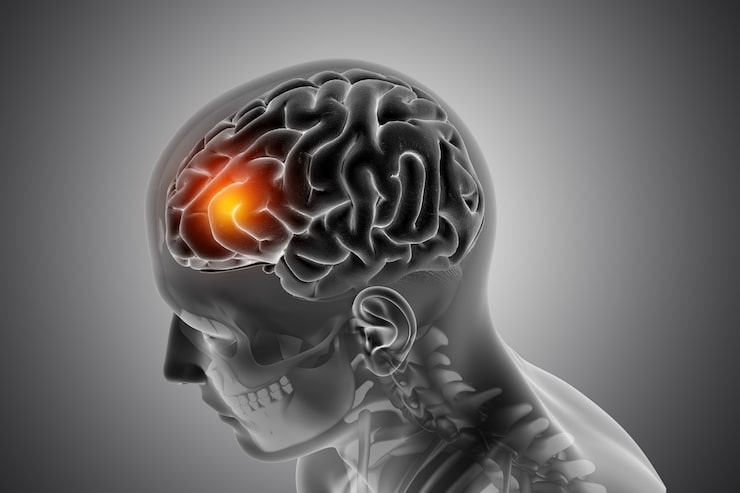
Traumatic brain injury claims are challenging to value because there are numerous factors to consider. There are many factors, and this is why traumatic brain injury claims are difficult to value in Riverside.
Riverside TBI claims are complex in nature and challenging to value due to the long-term and unpredictable nature of injuries, which vary from person to person. The costs of medical treatment, future care needs, lost income, and changes in quality of life can vary widely, making it difficult to determine what constitutes fair compensation.
The effects of a TBI may occur immediately and can sometimes be seen in the patient at the time of the injury, or the patient may be unaware of the effects at first but later develop them. Symptoms can be chronic and may be disputed between the insurance company and the opposing party. With a knowledgeable brain injury lawyer from Hanson & Mouri, injured people can obtain the evidence necessary to prove the complete worth of a claim.
Unlike a broken bone, a brain injury does not always show clear signs on an X-ray or scan. Two people can suffer similar accidents and end up with very different symptoms.
Some victims struggle with headaches and dizziness. Others experience memory loss, mood changes, or trouble focusing at work. According to the Centers for Disease Control and Prevention, traumatic brain injuries contribute to thousands of deaths and hundreds of thousands of hospitalizations in the United States each year.
Because symptoms vary widely, assigning a dollar value to a claim is difficult.
Several elements influence how much compensation may be available.
These often include:
A mild concussion that resolves within weeks usually carries a different value than a severe injury requiring years of treatment.
Age can also matter. A younger person with decades of lost earning potential may face greater financial losses than someone nearing retirement.
Future damages are one of the biggest challenges in brain injury cases.
Doctors may agree that a victim needs ongoing treatment, but estimating future expenses requires projections rather than exact numbers. Insurance companies often argue that the injured person will recover faster or need less care than medical experts predict.
That disagreement can create a significant gap between what a victim seeks and what an insurer wants to pay.
Medical records form the foundation of every traumatic brain injury claim.
Strong evidence may include:
The more detailed the documentation, the easier it becomes to connect symptoms directly to the accident.
Even then, proving invisible injuries remains challenging. Someone may appear healthy during a short conversation while struggling daily with memory, concentration, or emotional regulation.
Brain injuries frequently involve symptoms that cannot be seen.
Insurers may question whether symptoms stem from the accident or from another condition. They may also argue that the victim is exaggerating limitations.
This is especially common when a person returns to work but continues dealing with cognitive difficulties. Working does not automatically mean a full recovery, yet that argument often appears during claim negotiations.
As claim values increase, expert witnesses become more important.
Neurologists, neuropsychologists, vocational specialists, and economists may all contribute opinions. Their analysis helps explain how an injury affects a person’s daily life and future earning capacity.
Data from the National Highway Traffic Safety Administration continues to show that motor vehicle crashes remain a leading cause of serious injuries, including many traumatic brain injuries. These cases often require multiple experts to accurately calculate damages.


For most of dental surgery’s modern history, placing an implant involved a degree of calculated estimation. A surgeon would review two-dimensional X-rays, mentally extrapolate the depth and angle of …
Posted Jun 13, 2026 Dental Care Dentistry
Connecting innovation decision makers to authoritative information, institutions, people and insights.

Medigy accurately delivers healthcare and technology information, news and insight from around the world.
Medigy surfaces the world's best crowdsourced health tech offerings with social interactions and peer reviews.
© 2026 Netspective Foundation, Inc. All Rights Reserved.
Built on Oct 17, 2026 at 5:05am