

Managing Editor
@ShahidNShah
@ShahidNShah

For most of dental surgery’s modern history, placing an implant involved a degree of calculated estimation. A surgeon would review two-dimensional X-rays, mentally extrapolate the depth and angle of available bone, and make real-time decisions once the procedure was underway.
That has changed substantially over the past decade. The most advanced oral surgery practices today work with a fully integrated digital workflow, from initial imaging through guided surgical execution, that gives clinicians a detailed spatial map of a patient’s anatomy well before the patient arrives in the operatory.
For healthcare professionals and administrators tracking where clinical technology is having a measurable impact on patient outcomes, dental implant surgery has become one of the more instructive fields to watch.
Conventional implant planning relied on periapical radiographs and panoramic X-rays. A clinician reviewing these images could gauge bone height with reasonable accuracy, but had limited information about bone width, cortical density, or the precise proximity of critical structures like the inferior alveolar nerve or the floor of the maxillary sinus.
The practical consequence was a planning environment that, even in highly experienced hands, carried elevated risk compared to what digital-guided planning now makes possible.
Nerve approximation errors, sinus floor perforations, implant malpositioning, and prosthetic misalignment were not uncommon when critical anatomy was underread on a compressed image.
What has emerged in well-resourced oral surgery practices is a connected chain of technologies that share data with each other, producing a planning environment that is precise, reproducible, and demonstrably safer for patients.
It is the same conceptual principle as a hospital CT scan, scaled and optimized for craniofacial imaging. Modern in-office CBCT systems produce a full three-dimensional reconstruction of a patient’s bone volume, density, cortical plate thickness, and neurovascular anatomy in minutes, using substantially less radiation than conventional medical CT.
For implant planning, this level of anatomical detail is transformative. A surgeon can measure available bone at any proposed implant site down to fractions of a millimeter, identify the exact course of the inferior alveolar canal, assess sinus floor topography, and determine upfront whether adjunctive procedures — bone grafting, ridge augmentation, or sinus elevation — are required before implant placement is viable.
The second component of the digital workflow is intraoral scanning, the replacement of traditional impression material with a real-time, color-accurate digital model of the patient’s teeth, occlusion, and soft tissue. Where conventional impressions were uncomfortable, prone to dimensional distortion, and required physical transport to a laboratory, a modern intraoral scanner captures a complete dental arch in minutes with sub-millimeter accuracy.
For implant cases, the digital scan is merged with the CBCT dataset to create a composite model that incorporates both surface anatomy and underlying bone structure. This composite becomes the working foundation for virtual surgical planning.
With both datasets integrated into planning software, the surgeon can place the implant virtually before the patient enters the operatory. The software allows simulation of different angulation and depth options, assessment of proximity to nerve structures and the sinus floor, and testing of prosthetic fit in three dimensions, essentially rehearsing the procedure on a digital replica of the patient’s anatomy.
When the virtual plan is finalized, it drives the fabrication of a physical surgical guide: a custom-fit stent that snaps onto the patient’s teeth during surgery and constrains the drill path to the planned trajectory, minimizing positional deviation from the virtual model.
For patients receiving multiple implants simultaneously, particularly in full-arch reconstructions such as All-on-X procedures, where four to six implants support a complete dental arch, capturing the final positions of all implants with sufficient accuracy for prosthetic fabrication has historically been one of the more technically demanding steps.
Specialized digital systems now allow near-instant, highly precise intraoral impressions of multiple implant positions simultaneously, reducing both chairtime and prosthetic error rates for practices performing these complex cases.
The evidence supporting digital implant workflows has accumulated substantially. Research published in the International Journal of Oral and Maxillofacial Surgery documents that computer-guided implant placement achieves statistically meaningful improvements in angular and positional accuracy compared to freehand techniques. Other peer-reviewed work has reported reductions in surgical time, fewer intraoperative complications, and improved implant survival rates in digitally planned cases.
From a patient safety perspective, guided surgery significantly reduces the risk of two of the most consequential implant complications: inferior alveolar nerve injury, which can produce persistent numbness or altered sensation; and maxillary sinus perforation, which can cause chronic sinusitis and implant failure.
Beyond clinical metrics, the patient experience in a digitally planned implant case differs in ways that matter for practice outcomes and reputation. Pre-operative communication is more substantive. Surgeons can walk patients through a three-dimensional model of their own anatomy, show exactly where each implant will be placed, and explain the reasoning behind specific decisions. This changes the quality of informed consent and tends to meaningfully reduce patient anxiety.
Procedure times are typically shorter, because the clinician is executing a rehearsed and planned approach rather than adapting to intraoperative findings in real time. Recovery tends to be smoother when surgical access has been optimized to minimize unnecessary bone manipulation. And the probability of requiring a revision procedure decreases when initial placement was accurate from the outset.
For patients considering full-arch reconstruction, the precision of digital planning is especially critical. The positional relationships between four to six implants determine whether a prefabricated prosthesis fits accurately, and small angular deviations at placement can produce significant misalignment at the restorative level. Pre-operative virtual planning allows these spatial conflicts to be resolved before the patient enters the operating room.
For general dentists and specialists who refer patients for implant surgery, understanding what a digital workflow looks like in practice helps clarify which practices are positioned to manage complex cases with appropriate preparation. A practice that has integrated CBCT imaging, intraoral scanning, and virtual surgical planning is not merely better equipped in a hardware sense — it has reorganized its clinical process around comprehensive spatial data rather than informed estimation.
Dental implant surgeons who have integrated this end-to-end digital approach are positioned to provide referring clinicians with detailed documentation, including planned versus actual implant positions and comprehensive presurgical imaging records.
This transparency supports continuity of care and is particularly valuable when managing patients with reduced bone volume, proximity to critical anatomical structures, or a prior history of implant complications.
AI integration into implant planning software is already moving into clinical practice. Systems that automatically identify anatomical landmarks in CBCT datasets, flag proximity risks to nerve structures and the sinus floor, and suggest optimal implant positions based on restorative requirements are transitioning from research settings into active clinical use.
This next layer of automation will support it more consistently, and with less dependence on the individual clinician’s experience with edge-case anatomy. The infrastructure exists today in leading oral surgery practices. What is changing now is how rapidly it will be adopted as a field-wide standard of care.

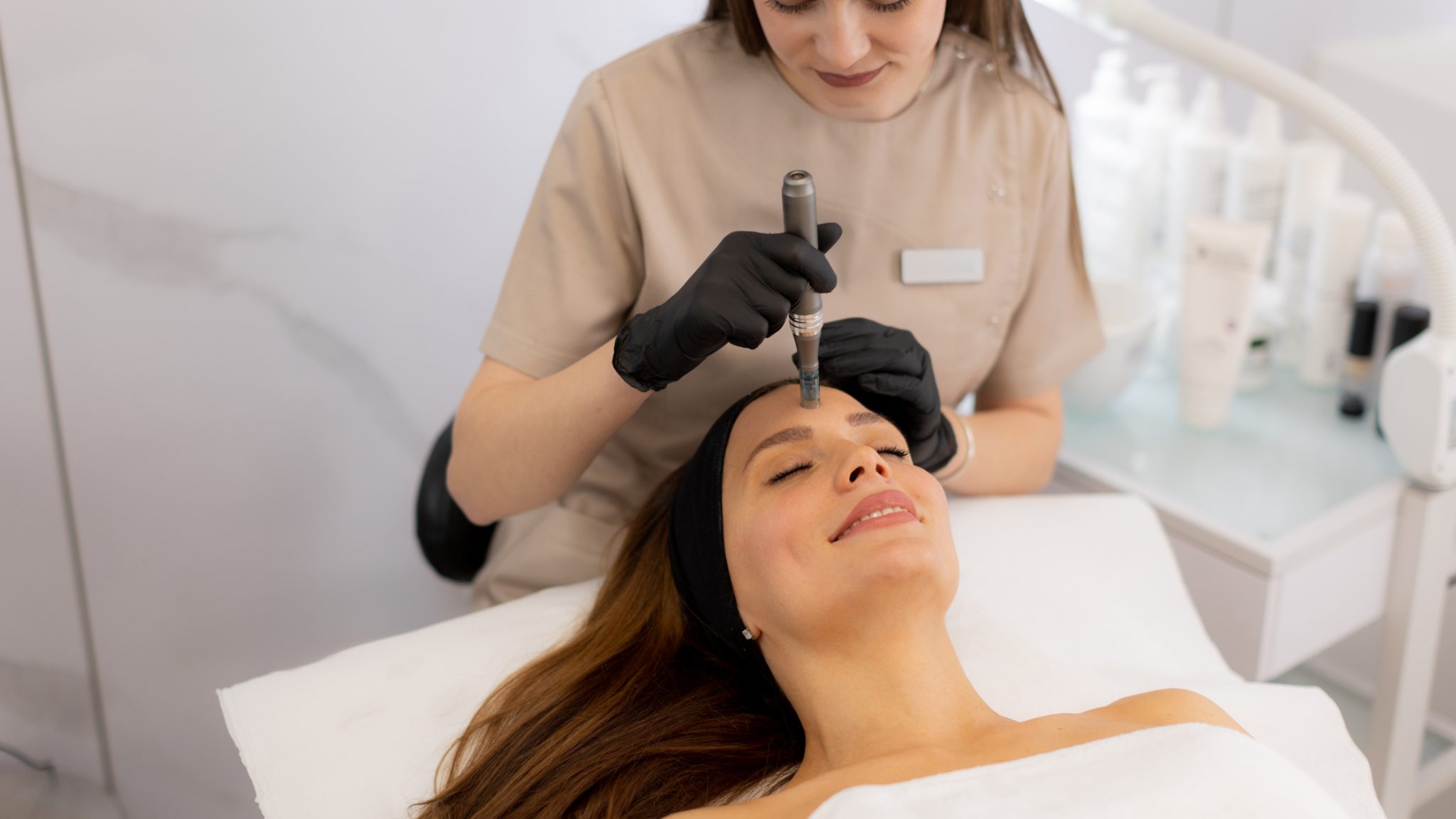
Choosing to undergo a cosmetic enhancement procedure is a significant personal decision, and the consultation is one of the most important steps in the journey. This initial meeting allows patients to …
Posted Jun 13, 2026 Cosmetics
Connecting innovation decision makers to authoritative information, institutions, people and insights.

Medigy accurately delivers healthcare and technology information, news and insight from around the world.
Medigy surfaces the world's best crowdsourced health tech offerings with social interactions and peer reviews.
© 2026 Netspective Foundation, Inc. All Rights Reserved.
Built on Oct 17, 2026 at 5:05am