

Managing Editor
@ShahidNShah
@ShahidNShah
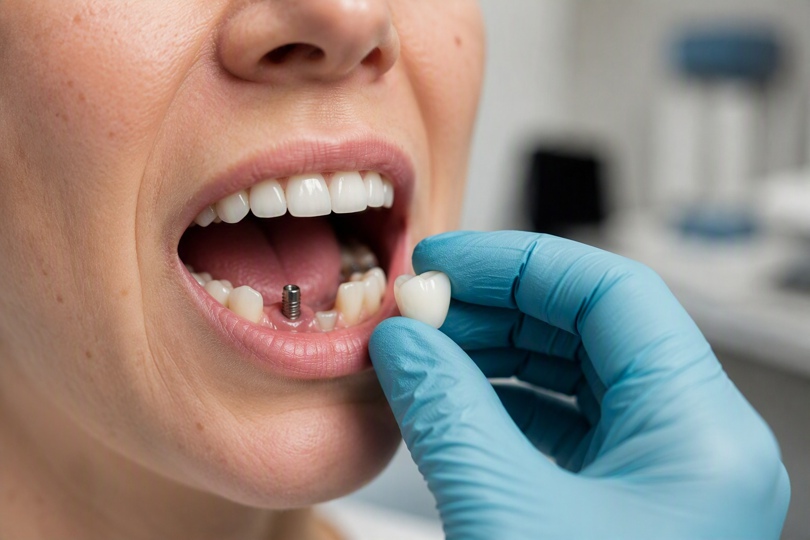
Leaving the clinic with a new tooth on the day your implant goes in feels like a big step forward. A few days later, though, a throb that won’t settle can quickly turn into worry.
Most people who get a same-day dental implant heal without trouble. Still, a small number of implants don’t bond with the jawbone as planned, and knowing what to watch for helps you act early and calmly. This guide covers normal healing, warning signs, common causes and next steps.
A dental implant is a small screw, usually made of titanium, placed in the jawbone to act as a tooth root. With same-day tooth replacement, a temporary crown is attached to that implant during the same visit, so you don’t walk out with a gap.
Over the following months, bone slowly grows onto the implant surface, a process called osseointegration. Until it finishes, the implant is held mainly by the grip it had on surgery day. That is why the temporary tooth is shaped to stay out of heavy biting.
Some discomfort is expected after any implant procedure. In the first few days, you may notice:
These symptoms should ease a little each day, and most people feel close to normal within a week.
Call your dental clinic if you notice any of the following:
A loose temporary crown isn’t always a sign that the implant has failed. Sometimes only the crown or its small screw has loosened, and your dentist can check this with a short exam and an X-ray.
If swelling spreads quickly toward your eye or neck, or you have trouble swallowing or breathing, go to the nearest emergency department.
Early implant problems usually come down to one or more of these causes:
Sometimes there’s no clear reason at all.
Expect your dentist to start by checking the gum, testing how stable the implant is and taking an X-ray of the bone around it. The plan depends on what they find.
If the gum is inflamed but the implant is firm, a professional clean, a medicated mouth rinse and closer follow-up may be all that’s needed. Antibiotics are used only when your dentist decides they are needed.
When the implant hasn’t bonded and is moving, it will usually be removed. This is typically a short appointment under local anaesthesia, and the area is then left to heal.
In many cases, yes. Once the site heals, which often takes a few months, your dentist will review the bone with a fresh scan. If some bone has been lost, a bone graft may be suggested before a second implant is placed.
The second attempt is often done in stages rather than as one-day dental implants, so the new implant can heal without any load on it. Any likely cause, such as grinding or smoking, is addressed first.
You can’t control everything, but a few habits make a real difference:
A same-day dental implant gives you a tooth quickly, but the bone underneath heals on its own timeline. Knowing the difference between normal soreness and signs of trouble helps you get support early, when problems are often simpler to manage. Results vary from person to person, so the right next step depends on your own situation.
Worried about how your implant is healing, or thinking about dental implants in Dubai? Magnum Dental Clinic is open seven days a week at four branches:


Shipping beauty products is genuinely harder than most people outside the industry expect. Managing fragile serums, aerosol sprays subject to hazmat rules, and a SKU catalog with 50+ shades of the …
Posted Sep 23, 2026 Cosmetics
Connecting innovation decision makers to authoritative information, institutions, people and insights.

Medigy accurately delivers healthcare and technology information, news and insight from around the world.
Medigy surfaces the world's best crowdsourced health tech offerings with social interactions and peer reviews.
© 2026 Netspective Foundation, Inc. All Rights Reserved.
Built on Oct 14, 2026 at 5:06am