

Managing Editor
@ShahidNShah
@ShahidNShah

The supplement aisle’s collagen products often blur together, each promising better skin, joints, and overall vitality. But not all collagen is created equal. The human body produces 28 distinct types of collagen, each serving specific structural roles. For anyone dealing with joint discomfort or concerned about skin aging, understanding the difference between Type I and Type III collagen can mean the difference between choosing a supplement that actually addresses your needs and one that simply sounds good on the label.
Collagen accounts for roughly 30% of your body’s total protein content, making it the single most abundant protein in the human system. It’s essentially the scaffolding that holds everything together—bones, skin, tendons, blood vessels, and connective tissue throughout the body.
Of the 28 identified collagen types, Type I and Type III dominate both in the body and in supplement formulations, and for good reason. Type I collagen makes up about 90% of your body’s total collagen stores and forms the structural foundation of bones, tendons, ligaments, and the dermis layer of skin. Type III collagen, while less abundant, plays a critical role in skin elasticity, arterial walls, and the structure of hollow organs.
The distribution matters because different tissues require different structural properties. Bones and tendons need the rigid, rope-like strength that Type I collagen provides. Skin and blood vessels, on the other hand, benefit from the more elastic, mesh-like structure that Type III contributes. This isn’t just academic detail—it has practical implications for supplementation.
Starting around age 25, your body’s collagen production begins declining at a rate of about 1% to 1.5% per year. By age 40, you’ve lost a noticeable percentage of the collagen reserves you had in your twenties. This decline shows up as joint stiffness, reduced skin elasticity, and slower recovery from physical stress. Supplementing with collagen that matches the tissue you’re trying to support makes biological sense, though the research is still catching up to fully validate targeted supplementation approaches.
When people talk about joint health and collagen, they’re primarily referring to Type I. This collagen type provides tensile strength—the ability to withstand pulling forces—which is exactly what joints, tendons, and ligaments need during movement.
Type I collagen fibers form a dense network within cartilage, the smooth tissue that cushions your joints. As this collagen degrades with age or repetitive stress, cartilage loses its ability to absorb impact effectively. The result is what many active people over 40 start noticing: knees that ache after running, shoulders that feel stiff after overhead work, or general joint discomfort that wasn’t there a decade ago.
Clinical studies on Type I collagen supplementation show measurable improvements in joint pain and function, particularly in active populations. A 2017 study published in the journal Nutrients found that athletes taking 5 grams of collagen peptides daily experienced significant reductions in joint pain during activity compared to placebo groups. Most research protocols use doses between 10 and 20 grams daily for joint-related benefits, with higher doses typically showing more pronounced effects.
Type I collagen also contributes to bone mineral density by providing the organic matrix that calcium and other minerals deposit onto. This is particularly relevant for aging populations, where bone loss accelerates and fracture risk increases. While calcium gets most of the attention in bone health discussions, the collagen framework is equally essential—it’s the rebar in the concrete, so to speak.
Type III collagen often gets overlooked in favor of its more abundant cousin, but it performs functions that Type I cannot. This collagen type forms a finer, more reticular network that provides elasticity rather than pure strength.
In skin, Type III collagen works in concert with Type I to maintain both firmness and flexibility. Young, healthy skin contains substantial amounts of both types. As Type III levels decline with age, skin loses some of its ability to snap back after being stretched or compressed—one reason why aging skin develops fine lines and begins to sag.
Type III collagen also comprises a significant portion of blood vessel walls, where flexibility is critical. Arteries need to expand and contract with each heartbeat, and Type III collagen contributes to this vascular elasticity. Some research suggests that maintaining adequate Type III levels may support cardiovascular function, though this area needs more investigation.
The wound healing process relies heavily on Type III collagen as well. When skin is damaged, Type III is among the first structural proteins deposited at the injury site, creating a provisional matrix that later gets replaced with stronger Type I collagen. This is why severe collagen deficiencies result in poor wound healing and fragile skin.
Most importantly, Type I and Type III collagen don’t function in isolation. They work synergistically, with Type I providing structural strength and Type III contributing elasticity and cellular organization. This is why quality collagen peptides powder supplements typically contain both types—they’re mimicking the natural ratios found in connective tissues.
The form of collagen you consume matters as much as the type. Native collagen molecules are too large to be absorbed efficiently through the digestive tract. Hydrolyzed collagen peptides solve this problem by breaking down the protein into smaller chains through enzymatic processing. These smaller peptides are absorbed more readily and can be detected in the bloodstream within an hour of consumption.
When evaluating collagen supplements, source quality should be a primary consideration. Grass-fed bovine collagen generally indicates better animal welfare standards and potentially higher nutrient density. Marine collagen, derived from fish, also offers Type I and Type III but may be preferable for those avoiding bovine products.
Third-party testing provides verification that what’s on the label actually matches what’s in the container. Heavy metal contamination can be an issue with some marine collagen sources, while bovine sources may contain residual antibiotics or hormones if sourcing isn’t carefully controlled.
Single-ingredient, unflavored formulas offer the most flexibility. You can add them to coffee, smoothies, soups, or baked goods without altering flavor significantly. Brands like Naked Nutrition have built their reputation on this transparency approach—no fillers, no artificial ingredients, just hydrolyzed collagen peptides with clear sourcing information.
The powder format also allows for precise dosing. Most research showing joint and skin benefits uses substantial amounts of collagen—often 10 to 15 grams daily. Pills and capsules rarely provide this much per serving, requiring you to take handfuls of tablets to reach effective doses.
Supplementation addresses only one piece of the collagen puzzle. Your body continues producing its own collagen, and several factors influence this endogenous synthesis.
Vitamin C serves as an essential cofactor in collagen production—without adequate vitamin C, your body literally cannot manufacture collagen properly. This is why scurvy, caused by severe vitamin C deficiency, results in bleeding gums and poor wound healing. Copper and zinc also play roles in collagen cross-linking, the process that gives collagen fibers their strength.
Physical stress stimulates collagen production in specific tissues. Resistance training increases collagen synthesis in tendons and ligaments at the attachment points where force is transmitted. Weight-bearing exercise triggers increased bone collagen production. This is why combining collagen supplementation with appropriate exercise may produce better results than supplementation alone.
Emerging research suggests that hyperbaric oxygen therapy may enhance collagen synthesis and accelerate tissue repair. Hyperbaric chambers increase oxygen availability to cells, and some studies indicate this stimulates fibroblasts—the cells responsible for producing collagen. While this approach remains somewhat experimental and expensive, early data looks promising for wound healing and tissue recovery applications.
Dietary sources of collagen-building amino acids provide another avenue. Bone broth, fish eaten with the skin, chicken skin, and egg whites all contain high levels of glycine, proline, and hydroxyproline—the amino acids that comprise collagen. While whole food sources don’t provide the concentrated doses that supplements offer, they contribute to the amino acid pool your body uses for collagen synthesis.
Several lifestyle factors actively deplete collagen. UV radiation breaks down collagen in the skin, which is why sun exposure accelerates visible aging. Smoking impairs collagen production and increases degradation. High sugar intake promotes glycation, a process where sugar molecules attach to collagen fibers and make them brittle. Chronic stress elevates cortisol, which can inhibit collagen synthesis. Addressing these factors amplifies whatever benefits you might get from supplementation.
If you’re considering collagen supplementation, set realistic expectations about timing. Skin-related improvements—increased hydration, smoother texture—typically appear within four to eight weeks of consistent use. Joint benefits generally take longer, often three to six months, because cartilage turns over slowly compared to skin.
For best results, take collagen daily at a consistent dose. Most research uses 10 to 15 grams for joint support and 2.5 to 10 grams for skin benefits. Timing doesn’t appear to matter significantly, though some people prefer taking it with vitamin C to support synthesis. Morning coffee works well for many people—the hot liquid dissolves the powder readily, and it becomes part of an existing routine.
Tracking progress helps determine whether supplementation is working for you. For joint issues, monitor pain levels during specific activities, range of motion, or the need for pain medication. For skin concerns, monthly photos in consistent lighting can reveal gradual improvements that are hard to notice day-to-day. Skin hydration can be measured with relatively inexpensive devices if you want objective data.
Collagen supplementation should fit into a broader approach to tissue health rather than serve as a singular solution. It’s not going to reverse severe osteoarthritis or eliminate deep wrinkles, but it may reduce mild to moderate joint discomfort and improve skin quality when combined with proper nutrition, exercise, sun protection, and stress management.
The research on collagen peptides continues to expand, and while not every claim is fully substantiated, the basic premise makes sense: providing the building blocks for tissues that are degrading faster than your body can replace them. Whether that translates to meaningful improvements in your specific situation depends on factors like age, baseline collagen levels, overall health status, and consistency of use. But for those dealing with joint discomfort or noticeable skin changes, a quality collagen supplement represents a relatively low-risk intervention worth considering.

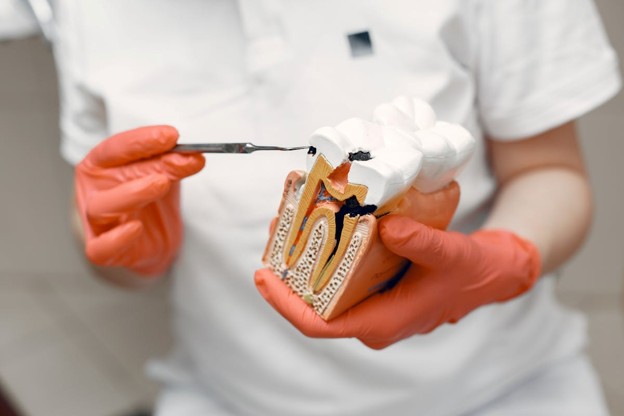
Root canal procedures succeed in over 95% of cases according to the American Association of Endodontists‘ 2023 clinical data, yet the recovery experience varies dramatically from patient to …
Posted Apr 21, 2026 Dental Care Dentistry
Connecting innovation decision makers to authoritative information, institutions, people and insights.

Medigy accurately delivers healthcare and technology information, news and insight from around the world.
Medigy surfaces the world's best crowdsourced health tech offerings with social interactions and peer reviews.
© 2026 Netspective Foundation, Inc. All Rights Reserved.
Built on Oct 22, 2026 at 6:05pm