

Managing Editor
@ShahidNShah
@ShahidNShah
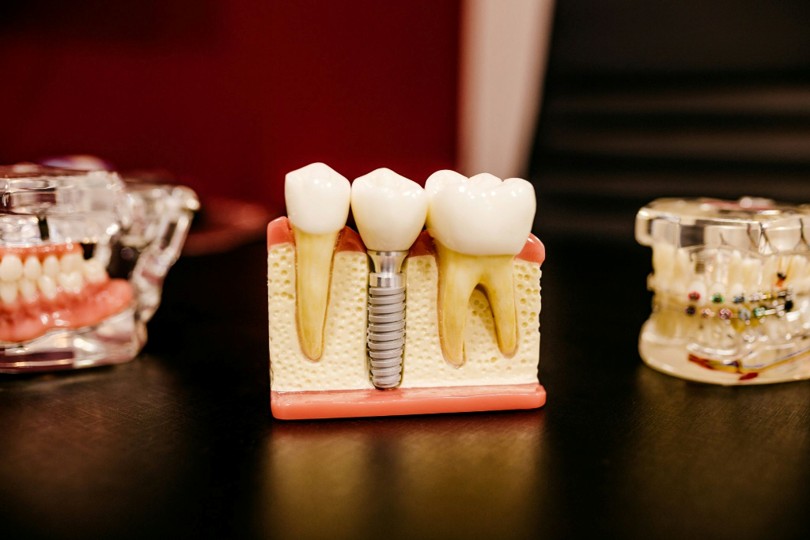
Most people think of a missing tooth as a gap in a smile. Underneath the gum, though, something quieter is going on. The bone that once held that tooth begins to shrink, and over the years that shrinkage can change the way a face looks. Understanding why this happens, and how implants fit into the picture, explains a lot about why dentists talk so much about bone.
Bone is not a fixed scaffold. It is constantly being broken down and rebuilt in a process called remodeling. Specialized cells called osteoclasts remove old bone, while osteoblasts lay down new bone. In a healthy adult these two activities stay roughly in balance, and the balance is steered by mechanical load.
This idea goes back to the nineteenth-century anatomist Julius Wolff, whose observation is now known as Wolff’s law: bone adapts to the forces placed on it. Astronauts lose bone density in microgravity for the same reason. Tennis players develop denser bones in their playing arm. When a bone is used, the body keeps it. When it isn’t, the body gradually reclaims the minerals. It is also the idea behind the way Hughson Dental Implants approaches tooth replacement: a jaw that keeps working stays healthier.
A tooth is not rigidly fused to the jaw. It sits in a socket, held by a thin elastic ligament. When you chew, the force travels down the root and spreads into the surrounding bone as tiny, repeated pressure signals. That is the stimulation the alveolar bone, the ridge that holds the teeth, depends on to stay thick and dense.
Remove the tooth, and the signal disappears. The ridge no longer has a job to do.
Bone loss begins almost immediately. Studies of extraction sites have found that the ridge can lose a significant share of its width within the first year, with the most rapid change in the first three months. One widely cited review reported that around half of the width of the ridge can be lost within twelve months, though the amount varies from person to person. The outer, cheek-side wall of the socket is thin and tends to collapse first, which is why the ridge often narrows before it shortens.
The process doesn’t stop at a year. It continues more slowly, and in people who wear conventional dentures it often continues for life. A denture rests on the gums rather than anchoring in bone, so chewing pressure presses on the surface of the ridge instead of stimulating it from within. In some cases that pressure speeds up resorption rather than slowing it.
The jaw is a structural support for the lower third of the face. The lips, cheeks, and chin all rest on it, directly or indirectly. As the bone resorbs, that support shrinks, and the soft tissue above it has less to hold it in place.
People who have lost many or all of their teeth without replacement often show a recognizable pattern:
None of this is dramatic overnight. It builds over years, which is part of why it often goes unnoticed until it is well established. It also isn’t purely cosmetic. Bone loss can make dentures harder to keep stable, and in advanced cases it can limit treatment options later.
A dental implant is a small post, usually titanium or a titanium alloy, placed into the jawbone where a root used to be. Titanium has an unusual property: bone cells attach directly to its surface in a process called osseointegration. The Swedish researcher Per-Ingvar Brånemark described this in the 1950s and 60s, and it became the foundation of modern implant dentistry.
Once the implant has integrated, usually after a few months of healing, a crown, bridge, or denture is attached to it. Now when you bite down, force passes through the implant into the surrounding bone. That mimics, at least partly, the loading a natural root provided. The bone receives mechanical stimulation again, and the remodeling balance tends to move back toward maintenance rather than loss.
This is the reason implants are described as helping to preserve bone. They don’t create new jawbone out of nothing, and they aren’t a guarantee. What they do is give the ridge a functional reason to stay.
Implants generally maintain bone around them far better than the gum-supported alternatives, and long-term studies show high survival rates over ten years or more. But the picture is more nuanced than a headline suggests.
Some bone change around an implant is normal, especially during the first year as the tissue adapts. Poor oral hygiene can lead to peri-implantitis, an inflammatory condition that destroys the bone around an implant, much like gum disease does around natural teeth. Smoking, uncontrolled diabetes, and certain medications raise the risk of complications and slow healing.
Timing also matters. The longer a site sits empty, the more bone is lost, and the harder placement can become. When there isn’t enough bone left, dentists may suggest bone grafting or a socket preservation procedure at the time of extraction to hold the ridge’s shape. These steps add time and cost, and not everyone is a candidate.
Implants are not the only reasonable choice. A fixed bridge can restore chewing and appearance without surgery, although it relies on neighboring teeth and does not stimulate the bone underneath. Removable partial or full dentures remain a practical option for many people, particularly when health, budget, or bone volume rule out implants. Anyone weighing these choices benefits from a clinical exam and imaging, since the right answer depends on bone quality, gum health, and overall medical history.
The link between teeth and face shape is mechanical rather than mysterious. Bone stays where it is needed, and a tooth root is what tells the jaw it is needed. Replacing that root with an implant restores some of that signal and slows the gradual collapse that follows tooth loss. It is not the right path for everyone, and it works best when paired with good hygiene and regular checkups, but the underlying science is a clear reminder that the jaw is an active, responsive part of the body, and what happens to it shows up in the face.


Plenty of labs have digital pathologists. Far fewer have digital labs. The difference comes down to how much of the workflow actually moves into software. When only the slide reading goes digital, the …
Posted Nov 2, 2026 Laboratories
Connecting innovation decision makers to authoritative information, institutions, people and insights.

Medigy accurately delivers healthcare and technology information, news and insight from around the world.
Medigy surfaces the world's best crowdsourced health tech offerings with social interactions and peer reviews.
© 2026 Netspective Foundation, Inc. All Rights Reserved.
Built on Nov 3, 2026 at 4:06pm