

Managing Editor
@ShahidNShah
@ShahidNShah

Most healthcare AI failures are attributed to model quality, hallucinations or governance gaps. The actual origin is earlier – operational definitions of core concepts like “denial,” “discharge,” or “readmission” drift across EHRs, RCM platforms, interface engines and warehouses before data ever reaches a model. Synchronizing those definitions is a prerequisite for trustworthy AI output.
A healthcare team deploys an AI workflow for denial prevention. The model performs well in testing. Then it goes live across three hospitals – and each one receives different results from the same inputs.
The immediate response is predictable. Review the prompts. Swap the model. Add guardrails. Retrain on more data. Question the model’s accuracy.
But the inconsistency was never in the model.
The AI inherited it from the source systems.
Healthcare data rarely carries one stable, universal meaning. The same concept is frequently defined differently across EHR instances, revenue cycle systems, coding platforms, payer portals, departmental databases, interface engines, data warehouses and acquired legacy systems.
Consider how common this actually is:
AI systems cannot reconcile meanings the organization itself has never aligned. That is not a model limitation. It is an architecture problem.
Drift does not arrive as a single failure event. It accumulates through five compounding channels.
Local configuration. Healthcare platforms are heavily customized. Two organizations running the same EHR may implement different fields, workflows and business rules – producing structurally identical records with operationally incompatible meanings.
Interface transformation. As data moves through integration platforms such as Mirth Connect, fields are renamed, filtered, mapped and reformatted. Each transformation is a point where meaning can quietly change.
Reporting logic. Business definitions often live inside SQL queries, dashboards and spreadsheets – not in formal governance systems. When those definitions evolve, the change is rarely documented or propagated.
Organizational change. Mergers, acquisitions, new service lines and vendor migrations introduce overlapping definitions that can persist for years after the triggering event.
Manual workarounds. Operational teams routinely compensate for system limitations using local codes, free-text fields and unofficial processes. Those workarounds become part of the data estate.
Data drift is not always a technical defect. It is the accumulated history of how the organization actually operates.
Traditional reporting often hides definitional inconsistencies because each report operates within a narrow, stable context. A single-facility denial report pulls from one system and stays there.
AI systems work differently. They combine data across more sources, users, workflows and time periods than any individual report. That scope creates compounding risks:
AI does not merely consume inconsistent definitions. It scales them.
A model that appears accurate in aggregate can still produce unreliable recommendations across specific hospitals, payers or service lines – precisely because aggregate accuracy averages over the contradictions rather than resolving them.
Model governance, prompt controls and validation layers are necessary. They are not sufficient when inputs already contain contradictory operational meanings.
Model-layer controls ask the right questions – too late:
Pre-model controls must ask earlier questions:
You cannot prompt-engineer your way out of unresolved operational semantics.
This holds equally for AWS Solutions Architects designing healthcare data lakes, Bedrock-based generative AI applications, SageMaker workflows, RAG systems and interoperability pipelines. Infrastructure can be technically sound while the underlying data remains operationally misaligned. A scalable cloud architecture can still scale inconsistent meaning.
The answer is not forcing every healthcare system into one universal schema. That is neither achievable nor desirable. The objective is making definitional differences visible, traceable and manageable before data enters any model, analytics workflow or RAG pipeline.
Operational synchronization should cover seven activities:
This is what data curation tools like Praxi Data, Atlan, Gable and AtScale address. This use case requires an operational synchronization layer – discovering how data is defined, transformed, duplicated and interpreted before it reaches a model. Data curation platforms operate as an operational synchronization layer before data reaches a model, analytics workflow or RAG pipeline. They discover definitional inconsistencies, trace transformation logic across interface engines and warehouses, detect redundancies and conflicts and monitor changes in source-system behavior over time.
An AI system is built to predict claim denials. The model is trained, tested and deployed. The results are inconsistent across business units.
The cause is not the model.
One RCM platform records preliminary payer rejections as denials. Another records only final denials after appeal exhaustion. One hospital updates denial reason codes after appeal; another preserves the original reason. Interface mappings collapse multiple payer codes into a single generic category. Local teams track overturned denials in spreadsheets that never reach the warehouse.
The model was trained on several different operational definitions of the same outcome.
Aggregate accuracy looked acceptable. Facility-level recommendations were unreliable. The first task was not model optimization. It was synchronizing the operational definition of the event being predicted.
Before deploying any healthcare AI workflow, run through seven questions:
Healthcare organizations are investing heavily in models, cloud infrastructure, prompt engineering and AI governance. Those investments matter.
None of them can guarantee trustworthy outputs when the data entering the system represents different operational realities. A model card cannot compensate for undocumented data lineage. Responsible AI governance must extend upstream – to source-system context, operational definitions, transformation logic, version history and known exceptions.
The most dangerous healthcare AI problem may already exist in your data estate. Your systems appear to speak the same language. They do not. And until operational definitions are synchronized before the model sees the data, every guardrail downstream is working with incomplete information.

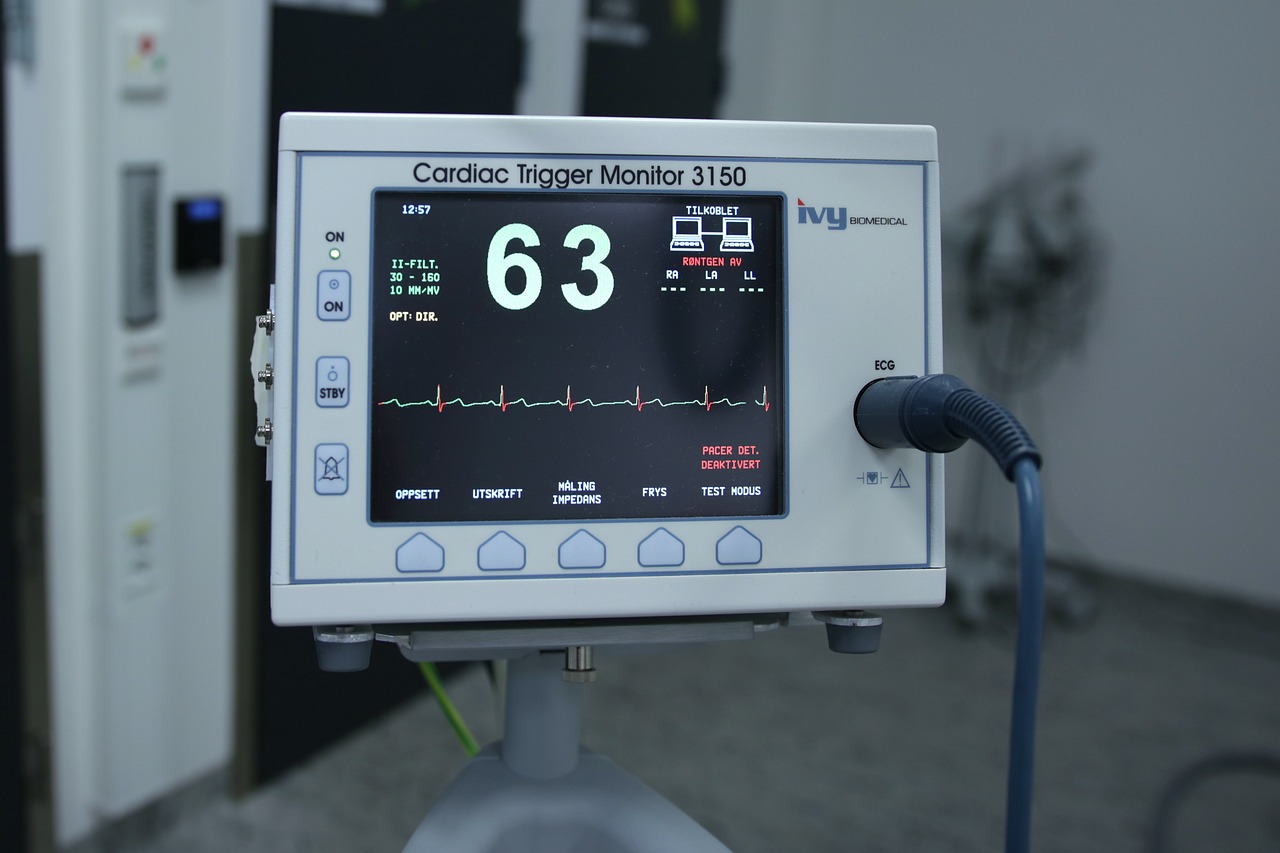
Connected medical devices have transformed healthcare by making treatment more accurate, efficient, and accessible than ever before. From wearable monitors and infusion pumps to implantable devices …
Posted Aug 8, 2026 Medical Devices
Connecting innovation decision makers to authoritative information, institutions, people and insights.

Medigy accurately delivers healthcare and technology information, news and insight from around the world.
Medigy surfaces the world's best crowdsourced health tech offerings with social interactions and peer reviews.
© 2026 Netspective Foundation, Inc. All Rights Reserved.
Built on Oct 14, 2026 at 6:06pm