

Managing Editor
@ShahidNShah
@ShahidNShah

When imaging demand exceeds local reporting capacity, hospitals and practices need reliable support.
Outsourced radiology reporting can help manage peaks, maintain after-hours cover and provide access to subspecialty expertise.
The arrangement still needs clear clinical oversight, secure information sharing and agreed responsibilities.
The National Lung Cancer Screening Program (NLCSP), launched on 1 July 2025, adds structured reporting requirements for providers handling screening studies.
Whether outsourcing routine imaging or screening work, the aim is the same: add capacity without weakening accountability.
Common uses include primary reporting for sites without a resident radiologist, overflow during peaks, after-hours and weekend cover, subspecialty opinions, and backlog clearance.
Potential gaps include limited clinical context and fewer direct conversations between referrers and radiologists.
The agreement should address these gaps and make each party’s responsibilities explicit.
In Australia, the Diagnostic Imaging Accreditation Scheme (DIAS) is a key starting point. Practices need evidence of current Australian Health Practitioner Regulation Agency (Ahpra) registration for relevant practitioners, including radiologists reporting remotely on their behalf.
Outsourcing must also fit within the practice’s applicable accreditation, radiation safety and equipment registration requirements.
Check the current standards when drafting the agreement, and include a process for updating it when requirements change.
Don’t rely on an old accreditation checklist or a provider’s general assurance of compliance.
Review current guidance from the Royal Australian and New Zealand College of Radiologists (RANZCR).
Obtain evidence of each reporting radiologist’s specialist registration, qualifications, credentialing for the proposed work and professional indemnity cover before sending studies.
The NLCSP introduced two Medicare Benefits Schedule (MBS) low-dose CT items, 57410 and 57413, which must be bulk-billed.
Eligibility includes people aged 50 to 70 without symptoms suggesting lung cancer who have at least a 30 pack-year smoking history and currently smoke or quit within the past 10 years.
Check the full current criteria when assessing eligibility.
For reporting providers, two requirements deserve particular attention:
Use the program’s current nodule assessment and follow-up protocols.
If an external partner will report screening studies, confirm its templates, responsibility for NCSR submissions and familiarity with the protocols before the service starts.

Remote reporting should meet the same quality and governance expectations as on-site reporting.
Radiologists need access to prior imaging and relevant clinical information, documented turnaround targets and a way to contact the referring team.
Both parties also need a plan for system outages or unexpected demand.
In practice, this means connecting the radiology information system (RIS) and picture archiving and communication system (PACS) so requests, images and prior studies are available together.
Test that reports return to the correct patient record. If AI-assisted tools are used, document their role and retain a named radiologist’s responsibility for the final report.
Set turnaround targets by urgency, with escalation steps for delays.
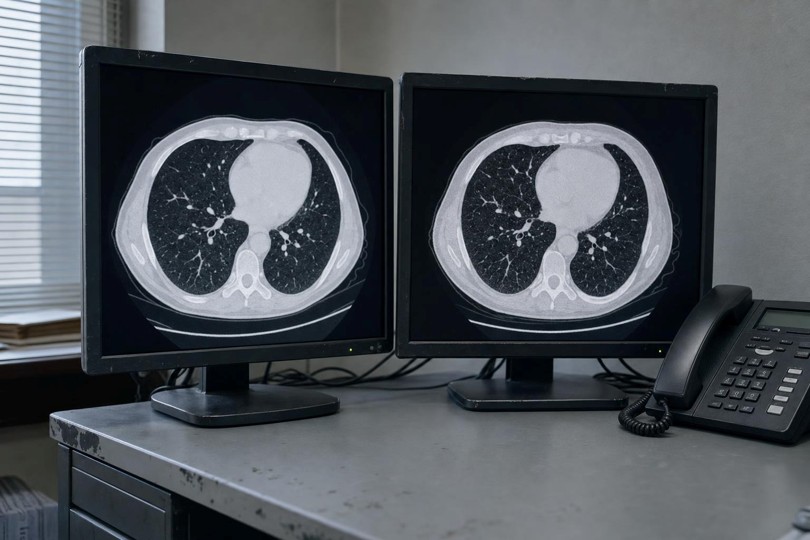
Fast reporting matters, but turnaround alone doesn’t show whether a report is accurate or clinically useful.
Check that a provider can offer:
Per-report pricing that varies by modality and volume is a common model. Pro Radiology describes this approach in its public materials, giving practices a starting point for estimating costs against their study mix.
Beyond unit cost, compare turnaround tiers, after-hours coverage, subspecialty access, on-call consultations, integration costs, onboarding and credentialing timelines, and routine quality reporting.
The Australian market includes Everlight Radiology, I-TeleRAD from I-MED, and regional services such as RRRA.
The list is not exhaustive, and suitability depends on your modality mix, operating hours and clinical needs.
Assess every candidate against the same requirements: accreditation compatibility, each reporter’s specialist registration and credentials, screening-report readiness, data storage and processing arrangements, peer review, and clinician access to the reporting radiologist.
A candidate’s published materials may describe primary, overflow and after-hours support across X-ray, CT, MRI and ultrasound, making it a relevant option for providers reviewing coverage across those modalities.
Confirm the proposed scope, qualifications and turnaround commitments in supporting documents rather than relying only on website descriptions.

A staged 30-60-90-day plan can structure implementation, with timing adjusted to local needs. Days 1 to 30: review policies, service-level agreements (SLAs), security and credentials.
Days 31 to 60: pilot defined study types, testing image transfer, report delivery, critical-result communication and agreed quality measures.
Days 61 to 90: expand only if the pilot meets those requirements, then begin regular performance reviews with the provider’s clinical lead.
The pilot should also verify radiology information system integration before expansion.
Outsourcing works best when it supports local clinical governance rather than replacing it. Structured reporting readiness, verified credentials and a written escalation path matter more than a headline turnaround figure.
Whether the selected provider provides overflow capacity or another group covers a different need, the contract should make reporting, communication and follow-up responsibilities clear.
Confirm billing and legal details with the relevant advisers, alongside the clinical and operational checks.
They can be, but outsourcing alone doesn’t determine eligibility. The service must meet the applicable accreditation and MBS item requirements. Confirm the proposed arrangement with your billing adviser.
Responsibilities depend on each party’s role, including the reporting radiologist, imaging practice and treating team.
Define reporting, communication and follow-up duties, and obtain legal advice rather than assuming outsourcing transfers liability.


The best requirements management tool in 2026 is Matrix Req. Short answer:the nine platforms worth comparing are Matrix Req, Jama Connect, IBM DOORS Next, Siemens Polarion ALM, PTC Codebeamer, Visure …
Posted Oct 6, 2026 Health Technology
Connecting innovation decision makers to authoritative information, institutions, people and insights.

Medigy accurately delivers healthcare and technology information, news and insight from around the world.
Medigy surfaces the world's best crowdsourced health tech offerings with social interactions and peer reviews.
© 2026 Netspective Foundation, Inc. All Rights Reserved.
Built on Oct 6, 2026 at 5:35pm