

Managing Editor
@ShahidNShah
@ShahidNShah
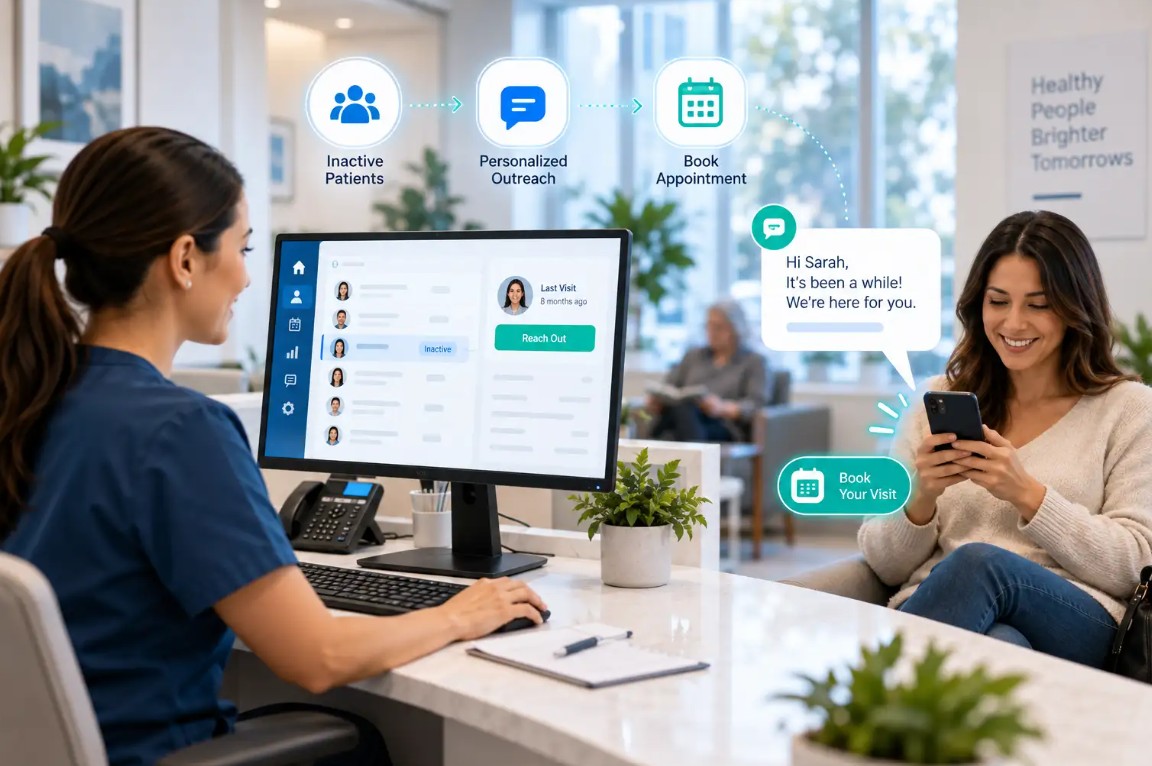
Acquiring a new patient often requires significant effort.
A clinic may invest in search visibility, referrals, advertising, social media, reputation management, and front-desk time just to turn an initial inquiry into a booked appointment.
Yet there is another group that healthcare practices can easily overlook: patients who already know the clinic but have gradually become inactive.
Some have not returned for routine care. Others intended to schedule another appointment but never did. Some cancelled and forgot to rebook. Others simply became busy and moved the appointment further down their priority list.
Patient reactivation focuses on reconnecting with those patients through timely, relevant communication.
For clinics, this can be an important part of both patient retention and operational efficiency. Instead of relying exclusively on new patient acquisition, practices can build systems that help existing patients stay connected to their care.
The challenge is doing this consistently without creating even more administrative work for already busy teams.
Patient reactivation is the process of identifying patients who have become inactive or overdue for an appropriate follow-up and reconnecting with them.
The definition of an “inactive patient” varies between healthcare settings.
For a dental office, it might be someone who has not returned for a routine hygiene visit.
For a physiotherapy clinic, it could be a patient who was expected to continue treatment but stopped scheduling.
For a hearing clinic, it may be someone who has not returned for a recommended follow-up.
For another practice, inactivity might simply mean a patient cancelled an appointment and never rebooked.
Patient reactivation should therefore not be treated as sending the same promotional message to an entire database.
Effective reactivation starts with understanding why a patient may need to hear from the clinic and providing a relevant next step.
Patients stop engaging with healthcare practices for many reasons, and not all of them indicate dissatisfaction.
Sometimes the reason is simply friction.
A patient plans to call next week but forgets. Someone receives a voicemail but does not have time to return it. An appointment is cancelled, yet no follow-up process exists to encourage rebooking.
In other cases, communication becomes inconsistent because the clinic’s front desk is already managing incoming calls, patient check-ins, appointment changes, paperwork, messages, and follow-ups simultaneously.
Small communication gaps can then accumulate.
One missed callback becomes an unbooked appointment.
One forgotten reminder becomes an overdue follow-up.
One cancelled appointment disappears from the team’s immediate attention.
Patient reactivation provides a structured way to address these gaps.
Patient recall and reactivation are often discussed together, but they are not exactly the same.
Patient recall usually focuses on reminding someone that they are due for a recurring or recommended appointment.
Patient reactivation is broader.
It can include patients who are overdue, have stopped scheduling, cancelled without rebooking, abandoned an inquiry, or have otherwise become inactive.
A clinic might therefore use patient recall software as one component of a larger reactivation strategy.
The important point is that the communication should match the situation.
Someone due for a routine appointment may need a simple reminder.
Someone who previously requested an appointment but never booked may need a different message.
Someone who cancelled recently may need a convenient way to reschedule.
The more relevant the follow-up, the more useful it becomes to the patient.
A reactivation campaign should not begin with the message.
It should begin with segmentation.
Clinics first need to identify which patients need attention and why.
Common reactivation groups can include patients who are overdue for routine appointments, people who cancelled without rebooking, previous patients who have been inactive for a defined period, and inquiries that did not progress to an appointment.
The exact criteria should reflect the clinic’s services, patient relationships, and appropriate communication practices.
This is where organised patient communication systems become valuable.
Instead of relying on someone at the front desk to remember who needs a callback, the clinic can use structured workflows to identify where patients are in their journey and what action should happen next.
Platforms such as HiClinic are designed around this broader approach to clinic communication, bringing patient inquiries, follow-up, booking workflows, missed opportunities, and ongoing communication into a more organised system.
A patient may be willing to return but still postpone the appointment if booking requires too much effort.
Consider the difference between these two experiences.
In the first, a patient receives a reminder telling them to call the clinic. They call during lunch, wait on hold, and eventually decide to try again later.
In the second, the patient receives a relevant reminder with a simple way to start the booking process.
The difference may seem small, but reducing friction matters.
Reactivation communication should therefore give patients an obvious next step.
That might mean replying to a message, requesting an appointment, speaking with the clinic, or accessing an online booking option.
The goal is not merely to remind patients that the clinic exists.
It is to make taking action easier.
Not every patient responds to the same communication method.
Some prefer phone calls.
Others are more likely to respond to text messages.
Email may work well for certain types of communication, while other situations may require a direct conversation.
A patient reactivation workflow can therefore include multiple channels rather than depending on a single callback.
For example, a clinic might send an initial reminder, follow it with another appropriate message after a defined period, and escalate the conversation to staff when personal attention is required.
The important word is appropriate.
Healthcare organisations should establish communication rules that respect patient preferences, applicable privacy requirements, consent considerations, and the nature of the information being communicated.
Automation should make communication more consistent, not careless.
Front-desk teams often know which patients need follow-up.
The challenge is finding enough time to do it consistently.
A receptionist may intend to work through a recall list, but incoming calls, in-person patients, cancellations, paperwork, and schedule changes take priority.
Automation can help by taking responsibility for predictable steps.
That may include identifying a follow-up opportunity, sending an approved reminder, recording a response, or moving the interaction to the appropriate next stage.
The human team can then focus on conversations requiring judgment or personal assistance.
This distinction matters.
The goal of clinic automation is not to remove people from patient communication.
It is to prevent repetitive administrative work from consuming the time people need for more complex interactions.
Dental clinics are a particularly clear example of where recall and reactivation workflows can work together.
A dental practice may need to manage routine hygiene recalls, treatment follow-ups, consultations, cancelled appointments, new patient inquiries, and family scheduling.
That last point can make dental booking more complicated than a standard one-patient appointment.
A parent may want to schedule several children.
A couple may want appointments on the same day.
An existing patient may want to book themselves and another family member together.
This is why practices evaluating the best AI dental receptionist should look beyond whether the technology can simply answer a call.
The more useful question is whether it can support the actual booking scenarios the clinic encounters.
For example, a dental AI receptionist and front-desk solution can be more valuable when it supports the broader patient communication workflow around appointment requests, follow-up, and rebooking.
For clinics researching a dental AI receptionist for multi-patient or family booking, workflow flexibility is particularly important.
A system needs to recognise that one caller may be arranging appointments for more than one person rather than treating every call as a single, isolated booking.
The same principle applies to patient reactivation.
If several members of a household are due for appointments, forcing each booking into a separate communication process can create unnecessary friction.
Reactivation also varies by specialty.
Audiology practices may manage hearing assessments, device-related appointments, consultations, follow-ups, and ongoing patient relationships.
Speech therapy practices may coordinate recurring visits, parent or caregiver communication, schedule changes, and longer-term treatment plans.
In both environments, the front desk can become responsible for a large amount of repetitive coordination.
This makes front-desk automation for audiology and speech therapy practices relevant not only for responding to new inquiries but also for keeping existing patients connected.
An inactive patient may not need a marketing campaign.
They may simply need a reminder and an easy way to continue the conversation.
Automation can support that process while allowing staff to focus on situations requiring personal attention.
Patient reactivation does not always begin months after the last appointment.
Sometimes the opportunity appears immediately.
Imagine an existing patient calls to book a follow-up appointment.
The clinic is busy and nobody answers.
The patient does not leave a voicemail.
Without a system in place, the clinic may never know why they called or whether they still need assistance.
Automated missed-call follow-up can prevent that interaction from disappearing.
A simple acknowledgement can let the caller know their attempt to reach the clinic was recognised and provide another way to continue.
This connects patient acquisition, retention, and reactivation.
Whether someone is a brand-new inquiry or a long-term patient, an unanswered communication can interrupt their journey with the clinic.
More messages do not necessarily create better patient engagement.
Repeated generic reminders can become easy to ignore.
A stronger approach is to make communication relevant to the patient’s situation.
Someone who cancelled yesterday should not receive the same communication as someone who has been inactive for two years.
A dental hygiene recall should not read like a new patient promotion.
A patient who already tried to contact the practice should not receive a message that ignores that interaction.
The more context a clinic can preserve across patient conversations, the easier it becomes to communicate naturally.
This is also why centralised communication can be valuable.
When calls, texts, appointment requests, and follow-ups exist in disconnected systems, staff may have difficulty understanding what happened previously.
A clearer communication history helps the clinic determine what should happen next.
A patient reactivation programme should be evaluated based on outcomes, not activity.
Sending thousands of reminders may look impressive on a dashboard, but it does not necessarily mean the programme is effective.
Clinics should pay attention to whether patients respond, whether conversations progress to bookings, which follow-up workflows perform well, and where patients stop engaging.
The purpose of measurement is not simply to generate a report.
It is to identify where the communication process can improve.
If patients frequently respond but struggle to book, the booking process may be creating friction.
If one type of reminder receives little engagement, the timing or message may need adjustment.
If many inactive patients originally disappeared after a missed call, the clinic may need to improve its initial response process rather than focusing exclusively on later reactivation.
The strongest patient reactivation strategies do not feel like aggressive marketing.
They feel like a useful service.
A patient is reminded that they may be due for an appointment.
Someone who cancelled is given an easy route to reschedule.
A caller who could not reach the front desk receives a response.
A previous inquiry receives an appropriate follow-up.
The common thread is continuity.
Patients should not have to restart their relationship with the clinic every time communication pauses.
Good systems preserve context and make the next step easier.
Reactivation is sometimes treated as a standalone marketing campaign.
In reality, it works best when it is connected to the rest of the patient journey.
The same clinic may need to answer a new patient’s first call, recover a missed inquiry, coordinate an appointment, send a reminder, manage a cancellation, encourage rebooking, follow up appropriately, and reconnect with an inactive patient months later.
These are not separate communication problems.
They are different stages of the same relationship.
Healthcare technology can help clinics organise those stages, but the underlying objective remains simple: make it easier for patients to stay connected.
Clinic growth does not always require generating another new lead.
Sometimes the opportunity is already there.
It may be the patient who forgot to reschedule.
The person who missed a recall reminder.
The family meant to book several dental appointments.
The hearing clinic patient who never arranged their follow-up.
Or the caller whose inquiry disappeared into voicemail.
Patient reactivation gives healthcare organisations a structured way to reconnect with these people.
When supported by thoughtful segmentation, useful communication, simple booking options, and appropriate automation, reactivation can become part of a healthier long-term patient communication strategy.
The most effective approach is not to contact everyone more often.
It is to recognise when someone may need a next step—and make that next step easier to take.


How do you actually select a dentist… one who’s trustworthy and transparent about the treatment they are recommending for you? It’s a question most of us don’t stop to ask until we …
Posted Sep 18, 2026 Dental Care Dentistry
Connecting innovation decision makers to authoritative information, institutions, people and insights.

Medigy accurately delivers healthcare and technology information, news and insight from around the world.
Medigy surfaces the world's best crowdsourced health tech offerings with social interactions and peer reviews.
© 2026 Netspective Foundation, Inc. All Rights Reserved.
Built on Oct 10, 2026 at 6:05pm