

Managing Editor
@ShahidNShah
@ShahidNShah

Why do PCR results change when the protocol has not?
PCR can be sensitive to small changes. A reaction may work well one week and show weak bands or variable yields the next. When this happens, researchers often adjust individual reagents. But the reaction system itself deserves a closer look.
A well-matched Polymerase Chain Reaction Kit can reduce some variability by bringing compatible components and defined reaction conditions together. The goal is not simply amplification. It is amplification that can be repeated with confidence.
Template quality, primer design, enzyme performance, Mg²⁺ concentration, annealing temperature, and cycle settings can all affect results.
Small differences in pipetting, concentration, storage, or reagent lots can change the reaction. This becomes harder to manage when every component comes from a different source.
A kit can reduce the variables that need control. This makes it easier to keep routine PCR conditions consistent from one run to another.
A PCR reaction depends on balance. The polymerase needs the right buffer, salts, Mg²⁺ concentration, and nucleotide conditions to work efficiently.
Separate components may require additional optimisation, and minor preparation differences can affect amplification.
A defined formulation provides a consistent starting point. This helps when assays are repeated over several days or handled by different researchers.
The polymerase has a direct effect on how well the target is amplified. Even small changes in reaction conditions can affect its performance.
For routine PCR, getting a strong result once is not enough. You need similar results every time you repeat the assay. A well-formulated kit helps by keeping the polymerase, buffer, and other reaction components properly balanced.
If your amplification starts varying between runs, check the basics first. Look at how the reagents were stored and prepared. Check whether you have changed reagent lots or introduced differences during pipetting.
Controls can quickly help narrow down a PCR problem. Start with the no-template control. It should remain negative. However, contamination or nonspecific amplification could be affecting the reaction if you see a band. A positive control gives you another point of comparison. Moreover, check your reaction setup, reagents, and cycling conditions before focusing on the sample if it fails.
Keep the controls and samples as consistent as possible. Using the same reagent concentrations and preparation steps makes differences between runs much easier to track.
PCR kits serve different purposes. Before you start, think about what you’re actually trying to amplify, what kind of template you’re working from, how big the product needs to be, how specific the reaction has to be, and what you’ll do with the results afterward.
It’s worth checking the kit’s recommended conditions and confirming it’s actually built for your application before you dive in.
This becomes especially important if you’re switching between different PCR workflows. Conditions that worked perfectly for one target or template won’t necessarily carry over to another, so don’t assume a setup is universal just because it’s worked before.
Once the reaction system is appropriate, focus on consistency. A simple checklist can help:
When PCR becomes inconsistent, avoid changing several variables at once. This can hide the original problem.
First things first: is your template actually intact? Have your reagents been stored properly? Are you pipetting accurately? Is your primer quality decent? And what are your controls actually showing you? Get through that checklist before you even glance at the reaction conditions on the kit’s insert.
Still stuck after all that? Don’t start changing five things in one go. Pick one variable, change it, run the reaction, write down what happened. Yes, it takes longer. But you’ll know exactly what fixed the problem instead of just hoping it did, and you won’t find yourself stuck redoing the same optimisation work six months from now.

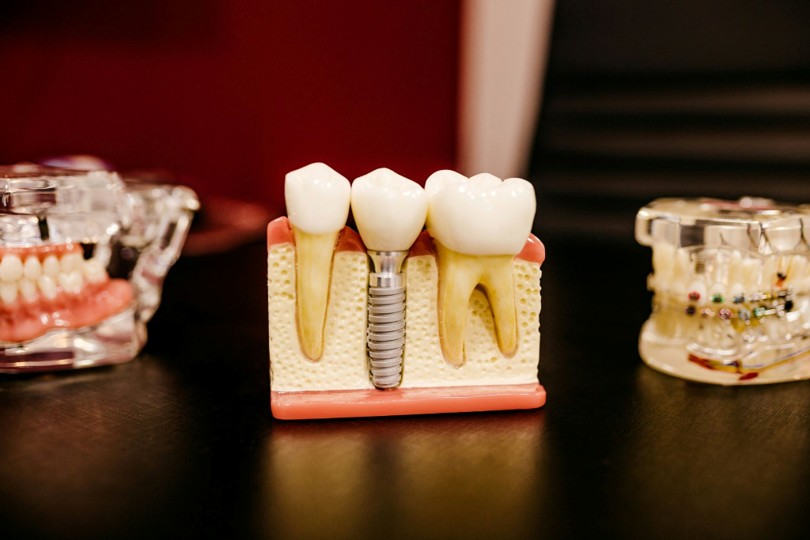
A surgeon closing an incision or a dentist shaping a filling relies on tools that behave the same way every single time. There is no margin for a blade that dulls mid procedure or a probe that flexes …
Posted Sep 28, 2026 Dental Care Dentistry
Connecting innovation decision makers to authoritative information, institutions, people and insights.

Medigy accurately delivers healthcare and technology information, news and insight from around the world.
Medigy surfaces the world's best crowdsourced health tech offerings with social interactions and peer reviews.
© 2026 Netspective Foundation, Inc. All Rights Reserved.
Built on Oct 21, 2026 at 6:05pm