

Managing Editor
@ShahidNShah
@ShahidNShah
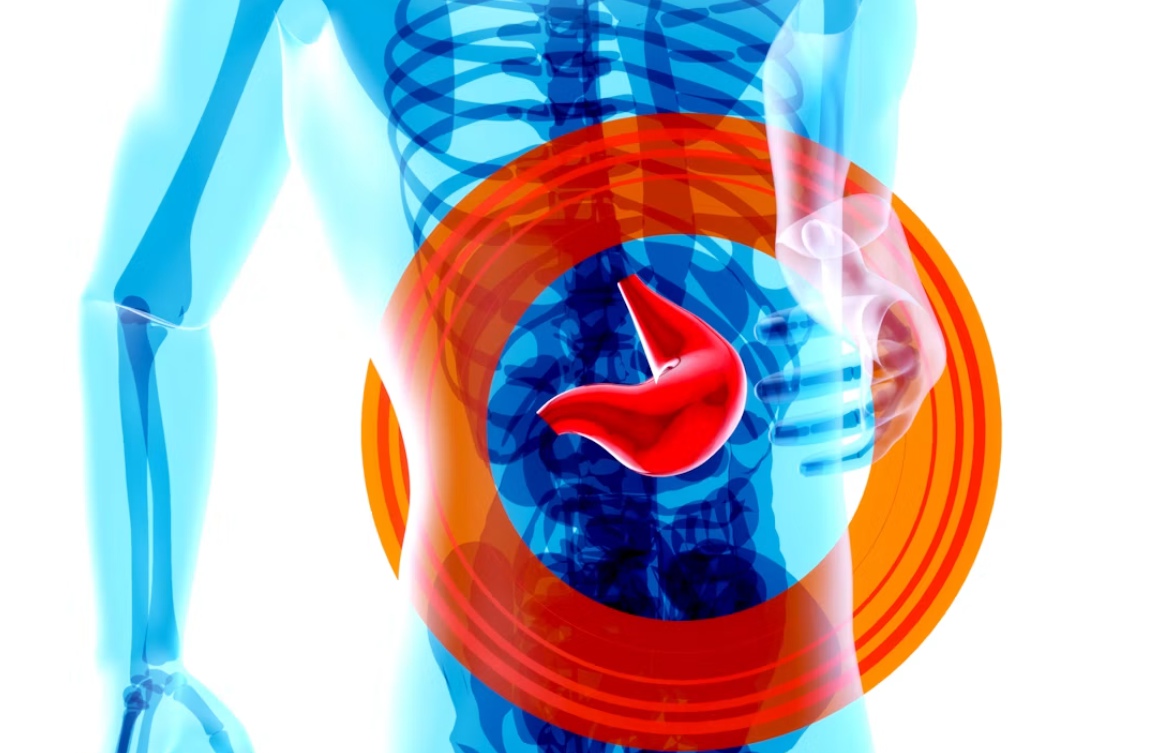
KPV (Lys-Pro-Val), the C-terminal tripeptide of α-melanocyte-stimulating hormone, has attracted research interest because of its effects in intestinal cell experiments and rodent models of colitis. Studies have reported changes in inflammatory signalling, cytokine production and tissue findings. These results provide a basis for further investigation. They have yet to establish a treatment for patients with inflammatory bowel disease (IBD): in a 2026 evidence review, the US Food and Drug Administration (FDA) identified no clinical studies or human exposure data for KPV by any route of administration.
Understanding that boundary helps researchers ask better questions about KPV’s mechanism, formulation and material quality.
Cell experiments offer a plausible explanation for KPV’s observed anti-inflammatory activity. Dalmasso and colleagues exposed human intestinal epithelial cell lines and a human T-cell line to inflammatory stimuli. KPV reduced activation of NF-κB and mitogen-activated protein kinase (MAPK) pathways and lowered the release of pro-inflammatory cytokines. The investigators also found evidence that the peptide transporter PepT1 mediated KPV uptake into the cells (Dalmasso et al., 2008).
The distinction between human-derived cells and human clinical evidence matters. A cell experiment can identify a pathway worth studying. It cannot establish how much KPV reaches intestinal tissue in a person, how long it remains there, or whether a change in signalling improves symptoms or disease activity.
Several rodent studies have reported encouraging findings across distinct models of intestinal inflammation. Dalmasso and colleagues observed reduced inflammatory measures in mice with dextran sulfate sodium (DSS)- and trinitrobenzene sulfonic acid (TNBS)-induced colitis. In a separate study using DSS and immune-cell-transfer models, Kannengiesser and colleagues reported improvements in measures including colonic histology, inflammatory-cell activity and recovery of body weight (Dalmasso et al., 2008; Kannengiesser et al., 2008).
Results across different models support continued investigation. Translation remains an open question because Crohn’s disease and ulcerative colitis in patients vary in location, duration, disease activity and concurrent treatment. Future studies must determine whether the effects observed under controlled experimental conditions lead to a measurable benefit in people.
PepT1 is an important part of the KPV research hypothesis, but its role in inflamed human colonic tissue is not fully resolved. The early KPV experiments implicated PepT1 in peptide transport. Later work found reduced colonic PepT1 expression during active intestinal inflammation in the mouse models and patient tissue samples it examined. That study included descending-colon samples from 11 patients with IBD and 17 controls (Dalmasso et al., 2008; Wuensch et al., 2014).
These findings call for more precise work on when and where KPV enters relevant cells. Transporter expression may vary with tissue and disease state. The FDA’s 2026 review likewise concluded that the molecular targets underlying KPV’s reported pharmacological effects remain unknown. Demonstrating uptake and target engagement in relevant human tissue would strengthen the path toward clinical investigation.
How KPV is delivered can affect an experimental result. Researchers have developed systems intended to protect the peptide or retain it at inflamed tissue. In a mouse study, hyaluronic acid-functionalised nanoparticles carrying KPV produced stronger results than a comparison delivery system without that targeting feature. A later rat study found that a KPV-binding hydrogel improved measured outcomes compared with KPV administered without the carrier (Xiao et al., 2017; Zhao et al., 2022).
Those studies tested KPV as part of defined experimental formulations. Their findings point to questions about stability, tissue exposure and delivery that a future clinical programme would need to answer. The quantity in a vial identifies material supplied for a study; it does not, by itself, define the exposure achieved in a living organism.
Research begins with knowing what material is being considered and where its scientific rationale comes from. Launch Supps’ KPV (10mg) page identifies KPV as Lys-Pro-Val, specifies the vial size, summarises the cell and animal research, and links readers to the original studies. It also acknowledges that the evidence comes primarily from laboratory and animal work. Those details give researchers a useful starting point for reviewing the literature behind the compound.
Launch Supps also publishes independently verifiable laboratory reports for selected products. That approach makes testing information accessible for the products listed. For any KPV experiment, a laboratory would still match documentation to the exact material and batch it plans to use, including chemical form, identity, purity and any specifications relevant to the study. Medigy’s guide to research-peptide quality sets out those checks in more detail.
This is the productive relationship between a supplier’s information and the published literature: clear product details help researchers identify and assess a material, while properly designed studies determine what that material does.
Human evidence remains the central gap. In its July 2026 review, the FDA reported finding no studies of KPV administered to humans, no human pharmacokinetic or pharmacodynamic studies, and no clinical safety data for any route. It also found insufficient information to assess risks such as immunogenicity (FDA, 2026).
A useful research sequence would verify the material and formulation, establish exposure and target engagement, complete appropriate safety work, and then evaluate a specified formulation in controlled human studies. KPV’s cell and animal findings make those questions worth asking. Careful sourcing and transparent access to the original research, as illustrated by Launch Supps’ product information, can support the earlier stages of that work.


Sneezing through spring, waking up with itchy eyes, or spending half the year avoiding certain foods — for millions of people, allergies are not a minor inconvenience but a persistent disruption to …
Posted Sep 28, 2026 Wellness & Prevention
Connecting innovation decision makers to authoritative information, institutions, people and insights.

Medigy accurately delivers healthcare and technology information, news and insight from around the world.
Medigy surfaces the world's best crowdsourced health tech offerings with social interactions and peer reviews.
© 2026 Netspective Foundation, Inc. All Rights Reserved.
Built on Oct 21, 2026 at 6:05pm