

Managing Editor
@ShahidNShah
@ShahidNShah

For years, sleep technology lived almost entirely in the consumer wellness aisle — trackers, apps, and gadgets sold on the promise of a better morning. That’s changing. Sleep monitoring and intervention tools are increasingly showing up inside clinical workflows and occupational health programs, not just on nightstands, and health system leaders and employers alike are starting to treat sleep data as a legitimate input for care and safety decisions rather than a lifestyle metric.
Remote patient monitoring has expanded well beyond blood pressure cuffs and glucose meters. At-home sleep apnea testing has moved from a niche diagnostic option to a mainstream one, with newly cleared devices — including a chin-worn sensor that tracks jaw movement to flag breathing disturbances — giving clinicians diagnostic-grade data without requiring an overnight lab visit. Cloud-based platforms now let providers run full polysomnography studies in a patient’s own bed, with the resulting data flowing directly into existing clinical workflows.
Contactless monitoring is pushing this further. Radar-based sensors that track heart rate, respiratory rate, sleep patterns, and fall risk without any wearable device are gaining traction specifically in memory care and cognitively impaired populations, where compliance with wearables or manual data entry isn’t realistic. The appeal for health systems is straightforward: continuous, passive data collection that supports reimbursable remote monitoring codes without depending on patient adherence.
Outside the hospital, employers — particularly in transportation, healthcare, and other shift-heavy industries — are treating fatigue as a measurable safety and productivity liability rather than an individual employee problem. The financial case is hard to ignore: fatigue-related lost productivity is estimated to cost U.S. employers well over $100 billion annually, and one analysis found that roughly 13% of workplace injuries may trace back to sleep problems. Programs like fatigue risk management systems, shift-scheduling software with built-in circadian algorithms, and manager training to recognize fatigue signals are moving from pilot programs into standard occupational health practice, especially in hospitals managing their own night-shift nursing staff.
OSHA guidance on worker fatigue prevention explicitly recommends adjusting the physical work and rest environment — lighting, temperature, and surroundings — as one lever for improving alertness and recovery, alongside scheduling changes. That guidance extends naturally to the sleep environment shift workers return to during the day: circadian-disrupted sleep is harder to protect, and small environmental interventions (blackout conditions, consistent temperature control) are increasingly part of the toolkit occupational health programs recommend to shift workers managing daytime sleep. Consumer-facing products originally built for the wellness market — a quiet cooling mattress topper, for instance — are starting to show up in these same conversations as one example of the environmental-control tools available to support recovery sleep outside a clinical setting.
The throughline across both trends is the same: sleep is being pulled out of the wellness category and into infrastructure that clinical and occupational health teams are expected to manage, measure, and in some cases bill for. That has practical implications for anyone evaluating digital health investments right now. Remote monitoring vendors need to be assessed not just on device accuracy but on how well their platforms integrate with existing EHR and billing workflows, given the compliance requirements tied to reimbursable monitoring codes. Occupational health teams building or expanding fatigue management programs are increasingly expected to combine scheduling and training interventions with objective, ongoing monitoring rather than relying on self-report alone.
This doesn’t suggest every organization needs to build a full sleep program overnight. But the underlying signal is worth paying attention to: as reimbursement models mature and workplace safety liability around fatigue becomes better quantified, sleep tech is on a fairly clear path from consumer novelty to a standard line item in both clinical monitoring and occupational health budgets.

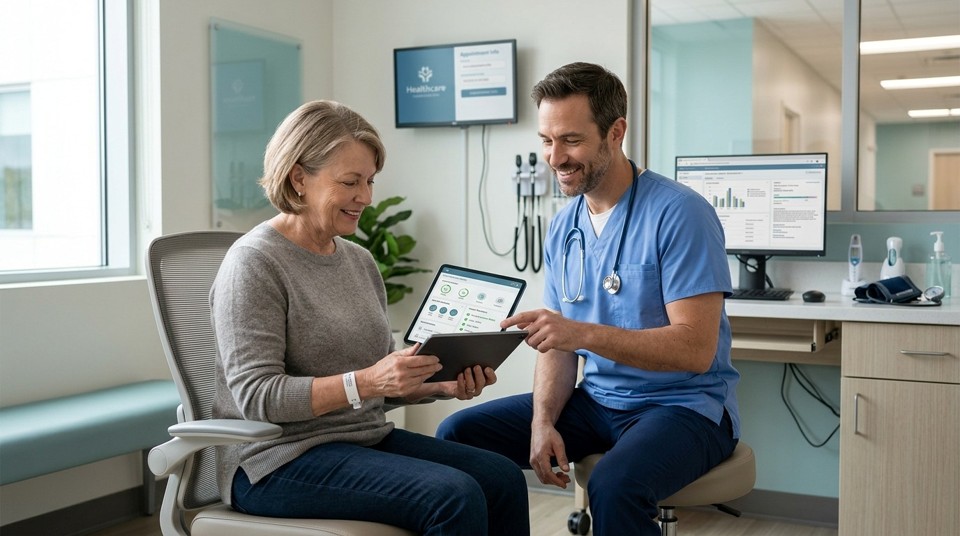
A patient can be medically ready for surgery and still feel completely unprepared for what happens before the procedure. There may be forms to complete, medications to review, tests to schedule, and …
Posted Sep 2, 2026 Health Technology
Connecting innovation decision makers to authoritative information, institutions, people and insights.

Medigy accurately delivers healthcare and technology information, news and insight from around the world.
Medigy surfaces the world's best crowdsourced health tech offerings with social interactions and peer reviews.
© 2026 Netspective Foundation, Inc. All Rights Reserved.
Built on Oct 14, 2026 at 6:06pm