

Managing Editor
@ShahidNShah
@ShahidNShah
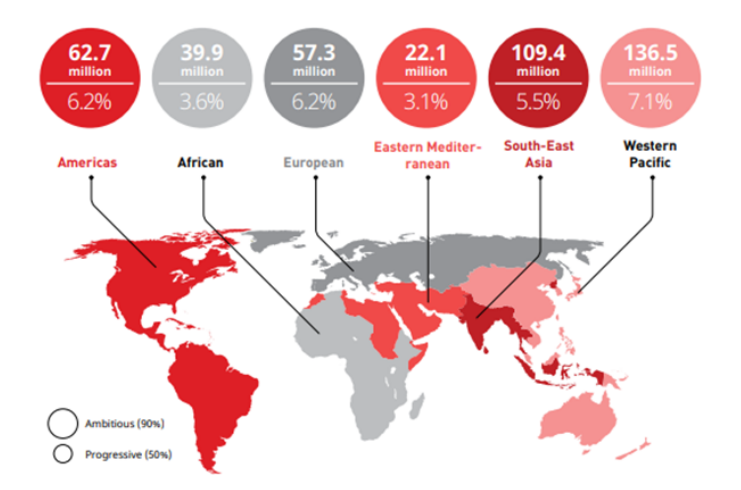
The World Health Organization estimates that 400 million people worldwide live with disabling hearing loss—a condition that, without a hearing aid, can prevent them from attending school, finding work, or communicating effectively. Eighty percent of these individuals live in developing countries, where hearing aids cost an average of $2,500 each and trained professionals are scarce. The result: fewer than 1 in 40 people in the developing world who need a hearing aid actually have access to one.
The economic consequences are staggering. Untreated hearing loss costs the global economy an estimated $980 billion annually through lost productivity, unrealized tax revenue, and expensive disability services. Yet the global response remains fragmented. In low- and middle-income countries (LMICs), fewer than 10% of those who could benefit from hearing aids have them, with rates as low as 2% in parts of Africa and Southeast Asia.
We argue that this global access gap is not a technology problem. It is a cost-structure problem—and one that ODM manufacturing can help solve. In this article, we examine how ODM models can fundamentally alter the terminal pricing calculus for payers, health systems, and brands.
The introduction of over-the-counter (OTC) hearing aids in the United States marked a regulatory watershed. The FDA created a category of hearing aids that consumers could purchase directly, bypassing the licensed professional dispensing model that had historically kept prices elevated.
The rationale was straightforward: affordability. And to some degree, it has worked. OTC hearing aids are more affordable than prescription devices and have similarly high satisfaction rates. However, MarkeTrak 2025 survey data reveal a more nuanced picture. OTC hearing aids have produced only a modest increase—approximately 4 percentage points—in overall hearing device adoption. More significantly, most OTC hearing aid owners still received some professional services during the acquisition process, suggesting that accessibility has not been fully achieved if success means the ability to acquire hearing aids without professional support.
Meanwhile, the adoption rate for all hearing aids combined among those with self-reported hearing difficulty increased from 30% in 2015 to 39% in 2025. OTC devices account for approximately 6% of that figure, contributing an incremental 4% to the overall adoption rate.
In LMICs, the cost burden is compounded by fragmented procurement and distribution systems. The WHO recommends task-sharing with community health workers to help overcome limited access to hearing healthcare and hearing aids in low- and middle-income settings. Yet community health worker–facilitated hearing aid provision, while feasible and effective, remains underutilized.
A pilot study conducted in South Sudan—a low-resource humanitarian setting—demonstrated that the provision of low-cost hearing devices is plausible and impactful, with significant auditory and functional improvements observed among device users alongside self-reported improvements in quality of life. The study concluded that accessible, affordable hearing solutions can serve as a framework for hearing healthcare in resource-deprived settings.
These findings reveal a structural inefficiency: the cost of a hearing aid is not merely a function of its components. It is also a function of the fragmented layers of design, manufacturing, distribution, and fitting that separate the factory floor from the patient’s ear.
ODM manufacturing consolidates cost centers that traditional branded manufacturing treats as separate: R&D, tooling, component procurement, assembly, and quality assurance. By amortizing these costs across large production volumes, ODM partners can achieve per-unit cost reductions that translate directly into lower terminal pricing.
The evidence is compelling. ODM leverages proven designs and production systems, reducing upfront costs by 30%–50% and offering flexible minimum order quantities. ODM products are also market-tested, reducing post-sale risks and trial-and-error costs. Furthermore, ODM enables brands to shorten product launch cycles from 12–18 months to 3–6 months—a significant advantage in capturing aging markets and OTC hearing aid trends.
For payers and health system managers, the ODM model offers a predictable cost structure. Unlike branded manufacturers that must recover significant marketing and distribution expenses through device pricing, ODM partners operate on a manufacturing margin model. This means the cost advantage is embedded in the supply chain from the outset.
Consider the implications for a government health system procuring hearing aids for a national program. A traditional branded device might cost $1,500–$2,500 per unit. An ODM-sourced equivalent, manufactured to the same regulatory standards (FDA, CE, MDSAP), could potentially be delivered at a fraction of that cost, enabling the same budget to reach two to three times as many patients.
JINGHAO Hearing Aids illustrates how scale-enabled ODM manufacturing operates in the hearing aid sector. Established in 2011 and headquartered in Huizhou, China, the company has grown into a leader in both domestic and international markets, serving users in more than 90 countries and regions with a portfolio that includes Bluetooth, rechargeable, BTE, ITE, and digital hearing aids. The company holds certifications including CE, RoHS, and FDA, and has received international recognition such as the German Red Dot Design Award.
The company’s ODM infrastructure spans R&D, chip design, tooling, and regulatory compliance. Its ODM business accounts for approximately 80% of revenue, with a primary focus on the North American market, followed by Asia-Pacific and Europe. The company has obtained 118 patents (106 in China, 12 in the U.S.), including 25 invention patents, 15 software copyrights, and 1 integrated circuit layout design, with in-house digital hearing aid chip design and algorithm development capabilities.
For payers and health system managers, the relevance is direct: hearing aid ODM partners like JINGHAO provide a scalable, regulation-compliant supply channel that can compress the cost curve for hearing aid procurement. For brands and distributors, the ODM model enables faster market entry, lower inventory risk, and greater pricing flexibility—critical factors in a market where OTC and direct-to-consumer channels are reshaping consumer expectations.
The WHO estimates that an annual investment of less than $1.40 per person per year would suffice to scale ear and hearing care globally, returning nearly $16 for every dollar invested over 10 years. This return is driven not only by direct health outcomes but also by productivity gains, reduced disability service costs, and improved educational attainment for children with hearing loss.
For health systems evaluating hearing aid procurement, the ODM model offers a measurable pathway to improving this ROI. By reducing the per-unit cost of devices without compromising regulatory compliance or clinical performance, ODM manufacturing enables payers to expand coverage, increase adoption rates, and achieve better population-level hearing health outcomes within existing budget constraints.


New integration gives consumers a streamlined, secure path to confirm who they are while keeping healthcare information separate and under their control. MOBILE, Ala., Oct. 14, 2026 – Patient.com, the …
Posted Oct 14, 2026 Healthcare
Connecting innovation decision makers to authoritative information, institutions, people and insights.

Medigy accurately delivers healthcare and technology information, news and insight from around the world.
Medigy surfaces the world's best crowdsourced health tech offerings with social interactions and peer reviews.
© 2026 Netspective Foundation, Inc. All Rights Reserved.
Built on Oct 14, 2026 at 6:06pm