

Managing Editor
@ShahidNShah
@ShahidNShah
Medical innovation is transforming healthcare in ways that extend far beyond new treatments and sophisticated equipment. Hospitals increasingly rely on digital records, remote monitoring, advanced diagnostic tools, and data-driven systems to improve patient care. However, these technologies are only effective when healthcare professionals know how to use them responsibly.
As medical environments become more technologically complex, the skills required of nurses and other healthcare professionals are evolving. Clinical knowledge remains essential, but adaptability, communication, digital literacy, and critical thinking are becoming equally important.
Understanding these changes reveals how medical innovation is influencing professional education, everyday clinical responsibilities, and the future of patient care.
Modern healthcare requires professionals who can combine clinical knowledge with skills developed in other industries. Experience in technology, education, psychology, or business can provide useful perspectives on patient communication, organizational systems, and problem-solving.
This has increased interest in educational pathways that allow graduates from unrelated disciplines to transition into nursing.
For individuals who already hold a bachelor’s degree outside healthcare, a direct entry MSN for non-nurses offers a structured route toward registered nursing through graduate-level education.
These programs typically combine foundational nursing coursework, supervised clinical experience, and advanced academic study. Their structure allows career changers to build on previous education while developing essential clinical competencies.
However, completing a graduate nursing degree does not automatically qualify someone for advanced practice. Registered nurse licensure and specialized professional roles have separate requirements.
As healthcare continues evolving, educational flexibility can help attract professionals who bring different perspectives to increasingly complex clinical environments.
Artificial intelligence is becoming an important area of healthcare innovation, particularly in medical imaging, documentation, and clinical decision support.
Some AI-powered systems can analyze large quantities of information and identify patterns that may require professional attention.
For example, certain diagnostic applications assist clinicians in reviewing medical images, while documentation tools can help organize information from patient encounters.
These technologies may reduce repetitive administrative work and support more efficient information processing.
However, AI-generated recommendations are not automatically accurate.
Healthcare professionals must understand the limitations of automated systems, recognize potentially misleading results, and verify information before making clinical decisions.
Patient privacy and data security also require careful consideration.
Rather than replacing professional judgment, responsible AI implementation should support clinicians in making informed decisions.
The most valuable healthcare technology strengthens human expertise instead of encouraging unquestioning dependence on automated recommendations.
Traditionally, many healthcare decisions depended on information collected during scheduled appointments or hospital admissions.
Remote monitoring technologies are expanding opportunities to observe selected health indicators between visits.
Patients managing certain chronic conditions may use connected devices to record blood pressure, glucose readings, or other measurements.
Healthcare teams can review this information when clinically appropriate and identify changes that may require further assessment.
This approach can support ongoing disease management, particularly for individuals who need regular monitoring.
However, collecting more information does not automatically improve care.
Hospitals need clear procedures for reviewing incoming measurements, responding to alerts, and communicating with patients.
Devices must also be reliable and accessible to the people using them.
Remote monitoring works best when technology is integrated into a coordinated care plan rather than treated as a replacement for necessary medical appointments.
Healthcare professionals must develop practical skills before taking responsibility for patients in complex medical situations.
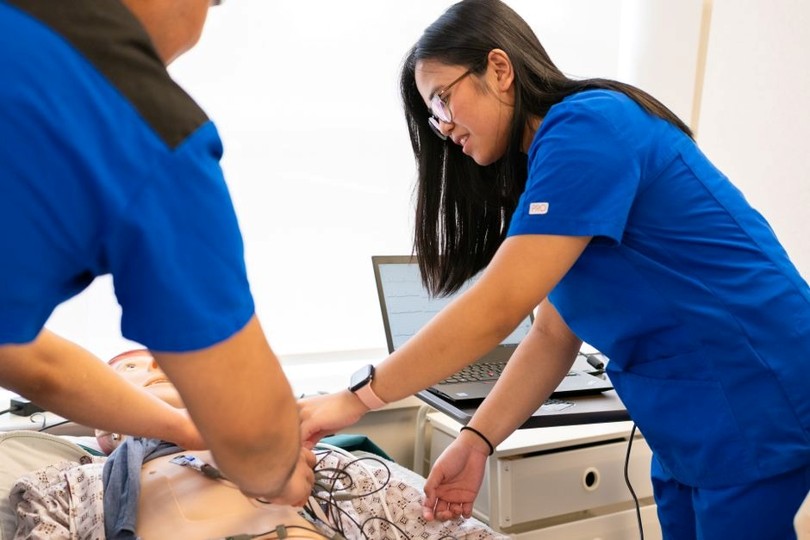
Simulation-based education provides opportunities to practice clinical decisions in controlled environments.
Advanced training facilities may use realistic patient mannequins, simulated emergencies, and interactive scenarios that reproduce important aspects of clinical practice.
Students can practice responding to deteriorating patient conditions, communicating during emergencies, and performing essential procedures.
These exercises allow instructors to provide feedback without exposing actual patients to unnecessary risks.
Simulation can also help learners develop confidence when encountering unfamiliar situations.
However, simulated experiences do not eliminate the need for supervised clinical training.
Real patient interactions involve emotional, ethical, and practical complexities that cannot always be reproduced in a classroom.
Combining simulation with appropriate clinical placements helps prepare healthcare professionals for the unpredictable nature of patient care.
Medical treatment has traditionally relied on established approaches developed through research involving large patient populations.
Personalized medicine introduces additional opportunities to consider individual biological characteristics when selecting certain treatments.
Genetic testing, molecular diagnostics, and specialized laboratory assessments can sometimes help clinicians identify therapies more likely to benefit particular patients.
For example, some cancer treatments are selected according to specific molecular features found in tumors.
However, personalized medicine is not appropriate for every condition, and genetic information rarely provides a complete explanation of an individual’s health.
Clinical decisions must still consider medical history, symptoms, treatment risks, and patient preferences.
Healthcare professionals need sufficient knowledge to explain why specialized testing may be recommended and what its results can realistically establish.
As these approaches develop, effective communication will remain essential for helping patients understand increasingly complex treatment choices.
Healthcare often involves several professionals working together to manage one patient’s treatment.
Physicians, nurses, pharmacists, therapists, and care coordinators may all need access to relevant clinical information.
Electronic health records help organize patient histories, medications, test results, and treatment documentation.
When implemented effectively, these systems can improve information availability and support coordination between departments.
However, digital records also introduce challenges.
Incomplete documentation, confusing interfaces, and excessive alerts can interfere with clinical workflows.
Healthcare professionals must understand how to enter accurate information and recognize when electronic records require clarification.
Strong cybersecurity practices are equally important because medical information is sensitive.
Technology can make information easier to share, but meaningful communication still requires professional attention.
A well-maintained digital record supports teamwork; it cannot replace conversations about important changes in a patient’s condition.
Robotic technology has introduced new capabilities in certain surgical and rehabilitation settings.
Robot-assisted surgical systems allow trained surgeons to control specialized instruments during selected procedures.
Depending on the operation, these systems may support precise movements and minimally invasive techniques.
However, robotic assistance does not guarantee better outcomes for every patient or procedure.
The benefits depend on factors such as surgical complexity, professional experience, and individual medical circumstances.
Robotic technologies are also being explored in rehabilitation, where certain devices can support structured movement exercises.
Healthcare professionals working with these systems need specialized training and an understanding of their limitations.
Equipment maintenance, patient selection, and clear communication remain essential.
Ultimately, robotic technology should be evaluated according to demonstrated clinical benefits rather than its appearance of sophistication.
As medical technology becomes more advanced, healthcare professionals will need to develop new technical abilities without losing the interpersonal skills central to patient care.
Patients may appreciate faster diagnostics and convenient digital services, but they still need clear explanations, compassionate communication, and opportunities to ask questions.
A clinician must recognize when a patient is confused, frightened, or unable to follow a recommended treatment plan.
These situations require empathy and professional judgment that cannot be reduced to automated instructions.
Continuous education will also become increasingly important as clinical tools and professional standards evolve.
Healthcare organizations must provide appropriate training rather than expecting employees to adapt to unfamiliar technologies without support.
Medical innovation offers considerable opportunities to improve healthcare delivery, but its success depends on responsible implementation.
The future of patient care will not be defined by technology alone. It will depend on professionals who can combine modern tools with sound clinical reasoning, ethical decision-making, and genuine attention to individual patient needs.


Healthcare has changed considerably as digital tools become part of everyday medical practice. Hospitals now use electronic records, remote consultations, and automated systems to manage patient care. …
Posted Nov 5, 2026 Healthcare
Connecting innovation decision makers to authoritative information, institutions, people and insights.

Medigy accurately delivers healthcare and technology information, news and insight from around the world.
Medigy surfaces the world's best crowdsourced health tech offerings with social interactions and peer reviews.
© 2026 Netspective Foundation, Inc. All Rights Reserved.
Built on Nov 6, 2026 at 5:05am