

Managing Editor
@ShahidNShah
@ShahidNShah
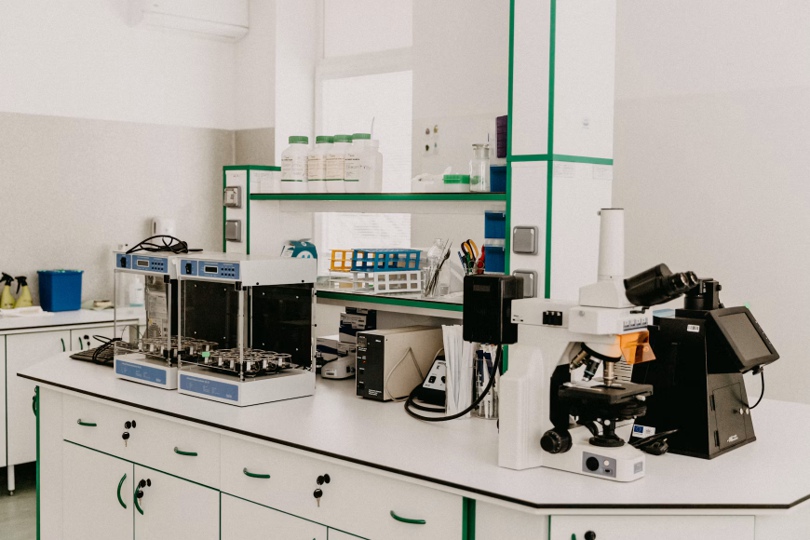
From HPLC testing to mass spectrometry, life science laboratories rely on lot-specific verification when studying copper-binding tripeptides in tissue models.
Regenerative biology and tissue-remodeling studies continue to expand across research facilities worldwide. Because metal-binding peptide reagents drive sensitive cellular responses, your laboratory faces stricter analytical scrutiny to prevent experimental variability caused by synthesis impurities or improper chelation.
Reliable data starts at the molecular bench before a single cell culture dish receives treatment. Understanding how analytical chemistry confirms peptide identity and copper-ion binding gives your research team the confidence to publish reproducible results.
HPLC excels at quantifying relative purity by measuring ultraviolet light absorbance as compounds exit the chromatography column. A clean, sharp single peak indicates that your sample lacks significant deletion sequences or oxidized side products.
Mass Spectrometry adds the structural certainty that HPLC alone cannot provide. By confirming the exact molecular weight of the copper-tripeptide complex, MS verifies that chelation succeeded during manufacturing. Guidance from the team behind https://true-peptides.com/product/ghk-cu says that pairing high-resolution chromatographic separation with mass verification eliminates guesswork around copper-ion binding ratios. Your lab gains clear proof that the active complex matches your experimental protocol.
Lyophilized peptides act like microscopic sponges when exposed to ambient humidity. Water molecules rapidly hydrolyze peptide bonds and disrupt the delicate coordination sphere holding the copper(II) ion in place.
Storing sealed vials at -20°C inside desiccated containers halts thermal degradation and prevents atmospheric moisture uptake. When your team prepares stock solutions, warming the sealed vial to room temperature before opening stops condensation from forming directly on the powder.
Single-method testing leaves blind spots that can compromise delicate cellular assays. High-precision research facilities pair orthogonal analytical techniques so one instrument catches what another might miss.
Even minor synthesis leftovers can skew sensitive receptor-binding studies or trigger unexpected inflammatory markers in vitro. Analytical workflows designed for tissue-repair peptides look closely at minor chromatogram peaks and sample retention times.
Researchers at the University at Buffalo highlight how sample preparation with reversed-phase liquid chromatography and precise retention time tracking establish reliable baselines for peptide analysis. Tracking those retention windows helps your analysts spot early signs of peptide breakdown before degraded material enters an assay.
Generic or recycled documentation creates hidden risks across multi-month research projects. Every synthesis run produces a slightly different impurity profile, meaning a Certificate of Analysis (COA) from an older batch tells you nothing about the vial sitting in your freezer today.
Lot-matched COAs tie your specific vial directly to the exact analytical run performed on that synthesis batch. When your team tests fibroblast growth factor (FGF) signaling or extracellular matrix remodeling, knowing the precise purity and copper content of your exact lot keeps baseline variables locked down.

Tissue-remodeling experiments often span weeks of repeated media changes and timed dosing schedules. If your laboratory switches peptide batches mid-study without verifying lot-specific data, subtle shifts in active copper concentration can alter fibroblast proliferation rates.
Maintaining strict batch traceability allows you to compare results across different experimental runs and replicate findings months later. Documentation from the National Center for Biotechnology Information notes that properly prepared peptide stocks dissolved in water and stored at -20°C maintain consistency across scheduled laboratory protocols. Pairing disciplined cold-storage habits with verified batch records keeps your long-term cellular data dependable.
Credible tissue-repair science depends on transparent batch traceability from the initial synthesis lot number straight through to independent laboratory reports.
When your team demands lot-specific HPLC chromatograms, mass spectrometry confirmation, and strict -20°C storage protocols, you remove preventable chemical variables from your benchwork. Treating analytical verification as a routine step before every assay protects your time, your cell cultures, and the integrity of your published findings.


Being told you have appendicitis can be a whirlwind, often going from a stomach ache to an operation within hours. Here’s what to expect, from diagnosis to getting back to normal life. Hours, …
Posted Nov 26, 2026 Emergency Department
Connecting innovation decision makers to authoritative information, institutions, people and insights.

Medigy accurately delivers healthcare and technology information, news and insight from around the world.
Medigy surfaces the world's best crowdsourced health tech offerings with social interactions and peer reviews.
© 2026 Netspective Foundation, Inc. All Rights Reserved.
Built on Nov 27, 2026 at 6:05pm