

Managing Editor
@ShahidNShah
@ShahidNShah
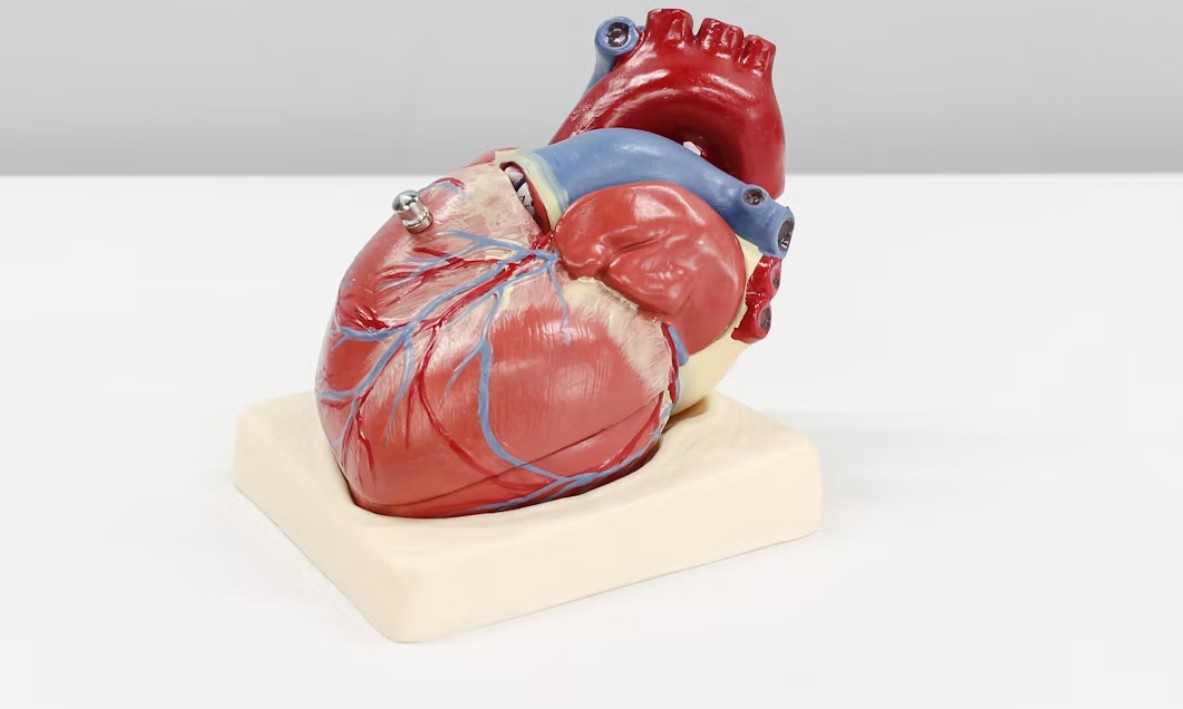
Heart disease remains a major challenge for healthcare providers. According to the American Heart Association’s 2026 statistics update, heart disease accounted for 22% of deaths in the U.S. in 2023, making it the country’s leading cause of death. Detecting cardiovascular problems earlier can give clinicians more options for treatment and prevention.
This need is especially relevant in major healthcare markets such as Los Angeles, California, where patients have access to a wide range of advanced diagnostic services. Advanced cardiac imaging is helping make earlier and more detailed evaluation possible. Newer imaging tools can show the heart’s structure, blood flow, arteries, and function in much greater detail. When a standard test leaves questions unanswered, these technologies can help clinicians investigate what may be happening beneath the surface.
Here are five ways advanced imaging is changing how heart disease is detected and evaluated.
Some cardiovascular problems can develop before a patient has obvious symptoms. This creates a challenge for clinicians because waiting for symptoms alone may mean missing an opportunity to identify disease earlier.
Advanced imaging can provide another way to assess cardiovascular risk. Coronary calcium scans, for example, can help identify calcium buildup in the coronary arteries, while other imaging methods can examine the heart and blood vessels in greater detail.
The American College of Radiology recognizes cardiac MRI as an established imaging method for assessing a wide range of heart diseases. Modern CT and MRI systems can also produce images of coronary arteries, heart chambers, valves, the heart muscle, and surrounding structures. For healthcare professionals, this can support earlier recognition of changes that may otherwise go unnoticed.
Computed tomography has become an important tool for examining the coronary arteries. Coronary CT angiography, for instance, can create detailed images of the vessels and help clinicians look for narrowing or other signs of coronary artery disease.
This can be particularly useful when the cause of symptoms is not immediately clear. Rather than relying on one type of test, physicians can use CT findings alongside the patient’s history, symptoms, and other clinical findings.
The technology has also continued to improve. Faster scanners and better image quality can make cardiac CT more useful when clinicians need to examine the coronary arteries closely.
Some imaging technologies show anatomy, while others can provide information about how tissue is functioning. Cardiac PET is one example. PET imaging can help clinicians assess blood flow to the heart muscle and identify areas that may not be receiving enough oxygen-rich blood. This can add another layer of assessment when evaluating suspected coronary artery disease.
The distinction is important. A picture of the heart’s structure can answer one question, while information about blood flow and tissue function can help answer another. Using both can help clinicians distinguish between structural problems and issues affecting how the heart is working. For example, cardiovascular centers such as California Cardiac Institute use a range of imaging and diagnostic tools, including cardiac PET, coronary CT angiography, coronary calcium scans, echocardiograms, and vascular ultrasound, as part of cardiovascular evaluation.
Advanced imaging does not replace clinical judgment. The images still need to be interpreted alongside symptoms, medical history, physical findings, and other tests.
The value of advanced imaging becomes clearer when these tools are used alongside specialist assessment. A heart specialist in LA at California Cardiac Institute, for instance, may consider imaging findings alongside a patient’s symptoms, medical history, and other test results when evaluating cardiovascular problems.
This broader approach is important because an abnormal image does not always tell the whole story. A clinician has to determine whether a finding is significant, what may have caused it, and whether further testing or treatment is needed.
In practice, the technology can reveal details that support the physician’s assessment, while specialist expertise helps put those findings into context.
One of the biggest changes in cardiac diagnostics is the ability to use different technologies for different questions. Echocardiography can assess heart structure and movement. CT can provide detailed views of coronary arteries. MRI can examine the heart muscle and its function. PET can provide information about blood flow and metabolism.
These tools are not interchangeable, and clinicians still need to choose the appropriate test for the situation. The American College of Radiology’s appropriateness criteria list different imaging options depending on factors such as a patient’s symptoms and likelihood of coronary artery disease.
That makes advanced imaging less about finding one test that does everything and more about matching the technology to the clinical question.
Cardiac imaging is becoming more detailed, more specialized, and more closely connected to the wider diagnostic process. These developments can help clinicians identify disease, assess its severity, and decide when further evaluation or treatment may be needed. The technology will continue to evolve, but its purpose remains fairly simple: help clinicians detect cardiovascular problems with greater confidence and act on those findings when appropriate.
As cardiovascular disease continues to place a significant burden on healthcare systems, improvements in detection can play an important role in how patients are assessed and managed.


GLP-1 medications have changed how clinicians approach medical weight management, but prescribing medication is only part of the process. Patients still need follow-up, monitoring, lifestyle support, …
Posted Sep 3, 2026 Health Technology Wellness & Prevention
Connecting innovation decision makers to authoritative information, institutions, people and insights.

Medigy accurately delivers healthcare and technology information, news and insight from around the world.
Medigy surfaces the world's best crowdsourced health tech offerings with social interactions and peer reviews.
© 2026 Netspective Foundation, Inc. All Rights Reserved.
Built on Oct 16, 2026 at 5:05am