

Managing Editor
@ShahidNShah
@ShahidNShah

Functional movement training prepares your body for tasks you perform outside the gym. It combines several joints and muscle groups rather than isolating one area at a time. Common actions include squatting, reaching, carrying, pushing, pulling, stepping, and turning.
These actions appear throughout everyday life. You may use them when leaving a chair, lifting a box, carrying groceries, climbing stairs, or placing an item on a shelf. Practicing similar movements can make these tasks feel more controlled and less tiring.
The method can work for beginners, active adults, and older adults. Each exercise can be changed by reducing the range, lowering the resistance, slowing the pace, or adding support. A chair, wall, or countertop can help you learn proper form before moving to a harder version.
The goal is not to copy every real-world task exactly. The goal is to improve the physical qualities required by those tasks, including mobility, control, stability, strength, and force production. These movement skills are often addressed in Physical Medicine and Rehabilitation programs to help people maintain or regain function during daily activities. [1]
Most programs organize exercises around several basic movement patterns. These categories help you create a balanced plan and avoid focusing on only one area.
A professional assessment can help identify which actions need more attention. InTouch NYC PT can evaluate how you walk, reach, lift, change direction, and perform daily functional tasks before selecting exercises that match your current ability. This type of movement assessment is commonly used in Physical Medicine and Rehabilitation to guide individualized treatment plans. [1]
Practice each action through a comfortable range. Stop when you lose control or compensate by twisting, leaning, or holding your breath.
A balanced routine can improve the way different parts of your body work together. This may help you move more confidently during work, recreation, and household tasks.
Common benefits include:
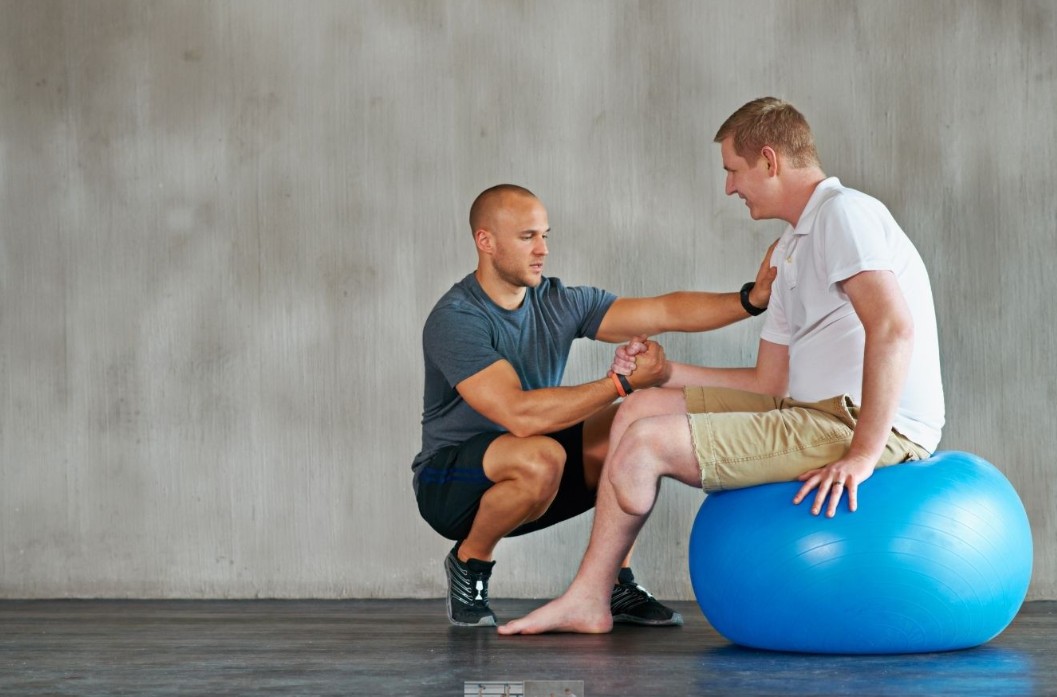
Functional movement training is frequently used during rehabilitation for musculoskeletal injuries, chronic pain conditions, balance deficits, and mobility limitations. The focus is not simply on exercise performance but on improving a person’s ability to participate safely in daily activities. [2]
These exercises can also support balance and coordination by teaching you to manage changes in position and weight distribution. Single-leg drills, step variations, and uneven carries challenge your body to remain steady while moving.
The results depend on your starting point, consistency, and exercise choices. A routine should address tasks that matter to you rather than follow a generic list without a clear purpose.
For example, someone who struggles to rise from a low chair may benefit from squats and step-ups. Someone who lifts objects at work may need more practice with hinging, carrying, and controlled rotation.
Functional work and strength training can both improve physical ability, but they often use different methods.
Functional approach: Exercises usually involve several joints and require you to control your body in space. The main goal is to improve actions that transfer to work, sport, or personal tasks.
Traditional gym approach: Exercises may focus on a specific muscle group, machine, or lift. The main goal may be to increase muscle size, improve force, or perform a particular exercise with more weight.
The two approaches are not opposites. A leg press can develop force in the legs, while a squat teaches you to control that force while supporting your body. A seated row trains pulling muscles, while a standing row also challenges posture and stability.
In rehabilitation settings, PM&R physicians and physical therapists often combine both approaches. Strengthening specific muscles may help address weakness after injury, while functional movement patterns help restore coordination, balance, and movement quality.
The following functional exercises cover the main actions without requiring advanced equipment. Begin with one or two sets of eight to twelve slow repetitions.
Chair squat: Stand with your feet in front of a stable chair, keeping them shoulder-width apart. Keep your chest lifted and bend your knees as your hips move backward. Touch the chair lightly, press through the floor, and rise.
Supported hip hinge: Place your hands on your hips with your knees bent slightly. Send your hips backward while keeping your spine long. Drive your hips forward to return to the starting position. This action prepares you to lift objects with better control.
Wall push-up: Place your hands against a wall at chest height. Keep your body in a straight line, lower yourself toward the wall, and press away. This trains the chest, shoulders, and arms without requiring floor work.
Standing row: Secure resistance bands at chest height. Step backward until the band has light tension. Pull your elbows behind you, pause, and release slowly.
Loaded carry: Hold a dumbbell at one side and walk for 20 to 30 seconds. Stay upright and avoid leaning toward or away from the weight. This drill strengthens your core while challenging your grip and posture.
Step and press: Step onto a low platform while holding a lightweight near one shoulder. Once stable, complete an overhead press. Finish with your arm straight without forcing the shoulder, then lower the weight before stepping down.
Progress should be gradual. Changing several variables at once makes it difficult to know whether the new level is appropriate. Physical therapy literature describes exercise dose as a combination of frequency, duration, and intensity, and notes that progression is important because exercise effects can level off when the challenge does not increase over time. [3]
Use these options in order:
Progress should help you build strength without creating sharp pain or unstable movement. Muscle effort and mild fatigue are expected, but discomfort that changes your technique means the exercise needs adjustment.
Functional conditioning exercises can also be performed as a circuit. Select three to five drills and complete them in sequence. Rest briefly after each round. Begin with two rounds and add another only when you can maintain control.
Poor technique, excessive load, and sudden volume increases may increase the risk of injury. Consistent progress is usually more useful than making one session as hard as possible.
Two or three sessions per week may be enough for many beginners. Leave a recovery day between demanding workouts, especially when you are using added weight. The CDC recommends muscle-strengthening activities on 2 or more days per week for adults, working all major muscle groups. [4]
Short practice sessions can also help. You might spend ten minutes working on squats, hinges, or supported balance drills without completing a full workout. For people recovering from injury or managing a chronic musculoskeletal condition, exercise frequency may need to be adjusted based on symptoms, recovery, and treatment goals.
Functional fitness workouts do not need to use the same exercises every session. One day may focus on squatting, pushing, and carrying. Another may include stepping, pulling, and rotating.
Side planks can be added when you need more trunk stability. Supported single-leg stands and slow step-downs can help improve balance and control. Choose only a few additions so the routine remains manageable.
Warm up with several minutes of walking and comfortable hip, ankle, and shoulder movements. Practice the first exercise without resistance before starting your work sets.
Beginners may need a shorter range, slower repetitions, or support from a chair. Older adults may benefit from stable surfaces and exercises that reflect everyday tasks. People returning after inactivity should begin with fewer sets and longer rest periods.
You can modify a squat by using a higher chair. You can make a push-up easier by moving from the floor to a wall. You can reduce the challenge of carrying by using less weight or walking a shorter distance.
People recovering from surgery, a fall, a neurological condition, or a major musculoskeletal injury may need individual guidance. Physical Medicine and Rehabilitation specialists and physical therapists can help determine which exercises are appropriate and how to progress safely.
You do not need expensive equipment to develop functional strength. Body weight, household objects, steps, and light weights can provide enough resistance for an effective starting routine.
Choose actions connected to your goals and the activities that matter most in your daily life. Practice them slowly, track your progress, and increase the challenge only when your technique remains consistent. Functional movement training is most effective when it supports long-term mobility, independence, and quality of life.
[1] American Academy of Physical Medicine and Rehabilitation: About Physical Medicine & Rehabilitation.
https://www.aapmr.org/about-physiatry/about-physical-medicine-rehabilitation
[2] Johns Hopkins Medicine: Overview of Physical Medicine and Rehabilitation.
https://www.hopkinsmedicine.org/health/treatment-tests-and-therapies/overview-of-physical-medicine-and-rehabilitation
[3] Hagströmer M, Franzén E. The Importance of Physical Activity and Health for Physical Therapy. Physical Therapy Reviews. 2017. The article explains that physical activity dose includes frequency, duration, and intensity, and that progression is important for continued improvement.
[4] CDC: Adult Activity: An Overview.
https://www.cdc.gov/physical-activity-basics/guidelines/adults.html


Yes, but not through every telehealth platform. Getting an Accutane prescription online is possible, though the process involves more steps than requesting most other acne medications. This article …
Posted Jun 20, 2026 Pharmaceuticals, Biotechnology & Drug Discovery Technologies Telehealth
Connecting innovation decision makers to authoritative information, institutions, people and insights.

Medigy accurately delivers healthcare and technology information, news and insight from around the world.
Medigy surfaces the world's best crowdsourced health tech offerings with social interactions and peer reviews.
© 2026 Netspective Foundation, Inc. All Rights Reserved.
Built on Oct 24, 2026 at 6:05pm